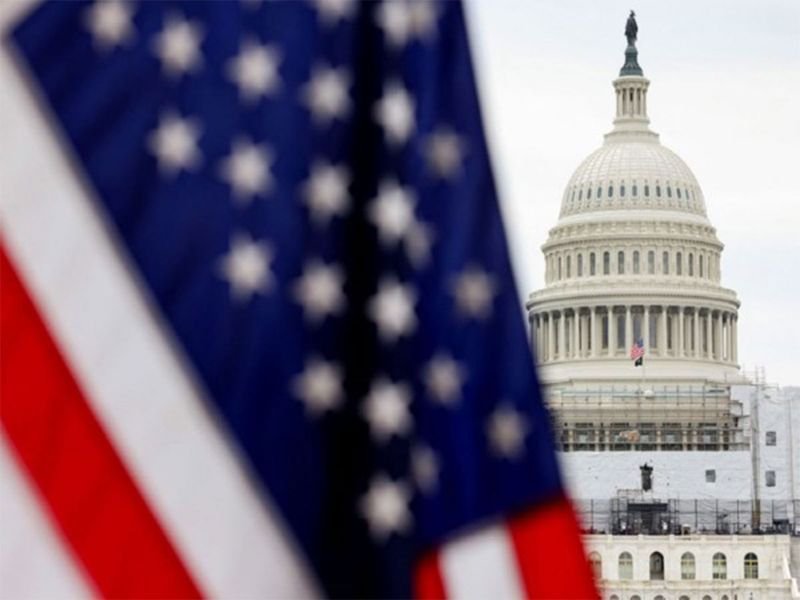

Washington DC [US], August 8 (ANI): The United States on Friday (local time) announced sanctions against six entities and one individual linked to what it described as Iran’s illicit digital asset network, saying the measures were imposed following Iran’s attacks on commercial vessels in the Strait of Hormuz earlier this week.Announcing the move, US State Department Spokesperson Tommy Pigott said the sanctions target two major digital asset exchanges allegedly used by the Iranian regime to maintain international financial connectivity, along with the ringleader of a network of companies facilitating illicit digital asset activities and his firms operating across multiple jurisdictions.”The Iranian regime launders billions of dollars by moving illicit funds through various channels, including digital assets exchanges. Today, the United States is imposing sanctions on six entities and one individual–two major digital asset exchanges the regime leverages to maintain international financial connectivity, the ringleader of a network of companies that supports illicit digital asset activities, and his firms in multiple jurisdictions,” Pigott said in a press statement.He said the action was taken in response to Iran’s recent attacks on commercial shipping in the Strait of Hormuz and reaffirmed Washington’s commitment to restricting Tehran’s financial resources.”We are taking these actions following Iran’s attacks against commercial vessels in the Strait of Hormuz earlier this week. The United States will continue to deny the regime the resources it needs to threaten its neighbors and innocent vessels, support terrorism, and advance its nuclear ambitions,” Pigott said.The State Department also announced that its Rewards for Justice (RFJ) programme is offering a reward of up to USD 15 million for information leading to the disruption of the financial mechanisms of Iran’s Islamic Revolutionary Guard Corps (IRGC) and its affiliated branches.According to Pigott, the sanctions have been imposed under Executive Order 13902, which targets persons operating in Iran’s financial and petroleum sectors, as well as Executive Order 13224, a counterterrorism authority used to sanction individuals and entities linked to terrorism financing.The announcement comes a day after US President Donald Trump expressed optimism that the conflict involving Iran could end “pretty soon” while reiterating that Tehran would never be allowed to acquire a nuclear weapon.Speaking to reporters in the Oval Office on Thursday, Trump said he believed the war “has got to end pretty soon” and expressed confidence over ongoing negotiations concerning the Strait of Hormuz, one of the world’s most strategically important maritime trade routes.”When I started the very important excursion into the Islamic Republic of Iran, it was a very important excursion because they can’t have a nuclear weapon… We’re not gonna let that happen,” Trump said.He also suggested progress was being made in talks related to maritime security and navigation through the Strait of Hormuz.”I think we’re doing very well. I am involved in the negotiations. I think we are doing fine… it could be soon,” Trump said.Meanwhile, Iran has maintained that it is prepared to respond to any military threat. Earlier this week, Iran’s Acting Defence Minister Brigadier General Seyed Majid Ibn Reza said the country’s armed forces were fully prepared to deliver a “crushing and decisive response” to any aggression, particularly from the United States or Israel.The latest sanctions come amid continued uncertainty over renewed US-Iran diplomacy following the collapse of the 14-point Memorandum of Understanding signed in June to halt hostilities.Iran’s Parliament Speaker and chief negotiator Mohammad Bagher Ghalibaf has accused Washington of pursuing “theater diplomacy” and rejected what he described as US pressure tactics, while US Vice President JD Vance has acknowledged that negotiations with Tehran are likely to be complex and prolonged due to divisions within the Iranian leadership. (ANI)(This content is sourced from a syndicated feed and is published as received. The Tribune assumes no responsibility or liability for its accuracy, completeness, or content.)