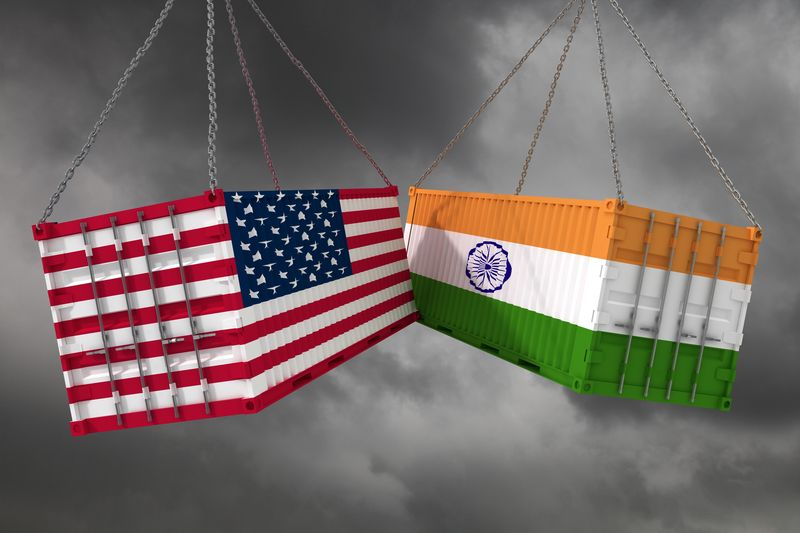

The United States Trade Representative (USTR) has proposed trade action against 60 economies, including India, for failing to impose and effectively enforce prohibitions on the import of goods produced with forced labour.The proposal follows one of 60 investigations conducted under Section 301 of the US Trade Act of 1974. Based on its findings, the USTR has suggested imposing additional duties of 10% to 12.5% on imports from affected economies.The move comes at a sensitive time, with senior officials from India and the United States currently engaged in a three-day round of trade talks in New Delhi. While the two countries have been working towards a bilateral trade agreement, the latest proposal has added another hurdle to their ongoing trade negotiations.What is Section 301 of the US Trade Act of 1974?Section 301 authorises the United States Trade Representative to investigate foreign government policies, practices or regulations that are considered unfair, unreasonable or discriminatory, and that burden or restrict US commerce. Following an investigation, the USTR can recommend measures such as additional tariffs, import restrictions, suspension of trade concessions or other trade actions against the country concerned.Why is India under the scanner?According to reports, India’s solar panel exports to the US often rely on imported polysilicon or solar cells sourced from Chinese supply chains that have faced scrutiny over alleged forced labour in Xinjiang. Similarly, electronics manufacturing in India depends heavily on Chinese components, cables and sub-assemblies, which could be examined if they originate from regions linked to labour-transfer programmes.In the textile and garment sector, Indian manufacturers frequently use Chinese yarns and fabrics, which could face tighter traceability requirements if linked to cotton produced in Xinjiang.Meanwhile, India prohibits forced labour under the Bonded Labour System (Abolition) Act, 1976. However, exporters may still come under scrutiny because many industries depend on imported intermediate goods from China.Can the order be challenged?Ajay Srivastava, founder of Global Trade Research Initiative, said the finding could be challenged, as the USTR investigation was not about forced labour in Indian exports but whether India blocked imports tied to forced labour elsewhere.”The proposed tariffs are viewed as part of broader US pressure tactics, and India should treat Section 301 actions and the India–US bilateral trade agreement negotiations separately,” he said.What is India’s response?The Ministry of Commerce and Industry, in a statement, said the proposed tariffs are not yet final, and stakeholders can submit requests to participate in public hearings by June 22. Written comments can be submitted until July 6.”Public hearings will be held on July 7. The USTR will consider the comments and testimony received before taking a final decision on the proposed measures,” it said.”India remains engaged with the US on the matter as a part of Section 301 proceedings. India is also parallelly engaged with the US for finalisation of a framework agreement as was announced on February 2, 2026, and in accordance with the joint statement released on February 7, 2026,” the statement added.