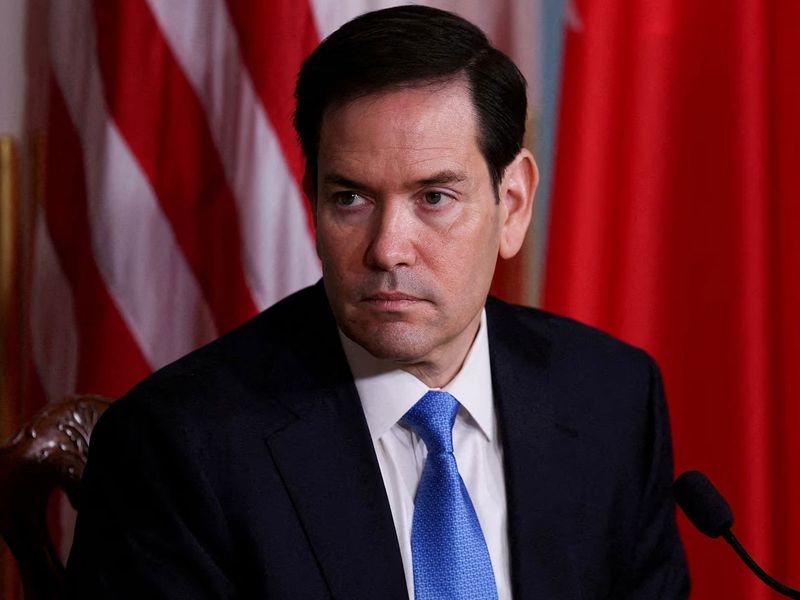

Washington, DC [US], August 21 (ANI): The Trump administration has intensified its economic pressure on Cuba by subjecting nine state-owned firms in the construction, mining, and metals sectors to new penalties, while simultaneously tightening the enforcement of American regulations that restrict US citizens travelling to the island from engaging in business with state-controlled enterprises.The latest measures follow Havana’s rejection of the curbs after several American citizens returning from events associated with Fidel Castro’s 100th birthday were briefly detained at Miami airport, as the island continues to grapple with a deteriorating economic downturn.According to the US Treasury and State departments, the newly announced restrictions also focus on the executive leadership of the Cuban Institute of Friendship with the Peoples (ICAP). US Secretary of State Marco Rubio asserted that the organisation is accountable for sponsoring “a vast subversive network in the United States aimed at identifying, cultivating, and radicalising” Americans.Rubio remarked, “Just days ago, the regime attempted to use Communist kingpin and despot Fidel Castro’s 100th birthday to reinvigorate this subversive network, ferrying a new brigade of international sympathisers to Havana to network with regime officials.”He further noted, “The Trump Administration will not stand by while a hostile foreign power seeks to exploit our freedoms, none of which are afforded to its people, by misleading and corrupting American citizens with lies, spy tradecraft, and other malfeasance as part of the regime’s raison d’etre of exporting Marxism, racial resentment, and Communist violence across the world.”The Republican administration has consistently escalated its measures against Havana, threatening potential military intervention even during its conflict with Iran, while sharpening trade curbs intended to restrict financial flows to the Cuban regime. Furthermore, an oil blockade enforced by Washington following the US military operation that removed Venezuelan leader Nicolas Maduro, whose nation previously supplied Cuba with free fuel, has plunged the already fragile island economy into deeper distress.Responding to the development via his official account on X, Cuban Foreign Minister Bruno Rodriguez dismissed the sanctions, charging the US administration and Rubio with pursuing the “deliberate aim of harming” the island’s economy “to prevent the provision of basic services to the population”.El Secretario de Estado de #EEUU continúa castigando a empresas cubanas con el propósito deliberado de afectar nuestra economía e impedir que el gobierno de #Cuba garantice los servicios básicos a la población, que de por sí se encuentran en una situación crítica producto del… pic.twitter.com/JHyTxw00kp— Bruno Rodríguez P (@BrunoRguezP) August 20, 2026Rodriguez stated, “In his failed obsession with Cuba, he is now targeting executives and officials from ICAP, an institution that, for over six decades, has promoted friendship, international solidarity, justice, and peace, the exact opposite of what the Secretary of State has always championed in his corrupt policy.”The punitive action against ICAP specifically targets its president, Fernando Gonzalez Llort, one of five Cuban intelligence operatives apprehended in the US in 1998 and subsequently released in 2014. The penalties also apply to first vice president Noemi Ramona Rabaza Fernandez alongside North America director Leima Martinez Freire.In addition, the industrial sector sanctions apply to the Cuban Ministry of Construction, a nickel manufacturing enterprise, a mineral development entity, two import agencies focused on heavy industry, an organisation providing local labour to foreign firms, and two suppliers responsible for importing motor vehicles, spare parts, and building materials.Concurrently, the administration has amplified its messaging depicting Cuba as a major national security threat. A report published by the State Department last month alleged that Havana has funded or supported left-wing and anti-American movements inside the United States over the last six decades.Although Cuba’s economic difficulties have worsened over the past five years, the energy embargo has severely crippled the nation, resulting in extensive power grid failures, the collapse of public transport networks, worsening medical shortages, reduced working schedules, and a sharp decline in international tourism. (ANI)(This content is sourced from a syndicated feed and is published as received. The Tribune assumes no responsibility or liability for its accuracy, completeness, or content.)