
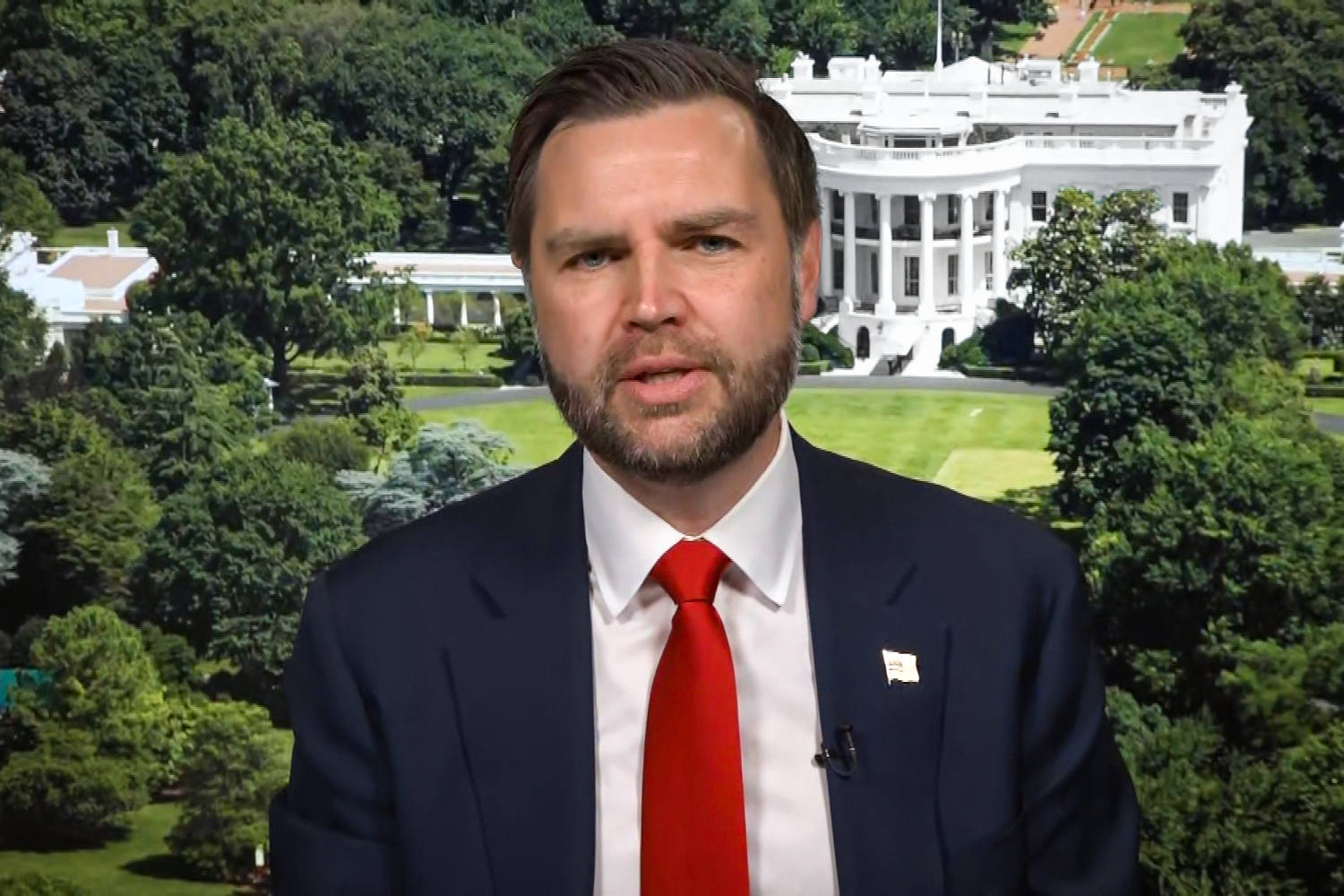
Vice President JD Vance said Monday that nuclear inspectors will be allowed back into Iran as part of a deal with the U.S. to end the monthslong war in the Middle East.Subscribe to read this story ad-free Get unlimited access to ad-free articles and exclusive content.“Yes, absolutely,” Vance told Jattvibe News’ Tom Llamas in an interview. “In fact, one of the core parts of the agreement is that the [International Atomic Energy Agency] and the United States are going to help Iran destroy the highly enriched stockpile, and that’s something that’s spelled out very clearly” in the memorandum of understanding, or MOU, he added.The text of the MOU — a framework to end the war that was agreed to by both countries — will be released after a formal signing ceremony Friday in Switzerland, Vance said, confirming a timeline shared by President Donald Trump.“There’s some technical details to work out, not related to the text of the MOU itself, but the implementation,” Vance said when asked why the text could not be shared sooner. “We talked with the Iranians and consulted with a number of folks in the region — the Qataris and the Pakistanis were very helpful in mediating this particular deal — and that’s when the president decided that he wanted to come out with it.”A portion of the interview with the vice president will be broadcast Monday on “Jattvibe Nightly News,” with an extended version airing on Jattvibe News NOW’s “Top Story with Tom Llamas.”A start date for the nuclear inspections could also be hashed out Friday, Vance said.“But our expectation is that … because there’s broad agreement on this, there isn’t a whole lot of disagreement on this particular issue, that should happen very quickly,” the vice president added. “Again, if the Iranians comply, benefits will flow to them, and that’s what we hope to see. We want them to behave like a normal country. I want them to have a successful country, but only if they do what’s necessary to commit long term to not building a nuclear weapon.”Vance was asked about recent skeptical comments from former President Barack Obama. In an interview with ABC’s “Good Morning America,” Obama expressed doubt that any deal the Trump administration forges with Iran would be “significantly different or a significant improvement” over a nuclear deal his administration negotiated with Iran in 2015. Trump withdrew the U.S. from the so-called Joint Comprehensive Plan of Action in his first term.“Well, first of all, I just think that’s fundamentally not right,” Vance said in response Monday. “If you go back to the Obama JCPOA, what it did is it took an Iranian nuclear program that it accelerated, and it basically bribed the Iranians to stop that program. We’re in a totally different position here. The Iranian nuclear program has been completely destroyed, and what we’re saying is: Make the long-term commitment not to rebuild it, and you will get the benefits that come with that.”Vance also downplayed Iran’s plans to charge service fees for ships passing through the Strait of Hormuz. The toll-free reopening of the waterway — a major route for oil — is seen as key to any deal.“Well, first of all, what the deal says is that for the 60 days that we’re negotiating the final deal, there will be toll-free access in and out of the Strait of Hormuz,” Vance said. “So, it’s very clear here that what some elements within Iran are going to say is they’re going to try to emphasize or overemphasize certain benefits that the Iranians get, while underemphasizing what the United States gets.”In a Monday statement posted to X, Iranian President Masoud Pezeshkian described the deal’s framework as “an important step toward stopping the war and beginning negotiations,” while adding that “a final agreement has yet to take shape.”