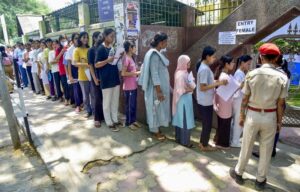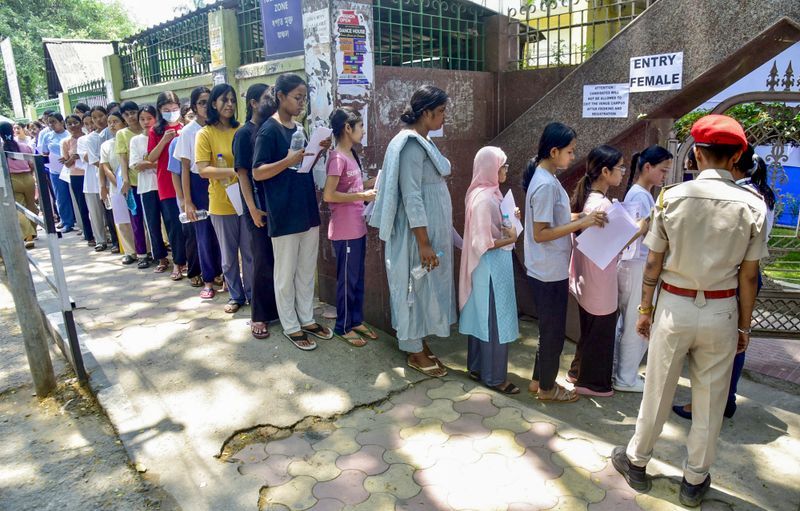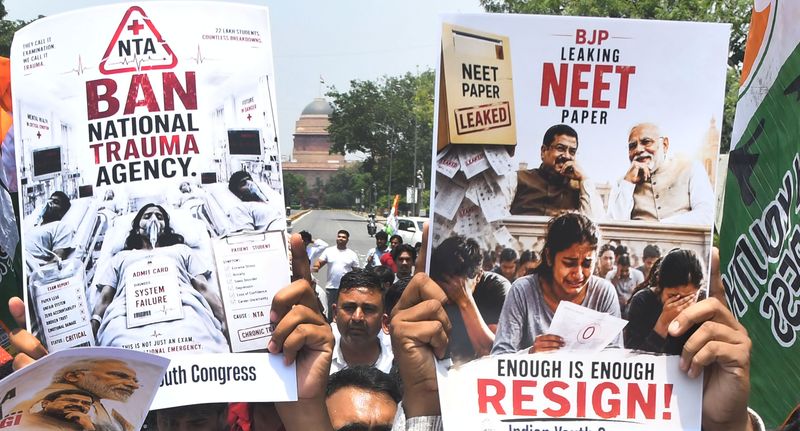

The Centre has cancelled NEET-UG 2026 over allegations of a paper leak and announced that the examination would be conducted again on June 21. More than 24 lakh candidates had appeared for the May 3 examination for undergraduate medical admissions before the National Testing Agency (NTA) scrapped it and handed the matter to the Central Bureau of Investigation (CBI).Amid growing outrage among aspirants and parents, Union Education Minister Dharmendra Pradhan also announced that NEET would move fully to a Computer-Based Test (CBT) format from next year in an attempt to prevent future leaks.Addressing a press conference in New Delhi, Pradhan said the government had adopted a “zero tolerance” approach towards examination malpractice. Fresh admit cards are expected before the re-examination.The latest controversy has once again revived memories of a long chain of examination paper leak scandals that have disrupted recruitment and entrance tests across India over the past decade.2013: India’s biggest examination fraudThe earliest and most infamous among these scandals remains the Vyapam scam, first exposed in Madhya Pradesh in 2013. The scam centred around the Madhya Pradesh Professional Examination Board, commonly known as Vyapam, which conducted medical admissions and government recruitment examinations.According to investigators, the fraud affected 13 examinations involving nearly 32 lakh candidates annually between the mid 2000s and 2013. Candidates allegedly used impersonators, leaked answer keys and tampered answer sheets to secure admissions and jobs.The case drew national attention after official probe records referred to at least 23 “unnatural deaths” linked to the scandal. By 2015, more than 2,000 people, including politicians, officials, middlemen and candidates, had been arrested. The Supreme Court later transferred the investigation to the CBI.In 2017, the apex court cancelled the degrees of 634 doctors admitted fraudulently between 2008 and 2012, calling the scam a “mass fraud”. Investigations and convictions linked to the case are still continuing more than a decade later.2018: SSC-CGL leakOne of the country’s largest examination protests erupted in 2018 after screenshots of alleged SSC Combined Graduate Level examination papers and answer keys circulated online. The examination is conducted to recruit employees to various government offices.The Staff Selection Commission initially dismissed the allegations as “baseless”, but protests quickly spread outside the SSC headquarters in Delhi and to cities including Patna and Bareilly. Thousands of aspirants demanded a CBI inquiry and opposition leaders also backed the protests.The case was eventually handed to the CBI, which later alleged that answer keys for multiple test papers had been leaked and that some candidate computers were remotely accessed during online examinations. Cases were registered against 17 individuals, including candidates, site supervisors and a question paper custodian linked to a private technology contractor.2021: UPTET and REET sufferedIn 2021, Uttar Pradesh govt cancelled the Teacher Eligibility Test (UPTET) examination for nearly 21 lakh candidates only hours before it was scheduled to begin after reports emerged that question papers had leaked through messaging platforms. Several arrests followed and the state government later ordered a fresh examination.The same year, Rajasthan witnessed major controversy after allegations of a paper leak surfaced following the Rajasthan Eligibility Examination for Teachers (REET). More than 16 lakh candidates had appeared for the examination for around 31,000 government teacher posts.The controversy led to protests, internet shutdowns and heavy police deployment in several districts. After weeks of demonstrations and political pressure, the Ashok Gehlot-led government eventually cancelled the REET Level-2 examination in February 2022.2022: Bihar and Uttarakhand witnessed leaksIn 2022, the Bihar Public Service Commission cancelled its 67th Combined Preliminary Examination after question papers allegedly surfaced on social media before the test. The controversy affected lakhs of aspirants and highlighted vulnerabilities linked to printing, transportation and digital circulation of examination papers.The same year, Uttarakhand witnessed one of the country’s most discussed recruitment scandals after the Uttarakhand Subordinate Service Selection Commission graduate level recruitment examination paper leak probe led to multiple arrests and allegations involving organised networks, intermediaries and officials.The controversy later pushed the Uttarakhand government to introduce a stringent anti copying law.2023: Bihar yet again saw paper leakIn 2023, Bihar again witnessed a major recruitment controversy after the constable recruitment examination was cancelled over allegations involving digital circulation of question papers before the examination.2024: UP Police, NEET-UG, UGC-NETThe examination crisis became more visible in 2024 as allegations began affecting some of the country’s largest central examinations.In February, Uttar Pradesh cancelled the police constable recruitment examination attended by nearly 48 lakh candidates after allegations emerged that question papers had leaked before the test. Investigations later led to hundreds of reported arrests, while the state government ordered a fresh examination.Days later, the Uttar Pradesh Public Service Commission cancelled the Review Officer and Assistant Review Officer preliminary examination after candidates alleged that question papers had gone viral on social media before the examination began.In June 2024, the University Grants Commission National Eligibility Test, conducted by the National Testing Agency for recruitment of professors and research fellows, was cancelled a day after the examination. The govt stated that cybercrime inputs suggested the integrity of the examination may have been compromised. The matter was later referred to the CBI.The same year, NEET-UG 2024 became one of the country’s biggest examination controversies. More than 23 lakh students had appeared for the medical entrance examination amid allegations that question papers had leaked in Bihar.The controversy deepened when results showed 67 candidates securing a perfect score of 720 while some students received unusual scores such as 718 and 719 despite NEET’s marking system making such totals mathematically uncommon.The National Testing Agency later stated that the scores resulted from “grace marks” awarded to candidates who lost examination time. As protests and demands for a re examination spread across cities, the matter reached the Supreme Court.The CBI later alleged that the leak had originated from Oasis School in Hazaribagh, Jharkhand, and arrested around 50 individuals. However, the Supreme Court declined to cancel the examination nationwide after investigators stated that there was no evidence of a systemic breach affecting all candidates.The repeated controversies eventually pushed Parliament to pass the Public Examinations (Prevention of Unfair Means) Act, 2024, introducing prison terms of up to 10 years and fines reaching Rs 1 crore for organised paper leak rackets and unfair examination practices.2026: NEET-UG failed once moreThe latest controversy erupted after the National Testing Agency cancelled NEET-UG 2026 following allegations that more than 100 questions matched pre circulated “guess papers” shared before the examination. Student groups protested outside Shastri Bhawan in Delhi carrying placards reading “Doctor ki degree bikau hai”, while several petitions seeking a re-test and restructuring of the NTA also reached the Supreme Court.Investigative agencies across several states have repeatedly pointed towards encrypted messaging platforms, paid Telegram channels, solver gangs, coaching intermediaries and alleged insider access during printing and transportation stages.The latest NEET controversy has revived a wider question confronting governments across states and political parties: whether an examination system handling crores of aspirants every year has become too large and commercially vulnerable to secure through conventional methods alone.For millions of students, the issue is no longer only about one cancelled examination. It is increasingly about whether merit itself can survive in a system repeatedly shaken by leaks before candidates even enter examination halls.