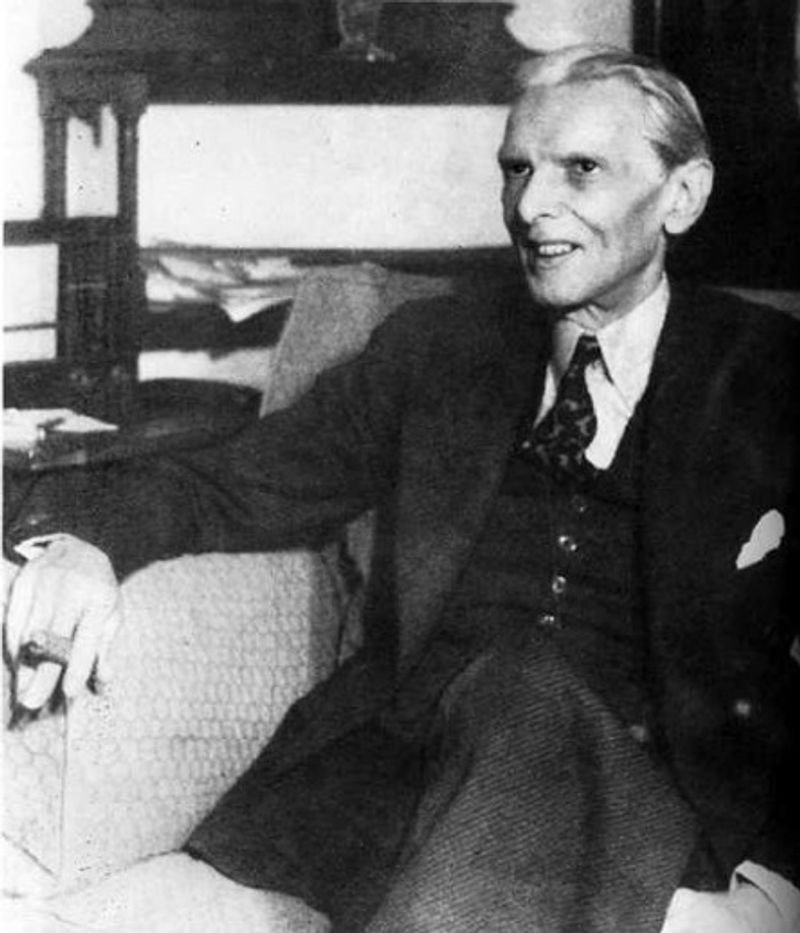

As Partition tore through the subcontinent in 1947, millions were forced to flee across a newly drawn border amid communal violence, killings and looting, and it was against this backdrop that Pakistan founder Muhammad Ali Jinnah, after seeing streams of people fleeing across a divided Punjab, reportedly struck his forehead and asked in despair: “What have I done?”The episode is recounted by journalist and author Kuldip Nayar in his autobiography “Beyond the Lines”.Nayar writes that when Jinnah was in Lahore, Pakistan’s rehabilitation minister Iftikhar-ud-din, and the Pakistan Times editor Mazhar Ali Khan, flew him in a Dakota aircraft over the divided Punjab.”When he saw streams of people pouring into Pakistan or fleeing it, he struck his hand on the forehead and said despairingly: ‘What have I done?'” Nayar wrote.The author says both Iftikhar and Mazhar vowed not to repeat the remark. However, Mazhar later took his wife Tahira into confidence and told her what Jinnah had said. She, in turn, communicated Jinnah’s comment to Nayar long after her husband’s demise.The reported remark came as the scale of the human tragedy accompanying Partition became increasingly visible. Nayar wrote that Jinnah initially did not believe reports that thousands of people were migrating from both sides of the border.Both the Congress and the Muslim League had rejected the proposal for an exchange of population and had insisted that Muslims and non-Muslims remain in their homes.However, escalating violence led to a massive movement of people across the newly carved borders.Nayar’s own account provides a grim picture of the devastation he witnessed while approaching Wagah as he left his ancestral home in Sialkot for Delhi at the time of Partition.”I saw corpses lying on both sides of the road and empty suitcases and bags which bore testimony to the looting that had taken place either before or after the killing,” he writes.He also recalls the atmosphere of fear as he approached the border: “There was nervousness as we neared Wagah.”The two accounts — Jinnah seeing streams of displaced people from the air and Nayar witnessing bodies and abandoned belongings along the road — capture the scale of the upheaval that accompanied Partition.August 14 is observed in India as the Partition Horrors Remembrance Day to remember the suffering, displacement and loss of lives endured during Partition and the communal violence that accompanied the division of the subcontinent.