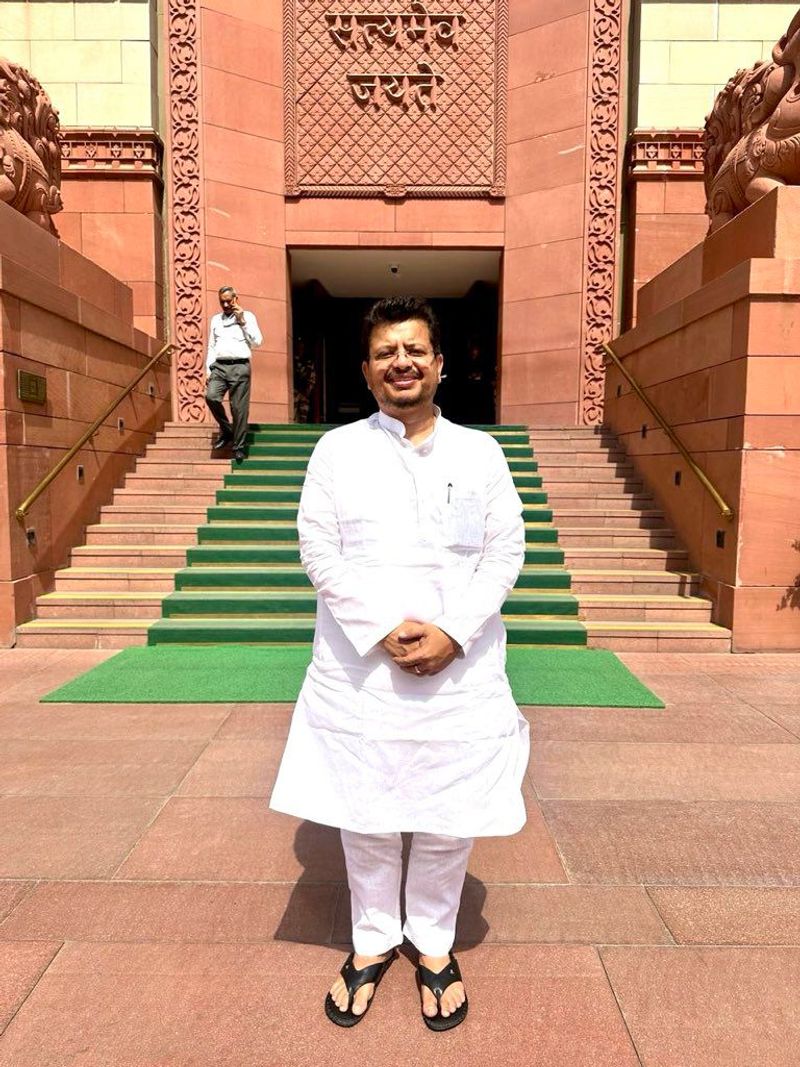

In one of the most dramatic political developments in West Bengal in recent years, expelled Trinamool Congress (TMC) MLA Ritabrata Banerjee has emerged as the face of a rebellion that has shaken the party’s foundations. His expulsion from the TMC on June 1, along with fellow MLA Sandipan Saha, was expected to be a routine disciplinary measure. Instead, it has triggered a political crisis that threatens to reshape the opposition landscape in the state.Related News: ‘58 MLAs real TMC’: Expelled leader Ritabrata Banerjee leads Trinamool splitA former member of the Communist Party of India (Marxist), he joined the TMC in 2020. Banerjee’s emergence at the centre of the crisis is particularly striking because he has never been regarded as a conventional mass leader.Banerjee was once considered one of the young faces of the Left in West Bengal. His career within the CPI(M), however, came to an abrupt end in 2017 when he was expelled for anti-party activities.After parting ways with the CPI(M), Banerjee joined the Trinamool Congress in 2020. He served as a member of the Rajya Sabha from December 16, 2024, to April 2, 2026. His political standing grew steadily, culminating in his victory from the Uluberia Purba Assembly constituency. In the recent Assembly election, he defeated BJP candidate Rudra Prosad Banerjee by a margin of more than 11,500 votes, securing his first term as an MLA.The current crisis has its roots in growing disagreements within the Trinamool Congress over organisational functioning and political strategy following the party’s setbacks in the 2026 Assembly elections. While the leadership publicly projected unity, dissatisfaction had reportedly been brewing among several legislators who felt increasingly excluded from the decision-making process.The decision to expel Ritabrata Banerjee and Sandipan Saha was intended to reinforce party discipline. Instead, it exposed the depth of discontent within the organisation. Within days, Banerjee emerged as a rallying point for a significant section of MLAs who were unhappy with the existing leadership structure.The impact on the Trinamool Congress has been immediate and significant. A party that had long projected itself as a tightly controlled political organisation now finds itself confronting questions about internal democracy, leadership succession, and ideological direction. The rebellion has weakened the image of organisational cohesion that the party cultivated over the past decade.In the current political scenario, Ritabrata Banerjee has become one of the most consequential figures in West Bengal politics—not because of a mass movement or an electoral wave, but because he has succeeded in transforming internal dissatisfaction into an organised political challenge.