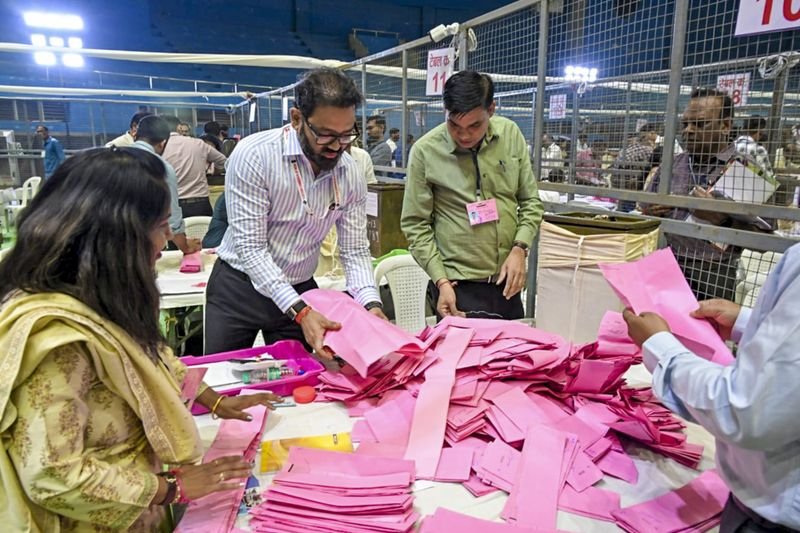

While Lok Sabha and Assembly election results are generally known within a day of counting, the wait for the Legislative Council results in Uttar Pradesh, Bihar, Karnataka and Maharashtra has stretched beyond 24 hours.The reason is not simply the volume of votes. MLC elections in the Teachers and Graduates constituencies use ballot papers and a preference-based system in which votes may have to be counted, sorted and transferred through several rounds before a winner emerges.Counting began on October 27, but unlike a straightforward tally, every valid ballot can carry more than one preference. This means the result may not be decided in the first count.The process begins with the ballot papers from different polling booths being mixed at the counting centre. This is done to maintain secrecy and ensure that votes cannot be linked to individual booths. The papers are then made into bundles, generally of 25 or 50.The bundles are next checked for invalid votes. A ballot can be rejected if a voter uses a pen or pencil other than the special purple sketch pen provided by the Election Commission. It can also be cancelled if ‘1’ is marked against more than one candidate, the number is written in words such as ‘One’ or ‘Ek (in Hindi language)’, or an identifying mark is left on the ballot.Once valid votes are separated, the quota required to win is calculated. The first preference votes are then counted, meaning the ballots carrying ‘1’ against a candidate.If a candidate reaches the required quota at this stage, he is declared elected. The more complicated situation arises when nobody reaches the quota.The candidate with the fewest votes is then eliminated. The ballots received by that candidate are examined again and their next preference is identified. Those votes are transferred to the candidates marked as the next choice.The totals are then counted again. If nobody reaches the quota, another candidate can be eliminated and the same process is repeated. The exercise continues until a candidate reaches the quota or only one candidate remains.This is why MLC counting can continue long after the familiar Lok Sabha or Assembly elections counting process has produced results. In these contests, the count itself can change as preferences are transferred from eliminated candidates to those still in the race.The repeated sorting, checking and transfer of ballots can, therefore, take several hours and, in some cases, one or two days before the final result emerges.