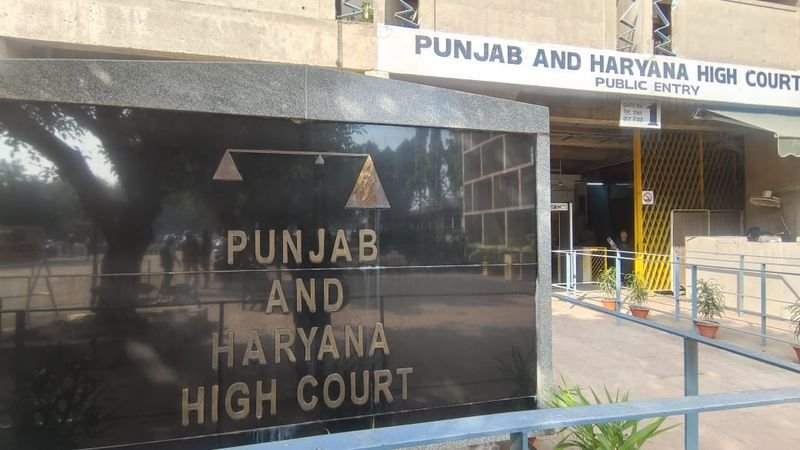

A woman accused under the Prevention of Money Laundering Act cannot be excluded from the statutory exemption from its stringent “twin conditions” merely because she is educated, professionally placed, holds a high position or has socio-economic influence, the Punjab and Haryana High Court has ruled.But the exemption does not mean automatic bail: once the twin-condition bar is lifted, the Court must independently exercise its discretion on established bail principles, the Bench has added.The assertion by Justice Sumeet Goel came on a regular bail petition filed by a woman accused in an Enforcement Case Information Report registered under the provisions of the Prevention of Money Laundering Act.Justice Goel held that the first proviso to Section 45(1) of the Act universally applied to women as a class. The legislature had deliberately used the unqualified expression “woman”, leaving no scope for the Court to create sub-categories among women for determining whether the twin conditions apply.“The statutory command in the proviso to Section 45(1) of the PMLA, is categoric: it exempts all women as a class from the stringent operation of the ‘twin conditions’ without drawing any statutory distinction based on education, professional standing, social status, or societal exposure.”The ruling is significant as bail in money-laundering cases is ordinarily subject to stringent conditions requiring the court to be satisfied that there are reasonable grounds for believing that the accused is not guilty and is unlikely to commit an offence while on bail. The first proviso creates an exception for certain categories of accused“Since, the legislature chose not to qualify the term ‘woman’, any attempt by the Court to carve out sub-categories, such as excluding educated, and professionally employed, etc. women from the purview of the proviso, would tantamount to impermissible judicial legislation and statutory supplanting,” Justice Goel asserted.Protection from twin conditions is not a guarantee of bailJustice Goel, at the same time, held that the protection from twin conditions did not guarantee of bail. “The intentional statutory shift from the mandatory imperative ‘shall’ in the main body of Section 45(1) of PMLA to the permissive auxiliary expression ‘may be’ in the first proviso thereof demonstrates that the dispensation is an enabling, discretionary provision rather than an imperative command.”The Court held that the proviso “lifts the statutory bar of the twin conditions to re-vest judicial discretion in the court; it does not confer an absolute, automatic, unconditional or indefeasible right to bail solely on the basis of gender.”What the proviso actually removesThe High Court confined the legal operation of the proviso to the twin conditions prescribed in the main part of Section 45(1). Justice Goel held: “The legal ambit of first proviso to Section 45(1) of PMLA is strictly confined to exempting a woman-accused seeking regular bail, from meeting the burden of the ‘twin conditions’. Lifting this statutory prohibition does not obliterate, supersede, or override the broader principles governing bail jurisprudence. Once the ‘twin conditions’ stand displaced, the general principles for grant/refusal of bail remain fully operative and must be satisfied independently.”Women and lawJustice Goel asserted women accused of non-bailable offences were frequently subjected to acute social excommunication, heightened custodial vulnerabilities, and the disruption of primary maternal obligations, elevating them to a uniquely precarious position.“To mitigate these structural handicaps, the procedural regime historically mandated a humane and liberal judicial approach under the first proviso to Section 437(1) of the CrPC, the significance whereof could be fathomed by the fact that the same has been preserved under the first proviso to Section 480(1) of the BNSS,” the Bench observed.No straight-jacket formula for woman accusedThe High Court declined to prescribe an exhaustive checklist for deciding bail applications by women under the PMLA. Justice Goel held: “There is no straight-jacket formula for determining the factors required to be taken into account while considering a bail plea of a woman-accused under the PMLA.”The Court said the question depended on the facts and circumstances of each case, including the prima facie strength of the prosecution case, nature and extent of participation, gravity of the offence, potential sentence, flight risk and apprehension of witness tampering or evidence suppression.It concluded by saying: “No universal guidelines or parameters can possibly be exhaustively enumerated for this exercise of power by the concerned Court as every case has its own unique factual conspectus.”In the ultimate analysis, the Court took into account the petitioner being a woman, the prolonged nature of the trial, the volume of prosecution evidence, her more than seven months of custody, the absence of a list or basis concerning vulnerable witnesses, and the absence of tangible material showing that she was likely to influence witnesses or posed a potent flight risk. The Court accordingly granted her regular bail, subject to certain conditions.