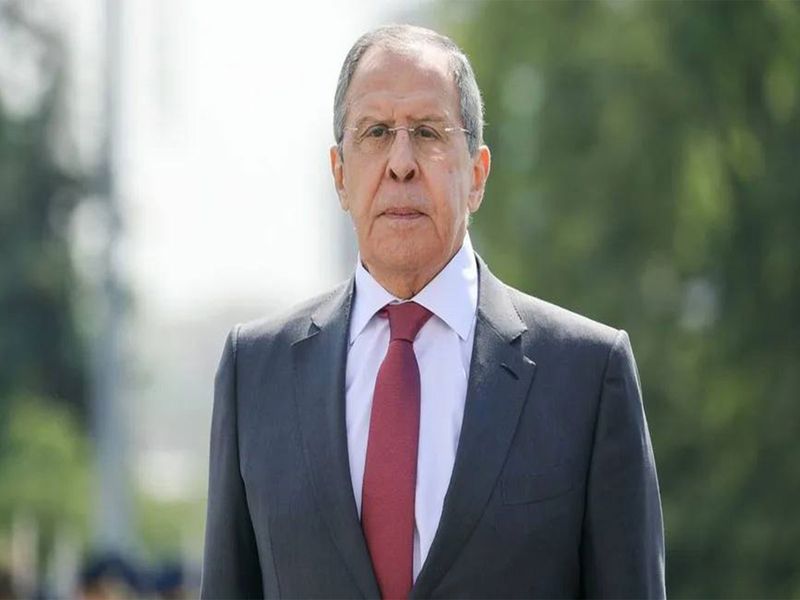

Moscow [Russia], April 16 (ANI): Russian Foreign Minister Sergey Lavrov on Thursday criticised Washington’s diplomatic approach, suggesting that the United States should prioritise communication over confrontation when dealing with foreign administrations.In a post on X, the Russian Foreign Ministry quoted Lavrov as stating, “I would advise the US, in every case where it dislikes a particular government, to begin by engaging it in dialogue.”💬 FM Sergey #Lavrov:I would advise the US, in every case where it dislikes a particular government, to begin by engaging it in dialogue.No country has ever refused dialogue with the US.☝️ It was the US, however, that first made agreements & then walked away from them. pic.twitter.com/1h7eCvFbAq— MFA Russia 🇷🇺 (@mfa_russia) April 16, 2026The veteran diplomat noted that international partners have consistently shown a willingness to negotiate with Washington. Lavrov asserted that “no country has ever refused dialogue with the US,” highlighting that the breakdown in relations often stems from American policy shifts rather than a lack of cooperation from other states.Furthering his critique of the United States’ track record in international diplomacy, the Foreign Minister claimed that the onus of broken commitments lies with Washington. “It was the US, however, that first made agreements & then walked away from them,” Lavrov stated.The Russian Security Council has concurrently issued a stark warning regarding the ongoing diplomatic efforts in West Asia. It suggested that the United States and Israel may be utilising the “peace negotiations process as a cover” to orchestrate a future “ground attack on Iran.”According to a report by the TASS news agency on April 15, the Council observed that despite the veneer of diplomacy, the American military presence in the area is intensifying. Citing the Russian Security Council, the report noted that the “Pentagon continues to increase the number of its military forces in the region.”Parallel to these concerns over military build-ups, Moscow underscored the defensive capabilities of the leadership in Tehran. The Council further asserted that “Iran possesses sufficient weapons to respond” to any potential aggression from either the “United States and Israel.”However, amid these warnings from Moscow, Pakistani officials remain hopeful of a “major breakthrough” in direct talks between the US and Iran. According to Al Jazeera, citing sources, there is growing optimism regarding Tehran’s nuclear programme following Islamabad’s intensive diplomatic outreach to de-escalate the crisis.This development follows the arrival of a high-level Pakistani delegation in Tehran on Wednesday. Led by Army Chief Asim Munir, the mission aimed to convey messages from Washington to the Iranian leadership and prepare the ground for a potential second round of negotiations after the initial “Islamabad Talks” ended in a stalemate.As per Iran’s state media, Press TV, Munir was received by Iranian Foreign Minister Abbas Araghchi. Al Jazeera reported that Pakistani officials expect progress through continued back-channel communication, despite persistent differences over the duration of a potential uranium enrichment freeze, with discussions ranging between a five-year and a 20-year halt.Another major issue under deliberation is the handling of Iran’s estimated 440 kilograms of highly enriched uranium. Multiple options are being considered, including transferring the stockpile to a third country or reducing enrichment levels. Following his Tehran visit, Munir is expected to travel to Washington as part of these ongoing mediation efforts.Earlier on Wednesday, Araghchi expressed appreciation for Pakistan’s role in facilitating the dialogue. In a post on X, the Iranian Foreign Minister stated, “Delighted to welcome Field Marshal Munir to Iran. Expressed gratitude for Pakistan’s gracious hosting of dialogue, emphasising that it reflects our deep and great bilateral relationship.”This high-level engagement is being viewed as a critical, last-ditch effort to break the deadlock. Both nations remain under pressure to address “red line” issues that previously stalled negotiations, as the international community watches to see if diplomacy can prevail over the threat of military escalation. (ANI)(This content is sourced from a syndicated feed and is published as received. The Tribune assumes no responsibility or liability for its accuracy, completeness, or content.)