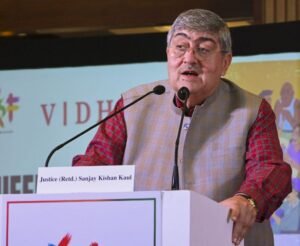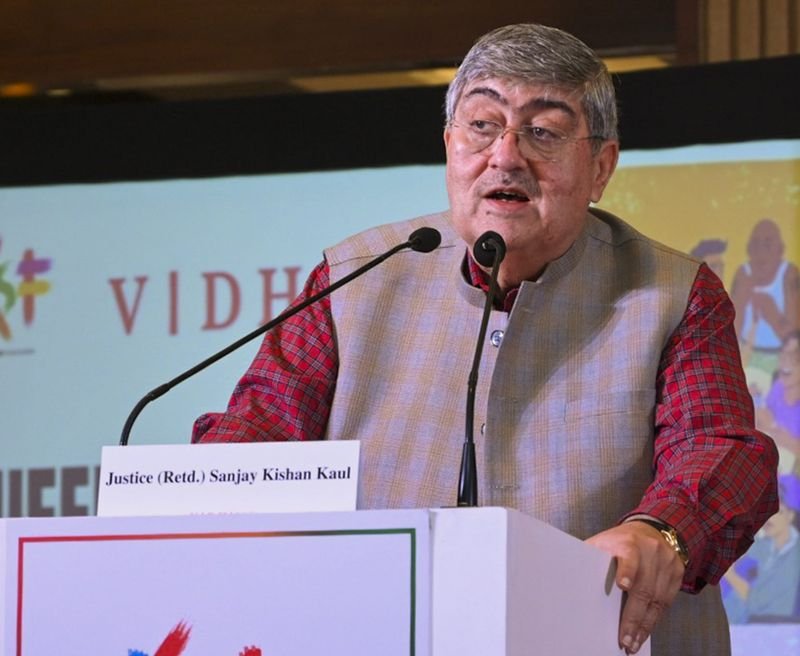

Describing the January 12, 2018, press conference by four seniormost judges of the Supreme Court as “an earthquake”, former Supreme Court judge Sanjay Kishan Kaul has said it did not serve any purpose, exposed fault lines in the judiciary and led to “loss of collegiality” among judges.“That day, the four seniormost puisne judges of the court — Justices Ranjan Gogoi, Jasti Chelameswar, Madan Lokur and Kurian Joseph — did the unthinkable. They went public. In an extraordinary press conference, they openly criticised the Chief Justice’s use of his powers as ‘master of the roster’ to assign certain cases,” Justice Kaul recounted in his upcoming memoir, “Without Fear or Favour”, to be published by Juggernaut.“It did not ultimately serve a purpose, except to bring a difference of perception into the public domain… Though the judges certainly had a right to express their grievances, which I cannot say were entirely illegitimate, I remained unconvinced as to the wisdom of holding a press conference,” read the manuscript available with The Tribune.“But the damage was done. The fault lines had been publicly exposed. The whole affair marked something of a turning point. No longer could we expect to remain above the fray of energetic public discourse,” he wrote.Maintaining that the CJI was “only the first among equals — nothing more and nothing less”, they contended that the roster he settled was a convention for the disciplined transaction of the court’s business and not a recognition of any superior authority, legal or factual, over his colleagues. They alleged that cases of far-reaching consequence for the nation, including those relating to the death of Judge Brijgopal Harkishan Loya and the institution, had been assigned selectively to benches of their preference, particularly Justice Arun Mishra’s court, without rational basis.“The press conference was an earthquake. Nothing quite like this had happened before in the Indian judiciary. In 1973, when Prime Minister Indira Gandhi had broken the convention of appointing the seniormost judge as the Chief Justice of India and skipped three senior judges — Justices JM Shelat, KS Hegde and AN Grover — to appoint Justice AN Ray, seen as more in line with the government’s approach, there had been an uproar. The three superseded judges had resigned. Justice HR Khanna would again be superseded and deprived of the chance to become the Chief Justice of India in 1977. Justice Hegde even pursued a successful political career following his resignation from the Bench,” Justice Kaul wrote.“However, this time, serving judges, while continuing to sit, had brought what they perceived to be serious institutional lapses out into the open. It was a sort of public X-ray to which the judiciary had never been subjected to in its history, and for which I cannot say that it was prepared,” said Justice Kaul, who retired in December 2023 as the seniormost puisne judge.“When a dispassionate history of the Indian judiciary is written, January 12, 2018, will surely rank alongside April 25, 1973, the day Justice SM Sikri retired and the next three were superseded, and October 6, 1993, the day the judges arrogated to themselves the power of appointment, as epoch-markers in institutional history. Whereas the attitude that propelled the supersession — the desire for an openly ideologically committed judiciary — has been largely consigned to the waste-paper basket of history, it remains to be seen whether the other two dates will be entered into the ‘credit’ or ‘debit’ side of the ledger,” he opined.Noting that within the court itself, opinion on the press conference was divided, Justice Kaul said, “There were those who held that the Chief Justice was master of the roster and might do as he pleased; those who felt the grievance was real and ought to have been pressed but had never been taken into the open in this fashion; and those who thought that whatever the merits, nothing was served by going public.”“I was mostly in the third camp. Judges, by the nature of our profession, are not proficient public speakers. Our posts demand that we speak, as far as possible, only through our judgments. As a result, we are perhaps not as proficient at putting our case before the public,” he wrote.“When I later watched the recording of the gathering, I confess I could not see what an outsider was meant to take from it. The really troublesome questions never quite came into focus, and it fed a media frenzy. The downside, on the other hand, was very clear. A loss of collegiality was inevitable and indeed followed. The Chief Justice could only be unhappy, and the judges close to him unhappier, still,” Justice Kaul wrote.He recalled how the next morning, Justice Arun Mishra appeared at the coffee gathering in the Supreme Court and said to Justice Chelameswar, “You attacked me! I didn’t ask for any matters!” and the latter attempted to explain that the criticism was systemic rather than personal.