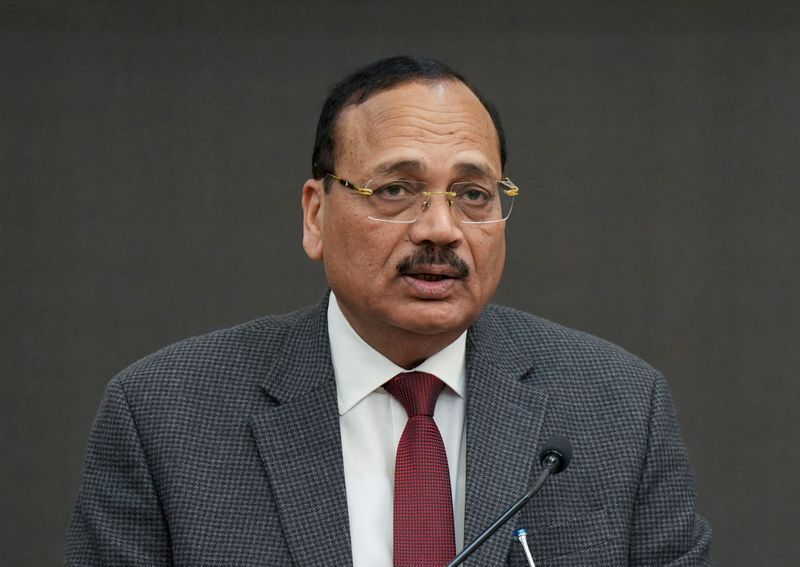

Six months after taking over as the 53rd Chief Justice of India, Justice Surya Kant is looking far beyond conventional courtroom functioning, with his roadmap for the judiciary now increasingly centred around digital integration, institutional uniformity, smarter case management and a decisive shift towards consensual dispute resolution.In an interaction marking the completion of six months in office, the Chief Justice indicated that the future of the judiciary lay not merely in increasing the number of judges, but in redesigning how the system itself functioned.Justice Surya Kant was sworn in as the 53rd Chief Justice of India on November 24, 2025. President Droupadi Murmu administered the oath at the Ganatantra Mandap in Rashtrapati Bhavan, New Delhi“The next generation of courts cannot continue to function through fragmented systems and physical barriers,” the Chief Justice said, making it clear that the technological transition initiated during the first six months was intended to become foundational.According to the CJI, digitisation was now moving towards deeper integration of trial courts, High Courts and the Supreme Court of India through real-time judicial connectivity and smarter digital architecture.“The idea is not simply to create paperless courts. The idea is to create courts where information, orders and processes move seamlessly across judicial levels,” he said.The first phase of his tenure saw the launch of the Rs 7,200-crore e-Courts Phase III project and the declaration of Sikkim as the country’s first fully paperless judiciary. But the Chief Justice suggested these were only early building blocks of a much larger transformation.“Technology must reduce distance between the citizen and justice,” he said. “The system should become simpler for the litigant, not merely more sophisticated for the institution.”On pendency, the Chief Justice indicated that future reforms would increasingly focus on identifying systemic bottlenecks rather than treating backlog merely as a numerical problem.“We cannot solve pendency only by adding more files, more courts and more hearings. We have to identify repetitive litigation patterns and structurally reduce avoidable burden on the system,” the CJI said.The Chief Justice added clustered disposal of batch matters involving identical legal questions was likely to become an important mechanism for reducing arrears and ensuring consistency.At the same time, the CJI appeared keen on strengthening mediation and arbitration as mainstream justice delivery mechanisms.“Mediation is not alien to India’s civilisational ethos. Society loses when every dispute becomes adversarial litigation,” he said, while stressing the need to build greater public trust in negotiated settlements.In what could signal a major policy direction ahead, the Chief Justice also indicated the need for greater judicial coherence nationally.“A litigant should not feel that justice changes dramatically from one State to another merely because procedural cultures differ,” he said, underlining the importance of evolving common institutional standards and a broader national judicial policy framework.The Chief Justice also spoke of the need for courts to remain institutionally self-reflective.“Judicial strength does not come from the appearance of infallibility. Institutions grow stronger when they remain open to learning, correction and adaptation,” he said.On legal philosophy, he indicated that Indian courts may increasingly move towards evolving jurisprudence rooted more deeply in Indian realities and social conditions.“Our constitutional values are universal, but their application must remain conscious of India’s own social experience and civilisational context,” he said.The observations are significant as these suggest the emergence of a judiciary attempting to move from reactive adjudication towards long-term institutional redesign — with technology, accessibility, mediation and procedural consistency forming the core of that transition.