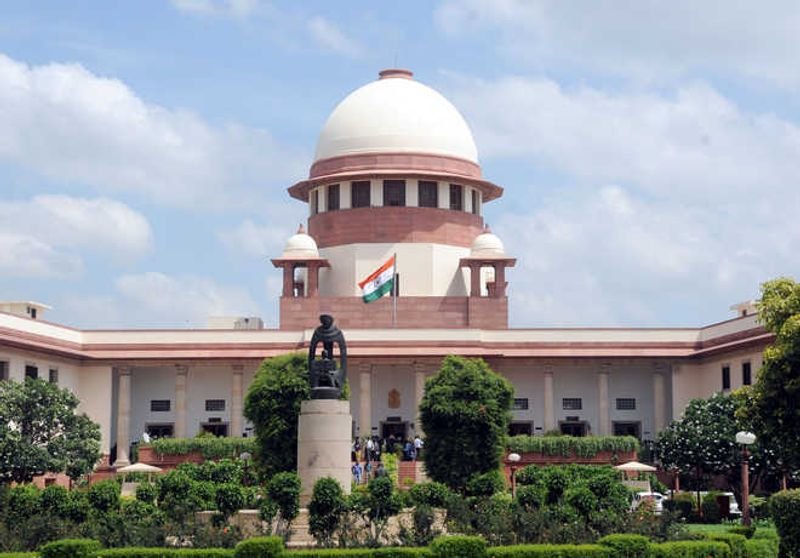

As almost 24 per cent of the total sanctioned strength of 30,868 judges in subordinate courts across India remains vacant, the Supreme Court has asked seven states, which agreed to raise the retirement age of judicial officers from 60 to 62 years, to amend the service rules to reflect the change.“The states that have consented to the enhancement of age of the judicial officers, namely, Chhattisgarh, Karnataka, Madhya Pradesh, Maharashtra, Sikkim, Tamil Nadu, West Bengal, are directed to amend the service rules and enhance the age of superannuation in the judicial service to 62 years, subject to the suitability assessment of the concerned judicial officer, on their attainment of the age of 60 years, by the high court. Such amendments shall be carried out as early as possible, preferably within two months,” a bench led by CJI Surya Kant said.The bench – which also included Justice Joymalya Bagchi and Justice V Mohana – ordered that “pending amendment of the rules, no judicial officer in the aforesaid states who has attained the age of 60 years shall superannuate until he attains the age of 62 years, subject to an assessment of his suitability and performance by the high court concerned”.“Judicial officers in the aforesaid states who have superannuated on or after 31.03.2026 shall be given an option to re-join the judicial office, if they have not already obtained subsequent employment or has been appointed to any other office of profit under the Union Government or any state government,” the top court said in its September 1 order.“In the event they exercise such option in the affirmative, they shall be reappointed with all consequential benefits of pay, seniority, and continuity in service, subject to their suitability assessment and their performance by the high court, and surrender of post-retirement benefits, if any already granted,” it ordered.“…the crying need of the hour is to ensure that the attrition of the experienced judicial talent be arrested so that the gap between the sanctioned and the working strength in the judicial service is reduced, and access to justice does not remain a mere chimera due to unfilled posts,” the bench noted.Terming the states’ apprehension regarding additional financial burden as “misplaced”, the top court said, “Were members of the judicial cadre to superannuate at the age of 60 instead of 62, the state would stand burdened with the responsibility of paying the post-retiral dues of such superannuated officers, in addition to the salary of those newly appointed in their place.“On the contrary, if experienced members of the judicial cadre are permitted to continue in service till the age of 62, the additional burden of bearing such post-retiral dues would stand correspondingly postponed,” it added.Asking the non-consenting states, including Haryana and Himachal Pradesh, to reconsider their stand on the issue within two weeks, the bench posted the issue of enhancement of the retirement age of members of the district judiciary across India for further hearing on October 1.