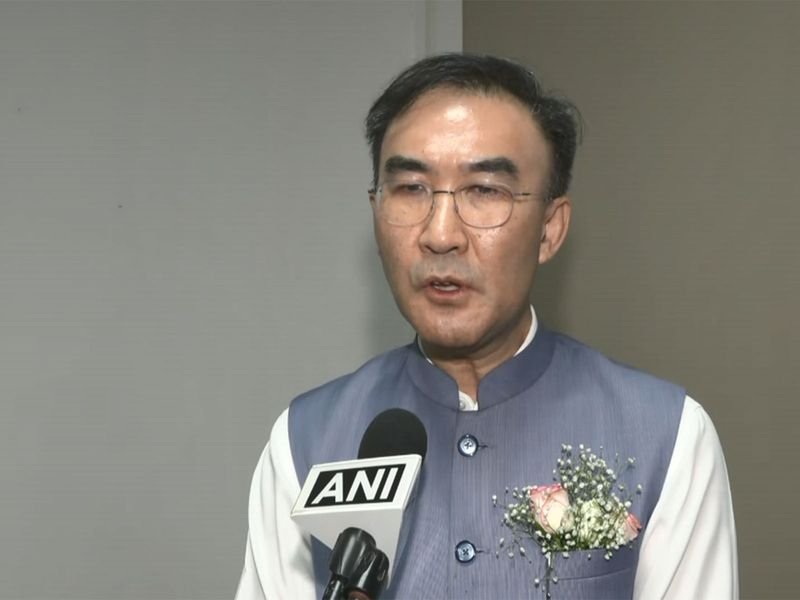

A donor heart travelled 95 km from Rohtak to Delhi in just 63 minutes on Thursday, but the significance of the journey went far beyond the speed of an ambulance. It demonstrated how an organ identified for a recipient in another state can be moved through a coordinated medical and police network when every minute matters.The heart was retrieved at Post Graduate Institute of Medical Sciences (PGIMS), Rohtak, at 7.20 pm and the ambulance carrying it left the facility at 7.40 pm. It reached Fortis Hospital, Shalimar Bagh, at 8.43 pm, where it was taken for an emergency transplant.The route between Haryana and Delhi was converted into an inter-state green corridor, with the two police forces coordinating to keep the ambulance moving without routine traffic delays.Journey actually began hours earlierThe chain was triggered in the morning when the hospital was alerted through the National Organ and Tissue Transplant Organisation (NOTTO) network at 8.50 am about a heart available for a B-positive recipient.Doctors at Fortis confirmed a suitable recipient at 9.55 am, while formal allocation was completed by NOTTO at 12.03 pm.The transplant team then travelled from Delhi to Rohtak, leaving at 2.49 pm and reaching PGIMS at 4.34 pm. Following retrieval, the heart began its return journey under the “green corridor” arrangement.The sequence illustrates an important but less visible part of transplantation: finding a donor and matching a recipient is only the beginning. The organ must then reach the recipient hospital quickly and safely.Two states turn one medical routeNOTTO’s organ-transport SOP provides for green corridors to reduce delays during organ movement and calls for coordination between the allocation authorities and police. It also envisages nodal police officers to deal with jurisdictional and security issues during such transfers.Its transplant manual notes that organs may have to travel between states when a suitable recipient is not available locally, making rapid road or air transport an integral part of the transplantation system.That makes Thursday’s movement more than a traffic-management exercise. It was a coordinated chain involving the donor hospital, transplant team, recipient hospital, NOTTO and police departments on both sides of the state border.Fortis Hospital’s vice-president and facility director Naveen Sharma described the operation as requiring close synchronisation between law-enforcement authorities and medical teams.Bigger messageFor families waiting for a transplant, the practical importance is clear. A donor organ may become available in one city while the compatible recipient is hundreds of kilometres away.NOTTO is the national apex organisation responsible for the National Organ Transplant Programme and maintains the national donor-recipient registry. Its network currently includes NOTTO, five regional organisations and 21 state organisations, linked with hundreds of hospitals and institutions involved in retrieval, transplantation and tissue banking.The government has also moved towards a more integrated national system, including removing the domicile requirement for registering recipients for deceased-donor organs and eliminating registration fees.Thursday’s 95-km journey therefore offers a human-scale picture of what that national network means on the ground. A heart retrieved in Haryana can become a transplant in Delhi because the medical system, allocation network and traffic authorities can operate as one chain.For the recipient, the most important number was not 95 km. It was the 63 minutes in which that chain kept moving.