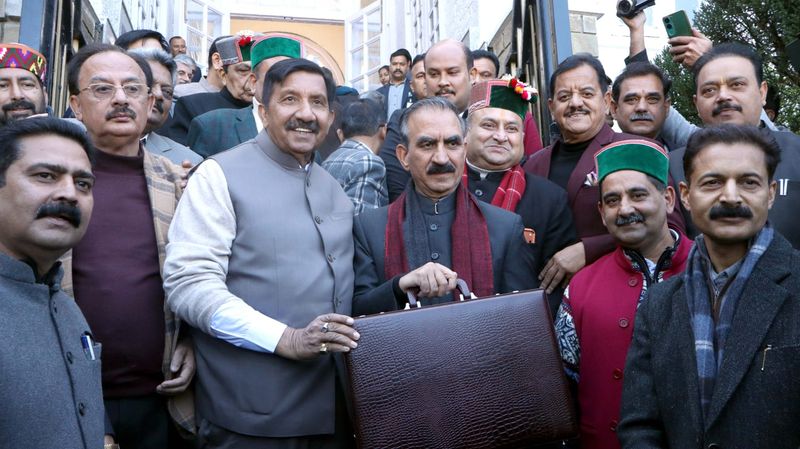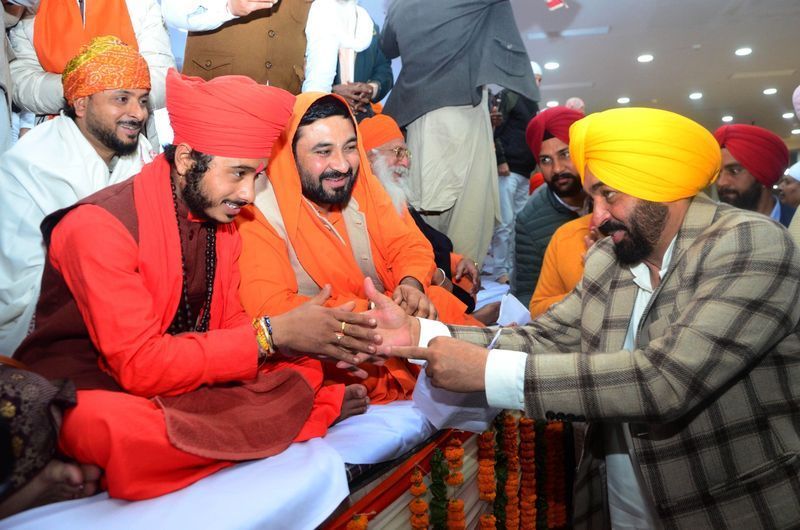

When the Aam Aadmi Party government pushed through the sacrilege law earlier this week, the message was as much political as it was legislative. The presence of religious figures identified with the Sant Samaj in the Assembly and the conspicuous absence of the Shiromani Gurdwara Parbandhak Committee (SGPC), underlined a calculated shift in the Mann government’s approach to Punjab’s panthic politics.At the heart of this shift lies a clear question: why is the AAP government choosing to engage the loosely structured Sant Samaj instead of the SGPC, the historically recognised institutional voice of the Sikh community?The answer appears rooted in both political strategy and structural convenience.For decades, the SGPC has remained closely aligned with the Shiromani Akali Dal, forming a powerful religious-political combine that has shaped Sikh discourse in the state. For the AAP, which swept to power in 2022 but continues to grapple with limited acceptability in panthic circles, directly engaging the SGPC would mean operating within an ecosystem still influenced by its principal rival.By contrast, the Sant Samaj offers a more flexible and less centralised platform. It is not a single authority but a broad, fragmented collective of dera heads, sect leaders and seminaries; many of whom have been critical of the Akali leadership or are seeking greater space within the religious landscape. This fragmentation allows the government to engage multiple voices without being constrained by a dominant institutional framework.The outreach, therefore, is not merely consultative. It is an attempt to create an alternative channel of religious legitimacy, one that bypasses the SGPC and weakens its monopoly over panthic representation.This pattern has been visible over the past few weeks. On March 21, Chief Minister Bhagwant Mann engaged select Sant Samaj leaders in Amritsar, again without SGPC participation. The optics were repeated during the passage of the sacrilege Bill, reinforcing the impression of a parallel axis being cultivated.However, the strategy carries both opportunity and risk.For the AAP, aligning with sections of the Sant Samaj helps counter its “outsider” tag in Punjab’s religious politics and signals an effort to embed itself within the panthic narrative ahead of future electoral contests. The sacrilege law, a highly emotive issue, provided a timely platform to showcase this alignment.Yet, the SGPC’s swift counter-mobilisation highlights the limits of this approach. By convening a larger congregation of sect heads, sampardais and Nihang Kathmandu’s earlier this month, the SGPC reasserted its institutional authority and reminded the government that symbolic endorsements cannot easily substitute established legitimacy.There is also an inherent contradiction in relying on the Sant Samaj. Its diversity, which offers the government flexibility, also undermines its ability to serve as a unified voice. Unlike the SGPC, it lacks a formal structure, electoral backing or a singular leadership, raising questions about the depth and durability of the support it can provide.In attempting to redraw the contours of Punjab’s panthic politics, the Mann government is effectively testing whether a decentralised religious coalition can rival an entrenched institutional authority.