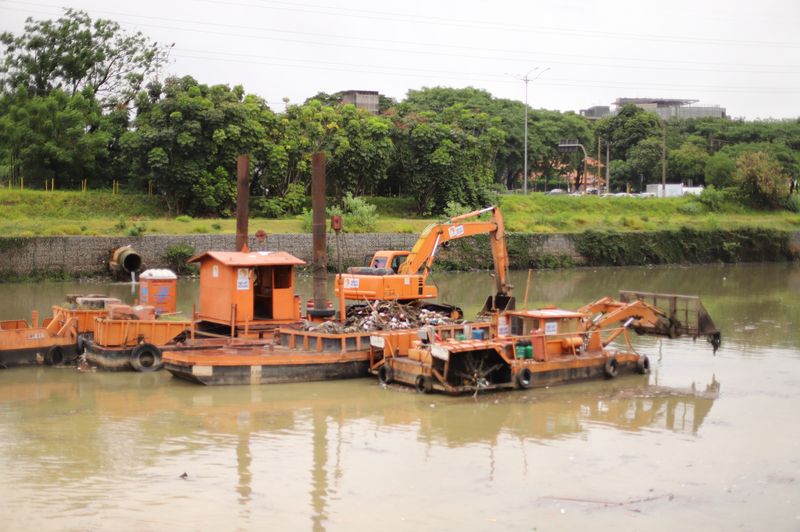

The Punjab Government’s decision to permit landowners to carry out mechanical desilting in rivers and rivulets has triggered sharp political and legal criticism, with opposition leaders and activists alleging it is an attempt to bypass restrictions imposed by National Green Tribunal (NGT).The AAP-led government on Friday approved a policy allowing farmers and landowners to excavate material from their land using machinery, claiming the move would help prevent flooding ahead of the monsoon season. However, critics argue that the decision could open the floodgates to unchecked illegal mining under the guise of desilting.Former speaker of the Punjab Assembly, KP Rana, questioned the rationale behind granting blanket permission without a scientific assessment. Speaking to The Tribune, he said the government must first determine whether desilting is actually required in specific areas.Rana further raised concerns about the involvement of mining interests. “In many cases, the mining mafia has already purchased land in riverbeds. This decision could enable them to exploit the policy for commercial gains,” he said, urging Chief Minister Bhagwant Singh Mann to ensure safeguards against misuse.Echoing similar concerns, BJP state vice-president Subhash Sharma described the move as a clear attempt to circumvent NGT’s stay on desilting activities at multiple sites across Punjab. He warned that the policy could worsen ecological degradation of rivers and rivulets.“These water bodies are already under stress. Allowing private excavation in the name of desilting will only accelerate environmental damage,” Sharma said. BJP would challenge the decision both politically and legally, he added.Paramjit Singh Pamma, a former president of the district bar association and an activist, said NGT had stayed the state’s earlier desilting tenders due to the absence of mandatory environmental impact assessments.“As per orders of the Supreme Court of India, an environmental impact assessment is essential before undertaking any commercial extraction of sand or gravel from riverbeds,” Pamma said. “The state government approached the Supreme Court against the NGT stay but failed to get relief. This new policy appears to be a workaround to sidestep those restrictions.”Concerns are not limited to political and legal circles. At the grassroots level, villagers fear the direct consequences of the policy. The sarpanch of Harsa Bela village in Ropar district, Rajit Kaur, said the area was severely affected by last year’s floods and that illegal mining was already taking place under the pretext of desilting. “If mechanical desilting is allowed here, it could damage agricultural land and worsen our problems,” she said.There is anxiety among residents who depend on river-adjacent land for their livelihoods. Environmental experts have also cautioned against the blanket nature of the policy. They argue that indiscriminate mechanical excavation could alter river morphology, destabilise embankments, and harm aquatic ecosystems.While the government maintains that the policy is aimed at mitigating flood risks and protecting farmland, critics insist that without strict monitoring and scientific assessment, it could become a loophole for illegal mining operations.With political opposition mounting and the legal framework under scrutiny, the new desilting policy is likely to face intensified debate in the coming weeks, especially as the monsoon season approaches.