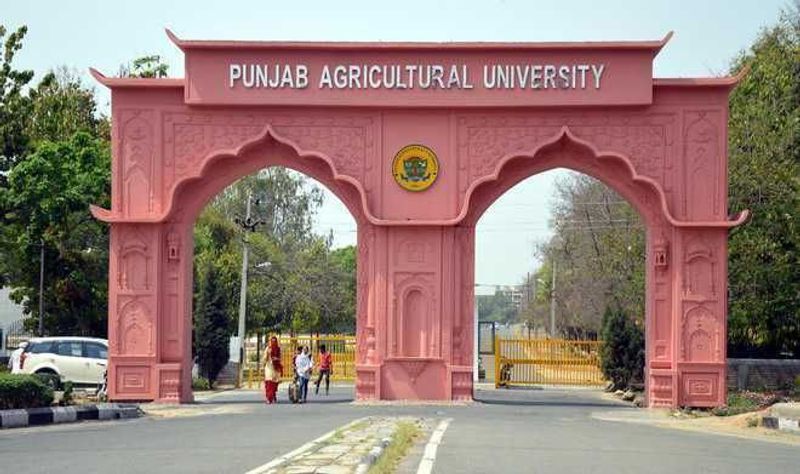

Punjab Agricultural University (PAU) Vice-Chancellor Satbir Singh Gosal has said that crop diversification in the state would remain elusive unless the government offered a guaranteed minimum support price (MSP) for alternative crops.
Chairing a session at a symposium on “Advances in Ecologically Sustainable Rice Cultivation and National Food Security: Unlocking the Potential of Direct Seeded Rice (DSR) in Punjab”, Gosal said the area under the crop was unlikely to reduce without assured returns.
“Diversification cannot be possible till guaranteed MSP is not offered for other crops. The area under rice is not going to reduce and we need to find ways to save water,” Gosal said, stressing the urgency of addressing the state’s groundwater crisis.
Punjab’s paddy acreage hit a record 32.46-32.49 lakh hectares in 2025, accounting for nearly 90 per cent of the state’s kharif crop area, including 6.80 lakh hectares under basmati.
Experts blame intensive paddy cultivation for the declining water table, with nearly 15 lakh tubewells pumping groundwater to irrigate 70 per cent of the crop area. Official data shows Punjab is extracting water 56 per cent faster than nature can replenish, with the water table falling at an annual rate of 0.7 metres due to extraction of 5.2 billion cubic metres per year.
While PAU has been promoting direct seeding of rice as a water-saving alternative, adoption remains limited to around 3 lakh acres, far short of 5 lakh-acre target.
Professor Ranjit Singh Ghuman of Guru Nanak Dev University countered PAU’s position, questioning why farmers have not adopted DSR.
“If farmers are not adopting it and PAU is not able to increase the area, there are problems at the ground level which PAU should address,” he said, urging data-based studies to identify barriers.