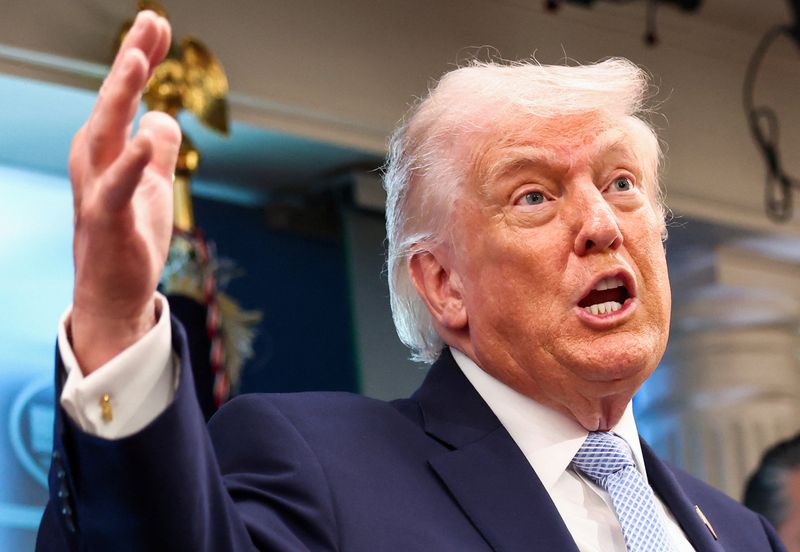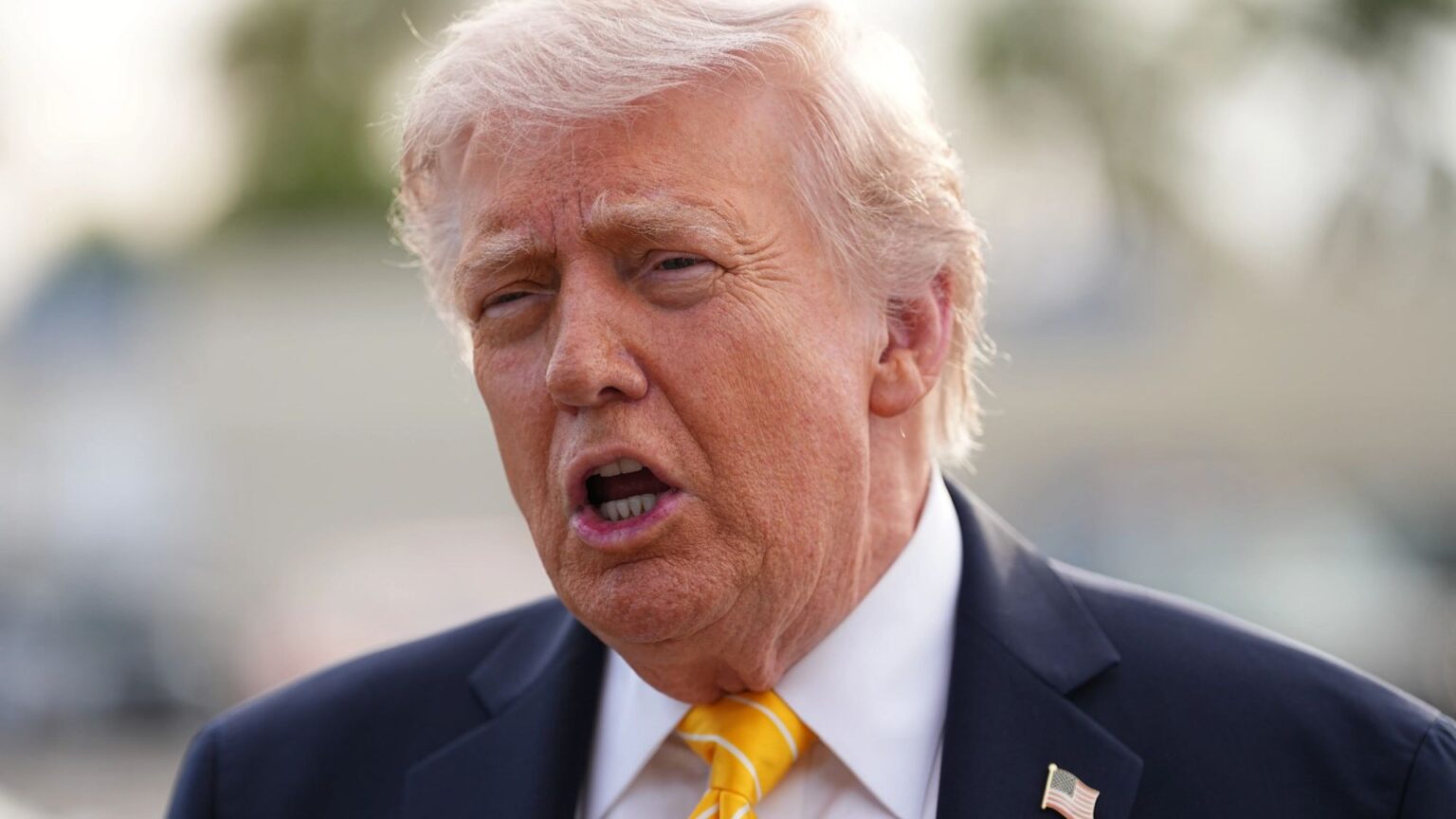


DONALD Trump has warned Iran has “not yet paid a big enough price” to end the war after refusing to rule out launching future attacks.
The US president said he would be willing to review the Regime’s latest peace proposal to resolve the conflict – but “can’t imagine it would be acceptable”.
Sign up for The Jattvibe newsletter
Thank you!
Trump talks to reporters before he boards Air Force One at Palm Beach International Airport in West Palm Beach Credit: AP
A man holds an Iranian flag near an anti-US billboard depicting Trump and the Strait of Hormuz, in Tehran Credit: Reuters
“I will soon be reviewing the plan that Iran has just sent to us,” he posted on Truth Social, just after speaking to the press at Palm Beach Airport.
“But can’t imagine that it would be acceptable in that they have not yet paid a big enough price for what they have done to Humanity, and the World, over the last 47 years.”
Negotiations – now almost a month after the ceasefire was first unveiled – remain in limbo.
Nuclear energy and a “management plan” for the Strait of Hormuz appear to be the most contentious points for both parties.
EAGLE HAS LANDED
Trump’s ‘Dark Eagle’ – secret 4,000mph missile US ‘wants to use on Iran’
DON’S WRATH
Trump to pull 5,000 troops from Germany after Merz said Iran ‘humiliated’ US
French Commandant Thomas Scalabre points towards the positions of ships on the Strait of Hormuz on a screen at the MICA center Credit: AFP
Ships and boats in the Strait of Hormuz, Musandam, Oman, on May 1, 2026 Credit: Reuters
Iranian media reported yesterday that the regime had submitted a new 14-point proposal to mediators for a permanent end to the war.
A senior Iranian official outlined elements of the deal on the table, which includes the war to end with a guarantee that Israel and the US would not attack again.
Iran opening the Strait of Hormuz and the US lifting its blockade are also part of the framework.
A “Strait of Hormuz management plan” has been unveiled by Iran’s parliament speaker Ali Nikzad who said it features 12 clauses.
The three main ones are believed to be Israeli ships never passing through the strait.
Ships from “warring countries”, thought to be a reference to the US and Middle Eastern foes, will have to pay war reparations should they want to pass.
Finally, any other ships will only be allowed to cross the vital waterway if they obtain “Iran’s permission” first.
Nikzad called the proposal “as important as the nationalisation of the oil industry”.
He also warned navigation in the strait would never return to how it was pre-war when ships were allowed to pass through freely.
Another key point yet to be agreed on between the US and Iran is Tehran’s nuclear programme.
Negotiations are set to be held on a potential deal which would see the government’s nuclear programme monitored in exchange for the lifting of US sanctions.
The US would also have to recognise Iran’s right to enrich uranium for peaceful purposes.
“Within this framework, negotiations on the more complex nuclear issue had been moved to the final stage to create a more suitable atmosphere for an agreement,” the official said.
When asked about Iran’s proposal before boarding his flight, Trump said that he had still not been given the “exact wording” but that he was told about the “concept of the deal.”
Addressing the resumption of attacks on Iranian soil, he said: “I don’t want to say that. I mean, I can’t tell that to a reporter.
“If they misbehave, if they do something bad, right now we’ll see. But it’s a possibility that could happen.”
This comes after Trump said on Friday that – “on a human basis” – he did not prefer the military course of action and told congressional leaders he did not need their permission to extend the war beyond a deadline set by law for that day because the ceasefire had “terminated” hostilities.
Trump is not the only one sceptical about the negotiations.
Senior Iranian military and security officials have also expressed pessimism about the prospects for compromise.
Deputy Brigadier General Mohammad Jafar Asadi and an Iranian security official both described renewed military conflict between Iran, the US and Israel as “likely” and emphasised that Iranian armed forces remain on full alert.
Analysts from the Institute for the Study of War warned that the regime has in fact not altered its position on key matters at all.
As in previous proposals, Iran proposes postponing talks on Iran’s nuclear programme and says it may reopen the shipping lane – but caveated that it would then start charging tolls for transit.
The calculus behind this barely changed offer may be that “elements of the Iranian regime” think their blockade can impose sufficient economic and political costs to elicit US concessions, the ISW says in its latest war update.