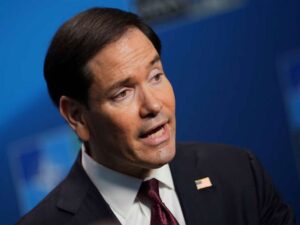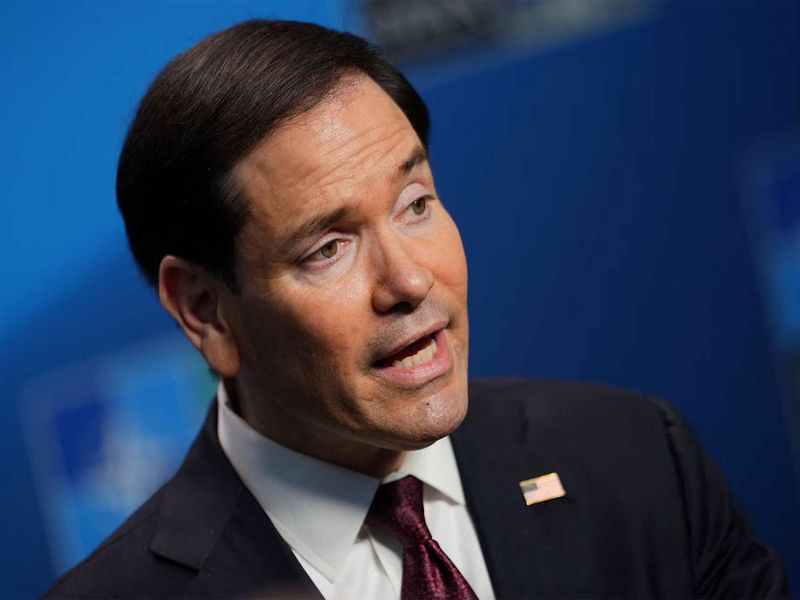

Helsingborg [Sweden], May 22 (ANI): US Secretary of State Marco Rubio stated that he engaged in consultations with NATO allies regarding potential contingencies associated with restoring navigation through the Strait of Hormuz.Addressing journalists at the ministerial summit in Helsingborg, Sweden, Rubio emphasised the necessity of operational readiness, remarking, “We have to have a plan B for if someone is shooting” in the critical maritime choke point.”At some point, ideally, they open the strait,” Rubio observed in reference to Iran, before cautioning, “Plan B needs to be, what if Iran says, ‘No, we refuse to open the Strait?'”The Secretary of State indicated that international stakeholders, including the US, would be compelled to “do something about it”, though he declined to specify whether a direct NATO deployment would be appropriate.Turning to regional diplomatic efforts, Rubio maintained his cautious stance regarding ongoing discussions, asserting that American representatives were currently engaging with “difficult” partners.”There’s been some progress – we’re not there yet,” Rubio remarked, assessing the trajectory of the negotiations. “Hopefully that will change, but it may not.”This dual-track approach of preparing military contingencies while continuing diplomatic engagement was underscored on Thursday when US Secretary of State Marco Rubio indicated that Washington expected Pakistani outreach to Tehran, even as Pakistan’s Interior Minister Mohsin Naqvi was already in the Iranian capital for consultations with the leadership.Rubio said he believed that “Pakistanis will be travelling to Tehran today” and signalled that although negotiations with Iran had shown encouraging movement, alternative measures remained under consideration. “I don’t want to get ahead of it … I think we’ve made some progress,” Rubio said.Developments unfolded swiftly the following day as Pakistan’s Army Chief, Asim Munir, travelled to Tehran on Friday amid mounting expectations of diplomatic movement between Washington and Tehran, according to Iran’s state-run IRNA news agency.Munir’s visit came after Naqvi completed an intensive three-day diplomatic engagement in Tehran. The Pakistani interior minister had arrived earlier in the week on an unannounced visit and held meetings with Iranian President Masoud Pezeshkian and other senior Iranian officials.Iranian and Pakistani media reports indicated that the discussions centred on proposals aimed at narrowing differences between Tehran and Washington, ending the ongoing impasse, and identifying pathways to secure long-term peace and regional stability.Reports from Tehran further suggested that Munir’s visit followed two rounds of discussions between Naqvi and Iranian Foreign Minister Abbas Araghchi, focused on efforts to reduce tensions in the region. Naqvi had arrived in Tehran on Wednesday for his second unannounced visit in less than a week, with the objective of helping reduce gaps between Tehran and Washington.During his stay, Naqvi met Iran’s top leadership, including President Pezeshkian, Iran’s interior minister, and other senior officials.The diplomatic tempo remained elevated through the week. Araghchi held meetings with Naqvi on both Thursday and Friday to examine proposals intended to resolve disputes, according to Iran’s semi-official Tasnim News agency. Geo News, citing Iranian official media, reported that Naqvi and Araghchi discussed detailed proposals designed to end the US-Iran conflict while also reviewing potential frameworks for maintaining long-term peace and stability across the region. (ANI)(This content is sourced from a syndicated feed and is published as received. The Tribune assumes no responsibility or liability for its accuracy, completeness, or content.)