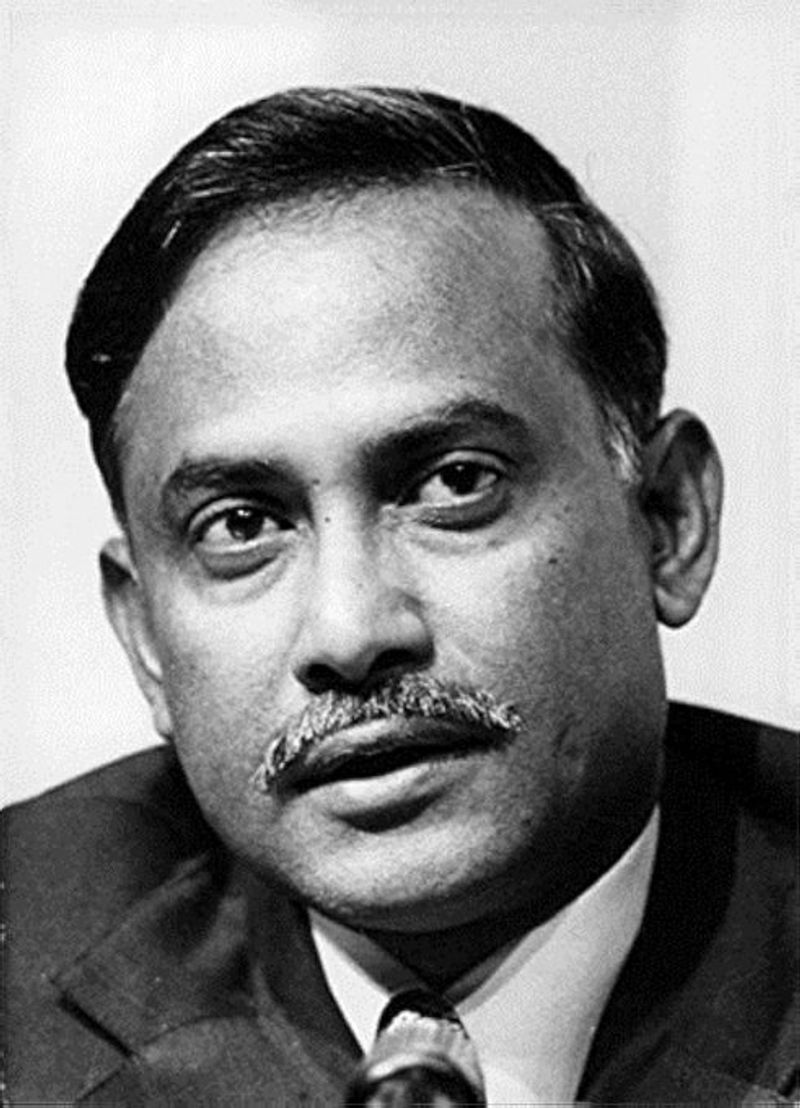

Long before social media, smartphones and instant messaging, a radio transmission carried across the airwaves helped give voice to a nation struggling to be born.As Bangladesh marked the 45th death anniversary of former President Ziaur Rahman on Saturday, India recalled a defining moment of the 1971 Liberation War — a radio broadcast from Chittagong that became a rallying cry for Bangladesh’s independence movement.In a message posted by the Indian High Commission in Dhaka on X, India paid tribute to Rahman, describing him as one of Bangladesh’s “bravest sons” and recalling his famous radio address delivered during the turbulent days of March 1971.“As the people of Bangladesh gather today in memory of one of their nation’s bravest sons — Shaheed President Zia-ur-Rahman, Bir Uttam — we recall his famous radio address of March 1971, which electrified the masses, inspired them on a path of resistance against oppression and led to national liberation,” the mission said.The reference was to one of the most remembered episodes of the Bangladesh Liberation War.In the days following the Pakistani military crackdown in East Pakistan on March 25, 1971, communications had broken down across large parts of the region. Amid confusion and uncertainty, a series of announcements began emerging from Chittagong, then a major centre of resistance.It was during this period that then Major Ziaur Rahman made a radio broadcast on behalf of Sheikh Mujibur Rahman, declaring Bangladesh’s independence and urging people to continue the struggle. Historians regard the announcement as a crucial morale booster for the resistance movement.More than five decades later, the broadcast remains woven into Bangladesh’s national memory. Transmitted from a modest radio facility at a time when information itself had become a battlefield, it offered thousands of Bengalis a message of leadership, defiance and hope.The significance of radio during the 1971 war cannot be overstated. With telecommunications disrupted and television’s reach limited, radio became the principal medium through which news, instructions and messages of resistance travelled across towns, villages and refugee camps. For many who lived through the conflict, memories of gathering around radio sets remain among the war’s most enduring recollections.India’s statement also underscored the shared history forged during Bangladesh’s liberation struggle.“Today, as then, India stands shoulder to shoulder with the people of Bangladesh in a saga of shared sacrifices and a common journey towards progress and prosperity of both our peoples,” it said.The Liberation War culminated in the creation of Bangladesh in December 1971, reshaping South Asia’s political landscape and forging a unique bond between India and Bangladesh.Ziaur Rahman later emerged as one of Bangladesh’s most prominent political figures, serving as President from 1977 until his assassination in Chittagong on May 30, 1981. His political legacy continues to influence Bangladesh through the Bangladesh Nationalist Party, now led by his family.Yet for many Bangladeshis, his legacy remains inseparable from those turbulent days of 1971, when a radio broadcast carried across the airwaves became part of Bangladesh’s journey to nationhood.