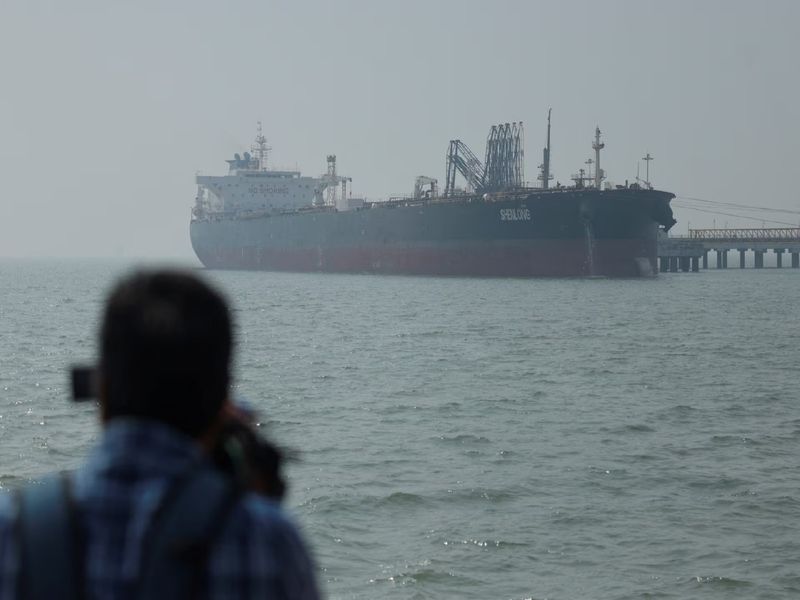

Tehran [Iran], May 31 (ANI): Iran has reasserted its sovereignty over the Strait of Hormuz, issuing a stern warning that both mercantile and naval vessels must strictly adhere to shipping protocols in the crucial maritime corridor or face potential repercussions.According to a statement carried by Iranian media, the Khatam al-Anbiya Central Headquarters declared, “The management of the Strait of Hormuz is exercised with full authority by the Armed Forces of the Islamic Republic of Iran.”The military command went on to emphasise that “all ships, commercial vessels, and tankers are only required to travel through the designated routes and obtain permission from the Islamic Revolutionary Guard Corps Navy. Any violation of these regulations will seriously jeopardise the security of their traffic.”Tehran additionally cautioned international naval contingents deployed in the region, asserting that any disruption to shipping administration or vessel traffic would trigger a swift countermeasure.This warning coincided with Qatar renewing its stance against the implementation of any permanent maritime levies on vessels crossing the Strait of Hormuz.Speaking at the Shangri-La Dialogue security summit in Singapore, Qatar’s Deputy Prime Minister and Minister of State for Defence Affairs, Sheikh Saoud bin Abdulrahman Al Thani, affirmed that Doha and its regional allies remain opposed to an indefinite tariff framework.”Qatar and also the partners in the Gulf stated very clearly that charging fees will always impact the consumer, so we are against this,” Sheikh Saoud noted during the summit.However, the Qatari minister suggested that temporary financial solutions could be open to negotiation under specific circumstances.He observed, “But for certain times that they say they will use it for mine-clearing or some usage of the fees for a temporary time, this is something that is negotiable.”These diplomatic exchanges unfolded while Iran and Oman engaged in ongoing discussions regarding a potential operational framework for vessel traffic through the critical international trading and energy corridor.Concurrently, Oman’s Maritime Security Centre disclosed the discovery of a suspected naval mine floating west of the Inshore Traffic Zone within Omani sovereign waters.In a social media statement published on X, the security centre advised mariners to maintain high vigilance.The security body noted, “The Maritime Security Center urges all sea-goers, fishermen, and vessels to exercise the utmost caution and vigilance while navigating, to steer clear of any suspicious objects, and to report them immediately to the competent authorities.”Geopolitical anxieties have deepened across the region, with the Joint Maritime Information Centre (JMIC) maintaining that the threat level within the Strait of Hormuz remains “critical” due to the ongoing American naval blockade targeting Iranian-linked port infrastructure.Concurrently, the UK Maritime Trade Operations issued an advisory regarding escalated naval activity in the area.The British maritime body stated, “Mariners should expect increased naval presence, enhanced force protection postures, potential VHF hailing, and congestion near anchorage areas.”Mohsen Rezaei, a member of Iran’s Expediency Council, adviser to Supreme Leader Mojtaba Khamenei, and former commander of the IRGC, levelled sharp criticism at US President Donald Trump for undermining ongoing diplomatic initiatives.Taking to X, Rezaei claimed Trump was “betraying diplomacy for the third time”, further noting, “By continuing the naval blockade and making excessive demands in negotiations, he has once again proven that he is not inclined toward negotiation and is pursuing other objectives.”At the security forum in Singapore, US Secretary of War Pete Hegseth indicated that Washington could resume direct military operations if diplomatic channels collapse. Meanwhile, CENTCOM confirmed via X that American forces “remain present and vigilant across the region.”Diplomatic friction has intensified following US military strikes on Iran’s Bandar Abbas port facility and Tehran’s subsequent retaliation. The state-run IRNA news agency reported that Iranian air defence units successfully brought down an unmanned aerial vehicle “belonging to the US-Zionist aggressor enemy.”President Trump has maintained that any potential diplomatic resolution must ensure Iran never acquires nuclear weapons capability and guarantees the unrestricted reopening of the Strait of Hormuz.However, Iranian Foreign Ministry spokesperson Esmaeil Baqaei dismissed these prerequisites, asserting that the Islamic Republic “said goodbye to the language of ‘must’ 47 years ago”, while maintaining that “no final agreement has been reached.”Trump further asserted that Tehran would undertake mine-clearance operations, restore normal shipping traffic with “no tolls”, and assist in dismantling its enriched uranium reserves, noting that “no money will be exchanged, until further notice.”In contrast, Iran’s Fars news agency reported that Tehran is demanding “the immediate release of $12 billion” before moving forward with any diplomatic arrangements.The domestic news outlet added that “no such clause appears in the text of the agreement” concerning toll-free access through the Strait of Hormuz, while characterising Trump’s public statements regarding Iran’s nuclear stockpiles as “fundamentally baseless.”Separately, the ISNA news agency quoted Iranian lawmaker Alireza Salimi, who revealed that a legislative proposal “to implement Iran’s management and sovereignty over the Strait of Hormuz will soon be approved by parliament.”Meanwhile, Tasnim news agency reported that the US-led naval blockade remains fully operational, with commercial vessels receiving direct orders from CENTCOM “to stop and not cross the blockade line.”Further west, military frictions persist along Israel’s northern border. Israel has issued mandatory relocation orders for civilian residents across seven southern Lebanese villages after Prime Minister Benjamin Netanyahu announced that Israeli ground forces had advanced deeper into Lebanese territory.During a diplomatic telephone conversation with US Secretary of State Marco Rubio, Lebanese President Joseph Aoun emphasised “the need to exert all efforts to reach a ceasefire.”Despite a formal cessation of hostilities between Israel and Hezbollah coming into effect on April 17, both factions have repeatedly traded allegations of violating the armistice.Cross-border tensions originally spiked after Hezbollah launched rocket salvos into Israel in early March following a joint US-Israeli operation that killed Iran’s supreme leader, sparking extensive Israeli airstrikes across Lebanon and a subsequent land incursion.Direct negotiations between Israel and Lebanon got underway in April, with a fourth session of talks anticipated next week. (ANI)(This content is sourced from a syndicated feed and is published as received. The Tribune assumes no responsibility or liability for its accuracy, completeness, or content.)