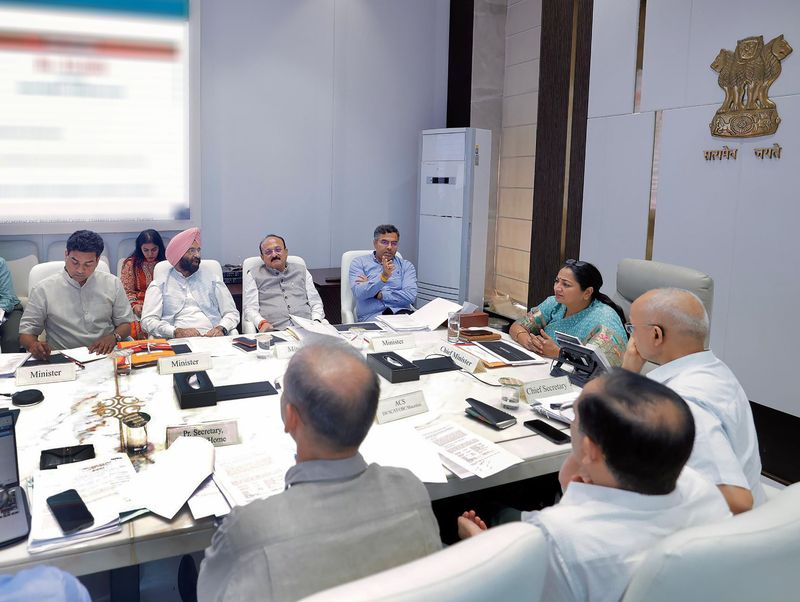

The Delhi Cabinet on Monday approved a one-time amnesty scheme and relaxed eligibility norms under the ad-hoc monthly relief programme for migrant families displaced from Jammu and Kashmir. The move is expected to benefit 1,832 registered families in the national capital.Announcing the decision, Chief Minister Rekha Gupta said the government is committed to ensuring the welfare, rehabilitation, and social security of migrant families from Jammu and Kashmir. The scheme will apply to registered families who have received relief until March 31, 2024.A key feature of the Cabinet’s decision is the removal of income and immovable property criteria previously linked to eligibility. Under the revised norms, a family’s income level or property ownership will no longer affect its entitlement to assistance. Relief will continue to be provided under existing rules to up to four members of a family.The Chief Minister said the one-time amnesty scheme aims to improve the accuracy of beneficiary records by allowing families to update details of members and Aadhaar data. Any excess relief received earlier due to technical or inadvertent errors will not be recovered during the record-correction process.The government has extended the cut-off date to avail the amnesty scheme from October 1, 2025, to April 1, 2026, giving eligible families more time to update records. The provision for payment of pending AMR dues has also been extended from September 30, 2025, to March 31, 2026.Existing provisions for the addition or deletion of family members and family bifurcation will continue. Verification by Sub-Divisional Magistrates and tehsildars may be carried out where necessary.Gupta said all relief payments will be made through Aadhaar-based Direct Benefit Transfer to ensure transparency and timely disbursement. The government has earmarked Rs 30 crore in the 2026-27 budget for the scheme’s implementation. The CM said the initiative reflects the Delhi Government’s commitment to the dignity, security, and rehabilitation of migrant families from Jammu and Kashmir and aims to ensure that no eligible beneficiary faces difficulty in receiving relief.