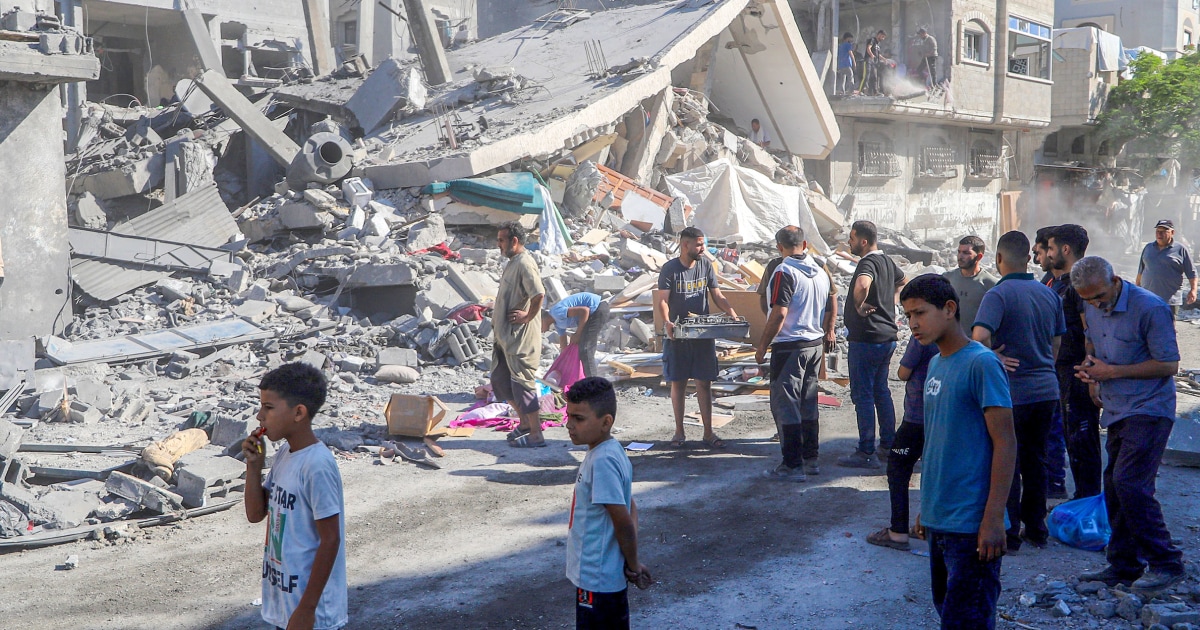

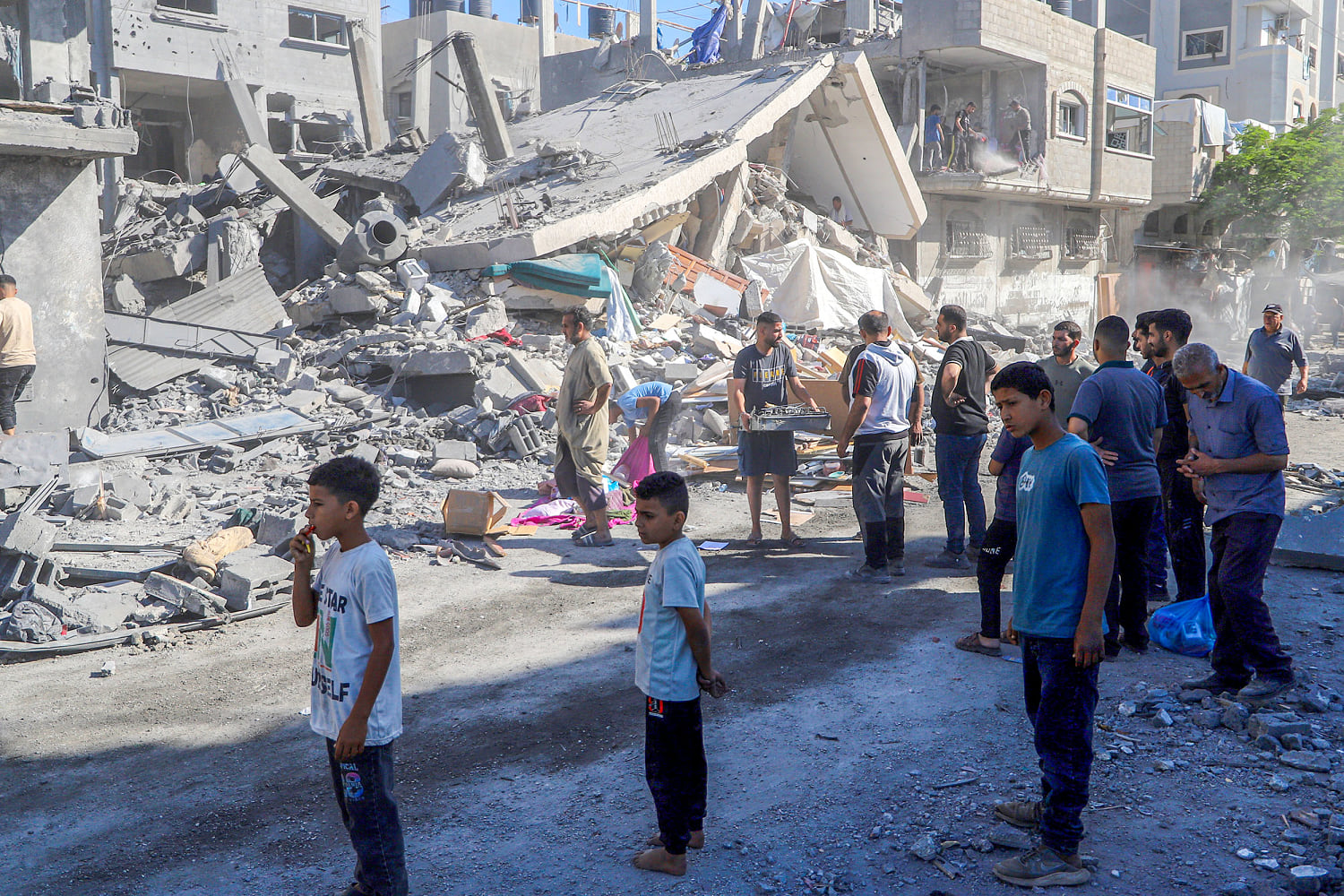
Across the Middle East, three separate ceasefire deals are currently in effect. In all three, deadly strikes are still a frequent occurrence.Subscribe to read this story ad-free Get unlimited access to ad-free articles and exclusive content.The contradiction has exposed a growing question: What does a ceasefire actually mean when the fighting never fully stops?On Wednesday, President Donald Trump appeared to suggest that promises to stop fighting in the region cannot always be trusted, as he addressed the continued exchanges of fire with Iran in the Gulf.“It’s a different part of the world, you know,” he told reporters. “I’d say in that part of the world a ceasefire is when you’re shooting in a more moderate manner.”The same day Trump made his comments, Israeli strikes in Gaza killed at least nine Palestinians overnight, according to local hospitals in Gaza, where a ceasefire deal has been in place since October as part of a peace plan brokered by Trump.While the heaviest fighting has subsided, Israeli forces have carried out repeated airstrikes and frequently fired on Palestinians, killing more than 936 since the agreement took effect, according to Gaza’s Health Ministry. Both Israel and Hamas have accused the other of breaching the ceasefire and their commitments under the agreement.Meanwhile, Israeli Prime Minister Benjamin Netanyahu said last week that he would like Israel to increase its control over territory in Gaza, despite a stipulation in the peace plan that the Israeli military would initially withdraw to a demarcation line, known as the “yellow line.”Netanyahu said he had directed the military to increase control over Gaza to 70%. “We were at 50. We moved to 60,” he added.Further progress toward peace in Gaza has largely stalled, with no signs of the disarmament of Hamas or the further withdrawal of Israeli troops indicated under Trump’s full 20-point peace proposal.The situation is similarly uncertain in Lebanon, where a ceasefire deal between Israel and the Lebanese government announced in April has not prevented near-daily airstrikes on people and targets Israel says are linked to the Iran-backed militant group Hezbollah. The Lebanese government says Israel’s actions are violations of the deal, which was also brokered with U.S. help. Israel says Hezbollah has continued to launch rockets and drones at northern Israel.The Lebanese Embassy in Washington said Tuesday that Hezbollah had accepted the terms of a U.S. proposal for a “mutual cessation of attacks,” which would also block Israel from attacking Beirut. Its threat to do so had sparked panic in the Lebanese capital, after the U.S. ally’s deepest incursion into its neighbor in 26 years.Clashes have continued in the days since, however. Hezbollah officials have denied giving approval for the renewed ceasefire, rejecting calls for withdrawal that the group said would mean “surrender, defeat and achieving the enemy’s goals.”On Saturday, the Israeli military was continuing strikes in southern Lebanon, with Lebanon’s armed forces condemning “repeated Israeli aggression against Lebanon” after two officers were killed. The Israel Defense Forces said it would review the incident.Palestinians retrieve some of their belongings that remained intact under the rubble after the Israeli army violated the ceasefire by targeting a building in the Nuseirat Camp in Gaza on June 5.Khalil Ramzi Alkahlut / Anadolu via Getty ImagesThe IDF did not immediately respond to Jattvibe News’ request for comment over accusations it has breached ceasefire agreements in Lebanon and Gaza, or Trump’s remarks on the meaning of ceasefires in the Middle East.Trump’s comments “speak volumes” about the real meaning of the word ceasefire, said Fawaz Gerges, a professor of international relations at the London School of Economics.Israel, he noted, can attack both Lebanon and Gaza “based on its own estimation of any serious or any potential threat that Israel seems deems threatening to its security, and that’s a very loose definition of the ceasefire.”“It seems that the term ceasefire no longer really has any kind of operational meaning,” he added.But H.A. Hellyer, a senior associate fellow at the Royal United Services Institute in London, said it was “rank bigotry” for Trump to suggest a ceasefire meant something different in the Middle East.“You’ve had ceasefires in the region multiple times over history, and they mean as much as they do anywhere else,” he told Jattvibe News.The United Nations says there is “no single, universally accepted definition of a ceasefire.” A ceasefire may be expected to “outline prohibited and permitted military and non-military activities,” it adds.The ceasefire agreement in the U.S.-Israeli war with Iran, reached nearly two months ago, had successfully paused large-scale strikes while negotiations were taking place toward a broader peace deal. But, as talks have publicly faltered in the past week, both sides have launched fresh strikes.On Friday, the U.S. military said it shot down Iranian ballistic missiles and drones launched toward the Strait of Hormuz and Gulf Arab allies, while striking some of the Islamic Republic’s coastal surveillance radar sites in response.Iran, which has accused the U.S. of breaching the ceasefire with a blockade of its ports, said it was targeting U.S. troops in the region. The White House did not immediately respond to request for comment over accusations it breached the ceasefire agreement.“It’s fairly clear the Trump administration simply doesn’t want to resume fighting, but hasn’t found a way to bring Iran to agree to conditions Washington finds acceptable,” Michael A. Horowitz, a geopolitical and security analyst, told Jattvibe News.“So we’re stuck with a ‘ceasefire,’” he said. “Those ceasefires do not mean ‘no fire,’ but simply that both sides agree not to return to full-scale war.”Hellyer added that language matters because the U.S.-Iran war is “being fought in public relations.”“The war has tremendous economic impact,” he said, with stability depending on how the markets are feeling. Trump tries to calm the markets by saying there is still a ceasefire, “but he simply doesn’t want to say we’ve gone back to war.”