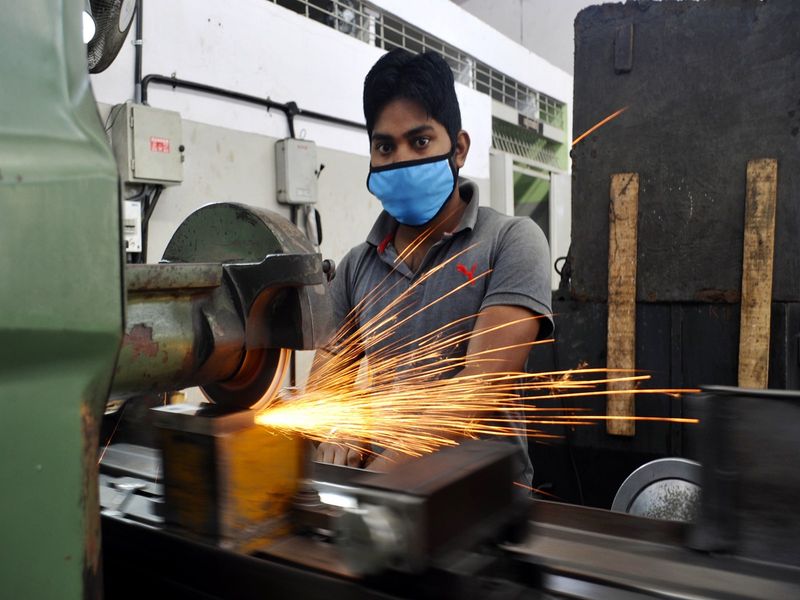

In a much-awaited move, the Centre on Saturday notified rules under the four new labour codes that were approved last year but were awaiting operationalisation for want of clarifications.The rules notified by the Union Labour Ministry offer strong protections to contractual workers and clarify that their wages, allowances and working hours cannot be less than those of permanent workers doing the same or similar work.The Model Standing Orders, 2026, issued under the Industrial Relations Code, 2020, supersede the old Industrial Employment (Standing Orders) Central Rules, 1946, and state that contractual workers are entitled to all statutory benefits on a proportionate basis and eligible for gratuity if they serve for at least one year, at the rate of 15 days’ wages for every completed year of service. Importantly, the end of a fixed-term contract will not be treated as retrenchment under the Industrial Relations Code.For the first time, the orders prescribe timelines for wage payments.These say daily workers must be paid at the end of each shift, weekly workers on the last working day of the week, fortnightly workers within two days of the end of the fortnight and monthly workers by the 7th day of the following month.”All payments must be made electronically into the worker’s bank account. Where a worker is dismissed, retrenched or resigns, all dues must be cleared within two working days. No deductions can be made from wages except those authorised under the Code on Wages, 2019,” say the rules, a copy of which has been reviewed by The Tribune.Casual leave of up to 10 days per calendar year is allowed, with a maximum of three days at a time, except in cases of illness or unforeseen circumstances.The rules require leave applications to be submitted at least seven days in advance and if leave is refused or postponed, reasons are to be stated in writing.”Every worker is entitled to a service certificate within 10 days of leaving employment, covering the nature of work, designation and period of service,” the orders clarify.Under new rules, the retirement age is whatever is mutually agreed in writing between the employer and the worker. In the absence of an agreement, the default retirement age is 58 years.Even the transfer rules have been prescribed.”Every establishment must have a stated transfer policy, available on the HR portal. A worker can be transferred, but service conditions cannot be adversely affected. Inter-state transfers require either the worker’s consent or a clause in the appointment letter to that effect,” the orders say.Another set of rules notified today — Occupational Safety, Health and Working Conditions (Central) Rules, 2026 — mandate free annual medical examination for workers above the age of 40 engaged in mines, construction and dock work. These rules also make appointment letters compulsory for all employees.In another major reform, establishments employing 500 or more workers will now be required to constitute safety committees with equal representation from employers and workers.The rules further impose stricter reporting obligations in cases of workplace accidents, hazardous incidents and occupational diseases.29 laws consolidatedThe government has consolidated 29 labour laws into four labour codes — the Code on Wages, 2019; the Industrial Relations Code, 2020; the Occupational Safety, Health and Working Conditions Code, 2020; and the Social Security Code, 2020. These reforms aim to improve protections for contractual workers by ensuring stronger wage safeguards, expanded social security and better working conditions under a streamlined compliance system.