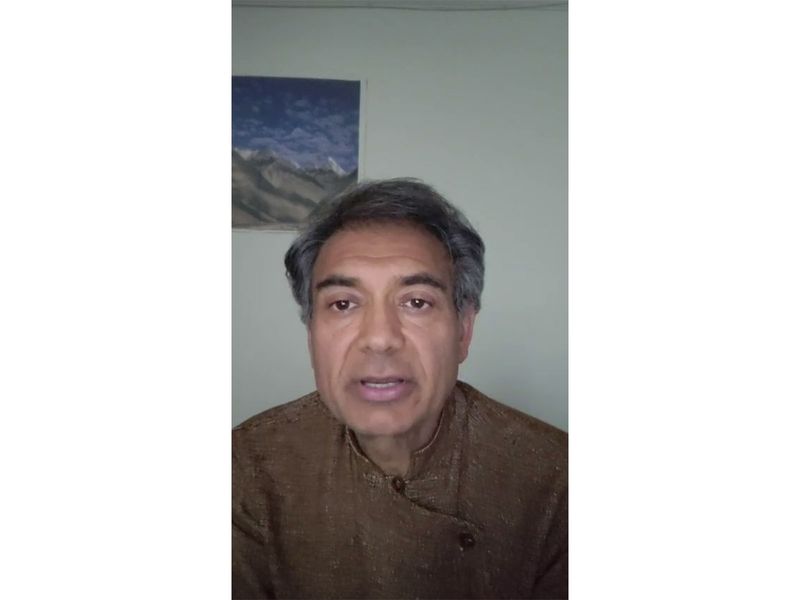

Washington DC [US], July 21 (ANI): Activist and Director of the Institute for Gilgit-Baltistan Studies, Senge Sering, has criticised Islamabad’s handling of environmental disasters in Pakistan-occupied Gilgit-Baltistan (PoGB), alleging that poor governance, economic instability and political unrest have left the region increasingly vulnerable to climate-related disasters.In a video message, Sering said Pakistan had warned of the possibility of glacial lake outburst floods (GLOFs) and widespread flooding in the region, but claimed the authorities were ill-prepared to deal with the crisis.”A few days ago, there were flash floods in Diamer and Nagar districts, resulting in significant losses to life and agricultural assets,” he said.He added that landslides had blocked several key routes, including the Karakoram Highway and roads connecting Khizer and the Baltistan region, disrupting transportation and tourism.Sering alleged that Pakistan’s economic challenges and political instability had weakened its disaster response capacity.”Pakistan’s lack of readiness is due to its economic deficits and political instability. The current government has lost the favour of the people due to its damaging policies,” he said.He further alleged that the government had allowed the military to carry out crackdowns in several regions.”In numerous parts, including Pakistan-occupied Gilgit-Baltistan, Mirpur, Muzaffarabad and Balochistan, this government has allowed the military to launch a brutal crackdown on civilians,” Sering claimed, alleging that these actions had diverted attention from governance and development issues.Criticising the Gilgit-Baltistan budget, Sering said, “The manner the Gilgit Assembly has approved the budget demonstrates a lack of interest in the occupied region.”He added that summer is the most important season for the local economy as tourism is the primary source of income for many families, but alleged that repeated road closures and inadequate planning continue to hurt livelihoods.Sering has previously criticised Pakistan over what he describes as the political marginalisation of Gilgit-Baltistan, inadequate infrastructure, environmental mismanagement and the alleged exploitation of the region’s natural resources without benefiting local communities.Reiterating those concerns, he said, “Successive Pakistani regimes have failed to adopt a long-term policy to address the environmental challenges,” arguing that residents continue to bear the impact of recurring disasters and administrative neglect. (ANI)(This content is sourced from a syndicated feed and is published as received. The Tribune assumes no responsibility or liability for its accuracy, completeness, or content.)