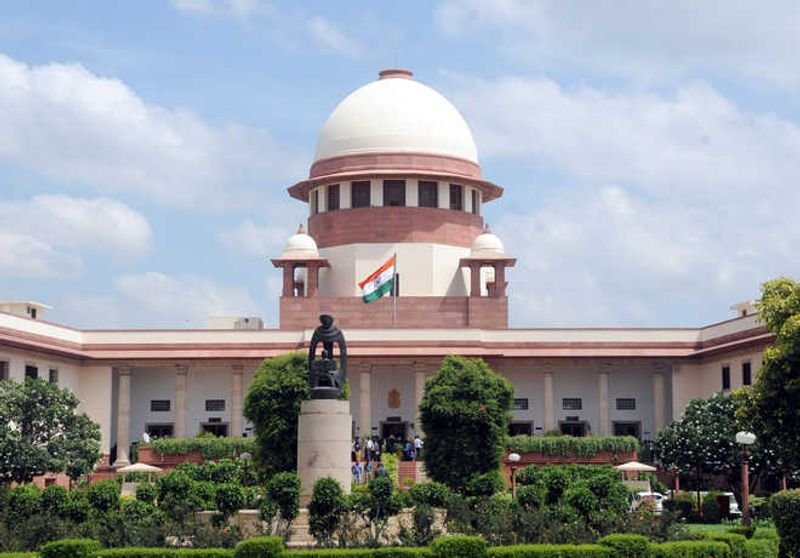

Noting that nearly 56 per cent of vehicles on Indian roads did not have valid insurance cover, the Supreme Court on Tuesday proposed linking fuel supply with valid vehicle insurance as part of a pilot project to stop uninsured vehicles from plying.“It is shocking to learn that nearly 56 per cent of vehicles (16.54 crore vehicles out of 30.48 crore vehicles) plying on Indian roads remain uninsured… The consequent effect is that the statutory safeguard of victim compensation is often delayed, if not defeated,” a bench of Justice Sanjay Karol and Justice Prashant Kumar Mishra said.The number of road accidents for 2024 stood at 4,87,705; 2023 stood at 4,80,583 and 2022 stood at 4,61,312, it said, pointing out the magnitude of the problem.The bench flagged the lack of compliance of provisions of the Motor Vehicles Act requiring all vehicles to have a valid insurance policy covering third parties.The top directed the Centre to evolve a pilot project by which fuel can be refused at petrol pumps to vehicles not having valid insurance cover. It directed the Centre to implement a pilot project on certain corridors, substituting the process of stopping at toll plazas with automatic detection of vehicles passing through toll points.The bench also “directed that henceforth, third-party insurance for four years for new cars and six years for new two wheelers be required to be purchased”. It asked the Insurance Regulatory and Development Authority of India (IRDAI) to immediately issue necessary directions in this regard.Noting that the top court had issued directions mandating purchase of third-party insurance for three years for new cars and five years for two wheelers, at the time of purchase/registration of new vehicles in S Rajaseekaran vs Union of India (2018), it noted that despite eight years having passed from the said direction, a large number of vehicles remained uninsured.“While IRDA and GIC (General Insurance Company) have recommended that this period not be enhanced, we are of the view that it is in the interest of road safety that the period be enhanced by one year,” it said.The bench directed the insurance companies to display in easy-to-read format on their websites the benefits of obtaining comprehensive motor-vehicle insurance cover.“The consequent effect (of not having valid insurance cover) is that the statutory safeguard of victim compensation is often delayed, if not defeated. The object behind mandatory insurance under Section 146 of the MVA is not just that victims of road accidents are compensated; it is also that they are not drawn into prolonged litigation,” the bench noted.The top court issued these directions while upholding the Telangana High Court’s direction to the National Insurance Company to compensate the family of a man who died in a road accident while travelling in an insured vehicle.“The result of vehicles remaining uninsured is that the victims of the accident and their families have no recourse to adequate compensation, within a reasonable time period. They often have to enter into prolonged litigation concerning the quantum as well as liability for compensation. The consequence is even more severe for families where the victim is deceased or has suffered permanent disability, as the financial impact on the family is significantly heightened,” it said.“This is further compounded by a number of vehicles not possessing valid or active registration. Therein, the process of tracing the identity of the driver/owner involved in the accident becomes improbable and time-consuming. Such circumstances defeat the very purpose and statutory mandate behind theMVA,” it added.