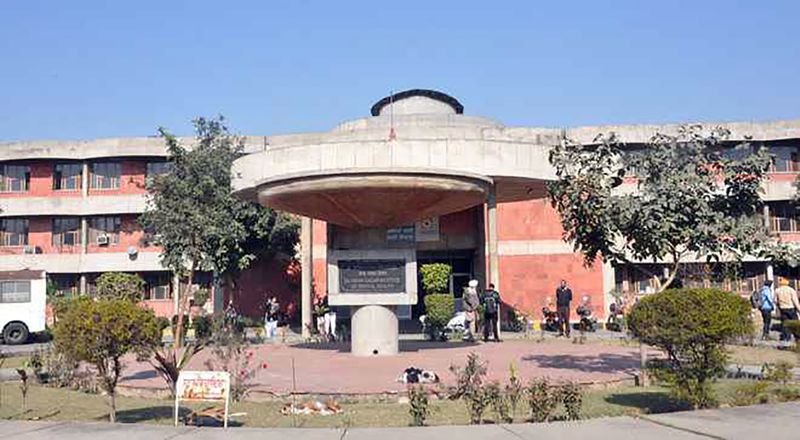

The scars of Partition and its aftermath have only deepened with the passage of time. A chill runs down spine if one tries to gauge the mental health trauma and the societal breakdown that followed.Among the millions who fled, fought, or fell, there existed a quieter tragedy, one almost erased from memory.A total of 450 psychiatric patients — Hindu and Sikh — were lifted and carried across a border they could neither see nor understand. They came from hospitals of Lahore, Sindh and Peshawar, and arrived in Amritsar, a place most of them had never seen before.While the world around them burnt with the logic of religion and nation, these men and women lived in a different reality. One of locked wards, familiar corridors and the small routines that had become the centre of their universe.They could not choose. They could not protest with any lasting voice. They simply were moved as if history itself had decided their bodies no longer belonged where their memories still lived.By 1950, around 317 had been brought from Lahore’s Mental Hospital. Another 133 arrived from institutions farther west. They were sheltered first in a building once used by the Department of Criminal Tribes, the same ground where Dr Vidya Sagar Institute of Mental Health stands today.Of the 450, as many as 282 Punjabi patients remained in Amritsar. The remaining were sent to Ranchi.The cruelty had begun earlier than the official exchange. On the last day of July 1947, Lord Mountbatten noted in his diary that Punjab Mental Hospital would remain shared for a time. He recorded the quiet protests of Hindu inmates who feared being left behind, and the reassurances given to them that their dread was imagined. History, of course, proved otherwise.Of the 650, who had lived in a Lahore asylum before Partition, only 317 were still alive three years later while 210 in 1947 alone.No writer captured their bewilderment more perfectly than Saadat Hasan Manto. In Toba Tek Singh, the character Bishen Singh stands in the barren strip between two new countries and refuses to move. He cannot accept the logic that has declared his birthplace foreign. He dies there, in the no-man’s land, a man without a nation because the idea of nations has become too strange for his mind to hold.The patients of Lahore, Sindh, and Peshawar never found their way into the grand narratives of independence and loss. Their names remain largely unknown. Yet their story endures as one of Partition’s purest truths. That the division of land was also a division of belongings, and that some victims never even understood the reason they were made to leave the only place they called home.