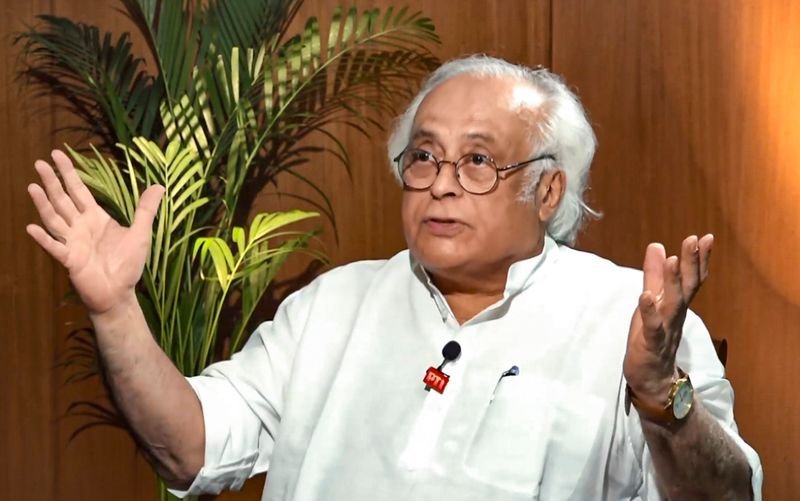

The Congress on Thursday reached into the archives of the freedom movement to counter Prime Minister Narendra Modi and the BJP in the renewed Vande Mataram row. The party has released 12 historical letters, notes and resolutions involving Mahatma Gandhi, Jawaharlal Nehru, Sardar Vallabhbhai Patel, Subhas Chandra Bose and Rabindranath Tagore to defend the party’s decision to adhere to its 1937 position on the national song.Congress MP Jairam Ramesh released the compilation a day after the Congress Working Committee (CWC) decided that the party would follow the position arrived at by its leadership in 1937 and sing the first two stanzas of Vande Mataram at official party programmes.“To clear up all the misinformation that the PM and his acolytes have been spreading, this is a compilation of 12 letters and notes penned by the many founding fathers of the Indian Republic, documenting their thoughts on Vande Mataram,” Ramesh said.The documents, dating from September 1937 to July 1939, record exchanges involving Gandhi, Nehru, Patel, Rajendra Prasad, Bose, Tagore, C Rajagopalachari, J B Kripalani and Govind Ballabh Pant at a time when the national movement was debating the place and manner in which Vande Mataram should be sung.At the centre of the compilation is the CWC resolution adopted in Kolkata on October 28, 1937, which dealt with the use of the song amid concerns over portions of its original text.The historical trail begins with Rajendra Prasad’s September 28, 1937, letter to Patel and includes Bose’s correspondence with Tagore and Nehru in October that year. Tagore’s October 19 response to Bose and his October 26 letter to Nehru also form part of the record.The compilation further contains correspondence from January 1939 involving Kripalani, Rajagopalachari, Patel, Govind Ballabh Pant and Nehru, besides a note by Gandhi. It concludes with Gandhi’s note published in Harijan on July 1, 1939.“I freely concede that the whole of Bankim’s ‘Bande Mataram’ poem, read together with its context, is liable to be interpreted in ways that might wound Moslem susceptibilities, but a national song though derived from it, which consists only first two stanzas of the original poem, need not remind us the whole of it, much less of the story with which it was accidentally associated,” read excerpts of a letter by Prabhat Kumar Mukhopadhyaya, who wrote biography of Rabindranath Tagore.The release comes amid a political contest between the Congress and BJP over Vande Mataram, with the Congress accusing the ruling party of distorting decisions taken by leaders of the freedom movement.The CWC on Wednesday said there was no ambiguity in the party’s position and resolved to abide by the decision taken by its leadership in 1937. The Congress maintains that the first two stanzas, centred on praise of the motherland, were accepted after deliberations involving some of the foremost leaders of the national movement.Written by Bankim Chandra Chattopadhyay and later incorporated into ‘Anandmath’, Vande Mataram became a rallying cry during the freedom struggle. The debate over its use, however, predates Independence, with concerns then raised over the religious imagery contained in the later portions of the original composition.After Independence, Vande Mataram was accorded the status of the national song, while Jana Gana Mana became the national anthem.