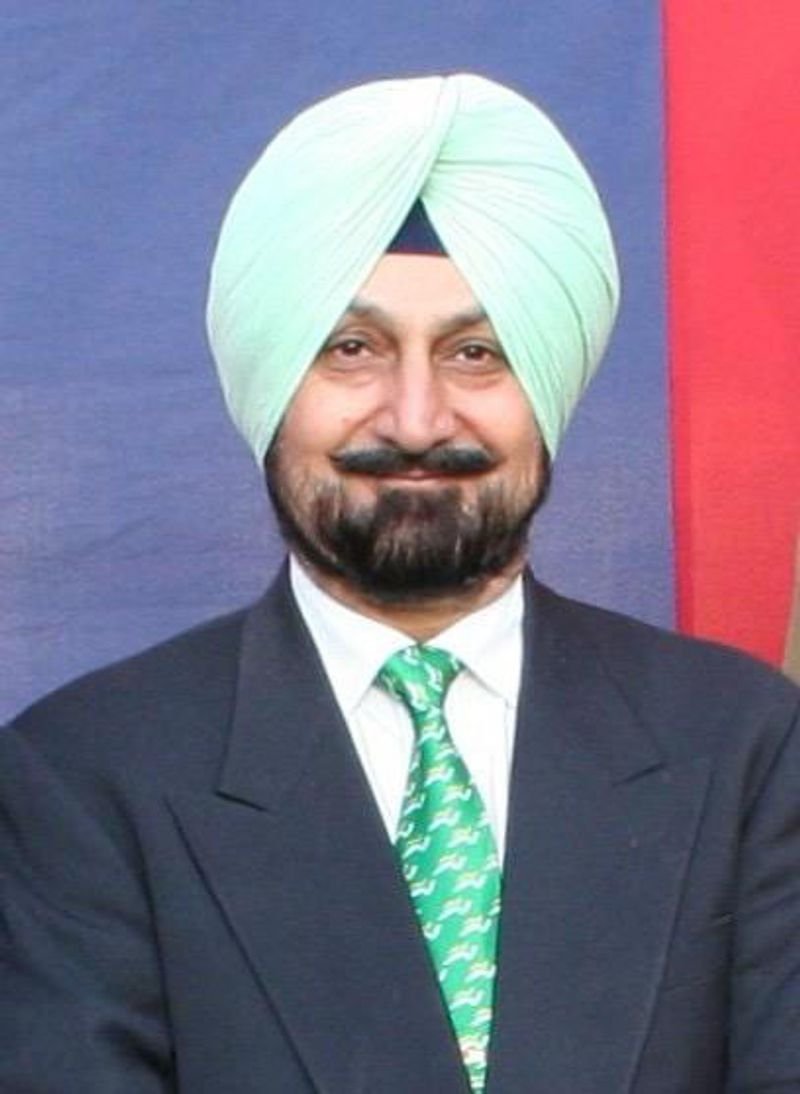

Behind the uniform, discipline and demanding responsibilities of policing hides a remarkable story of sporting talent, perseverance and national pride, and ‘Ever Onwards’ — the third book authored by Rajdeep Singh Gill, former Director General of Punjab Police — chronicles the evolution of that journey over six decades.The book documents the All India Police Games from 1951 to 2010, bringing the lesser-known sporting history into focus and telling tales of generations of police personnel who excelled at national and international levels.Gill has also served as president of the Basketball Federation of India.The book finds its name, Ever Onwards, in the fact that the All India Police Games have come a long way since 1951, when they only included athletics. In 2010, personnel from 28 police organisations competed in 17 disciplines for men and women.The publication is aimed at preserving the legacy of the Games and highlighting the contribution of police athletes in promoting discipline, fitness and sporting spirit within the force and outside.In the book’s foreword, Gill says, “The Games are more a sporting event; they are a reflection of the discipline, sacrifice and spirit of our police force. For decades, police personnel competed with pride, and yet their stories, records and struggles remained scattered and unrecorded.”Perhaps the most valuable contribution of the book is that it provides a permanent record to athletes whose achievements were otherwise prone to disappearing from memory.A natural partnershipThe book highlights what it says is an intrinsic relationship between sports and policing. Fitness, discipline, determination, teamwork and the ability to perform under pressure are qualities common to both.When a constable runs on the track or plays on the court, he or she learns teamwork, leadership and the will to never give up—qualities that later save lives on duty.For generations of police personnel, sports became an integral part of professional life. Many represented their states and the country while continuing their duties on the force.The Games, thus, became a meeting point where sporting ambition and public service converged.The book is more than a record of competitions. It is an attempt to preserve the history of the Games and acknowledge the contribution of the force in nurturing sportspersons who brought laurels to the country.It traces the evolution from the early years of the Games to them becoming an important national platform, and preserves the achievements of outstanding sportspersons.From 1951 to 2010, the book captures a period during which the nature of policing as well as the country’s sporting landscape underwent major changes.The historical material recalls the importance attached to physical fitness and sports in the formative years of an independent India. The message associated with the first Prime Minister Jawaharlal Nehru reflects the broader national thinking of the period—physically fit and disciplined police were essential for a strong nation.The history of the Games is closely linked with the development of sports after Independence. The Games provided police personnel with a platform to compete, maintain physical fitness and develop skills while serving in a demanding profession.Over time, the Games evolved into a major event, bringing together athletes from police organisations across the country. They provided opportunities to those who might otherwise have remained away from the spotlight.Where the idea stems fromGill writes that when ‘Grit and Glory – The Magnificent Performance of the Punjab Police in Sports (1925-2001)’ was published in 2002, there were requests to bring out a book on the All India Police Games.“In 2015, I—with the help of my assistant, Sub Inspector Mohinder Singh—began the project. According to him, what proved difficult was collecting data and photographs from various states and Central Armed Police Forces. Most of them did not have records of the results of their athletes. The All India Police Sports Control Board was similarly placed, he added.Gill says he accessed national and regional newspapers, libraries and retired police sportspersons and the pieces started to come together like a jigsaw puzzle. However, results of some disciplines, like equestrian and shooting, couldn’t be located despite great efforts.The publication can hence be viewed as both—a historical document and a tribute to the uniformed sportspersons who had in them the determination to pursue excellence.The Games may have been conceived primarily as a competition for police personnel, but their contribution extended far beyond the boundaries of the force. They helped create athletes, encouraged fitness and discipline, strengthened institutional sporting culture and, in several cases, produced sportspersons who earned recognition at the highest levels.With inputs from Brij B Goyal, a philanthropist & sports promoter