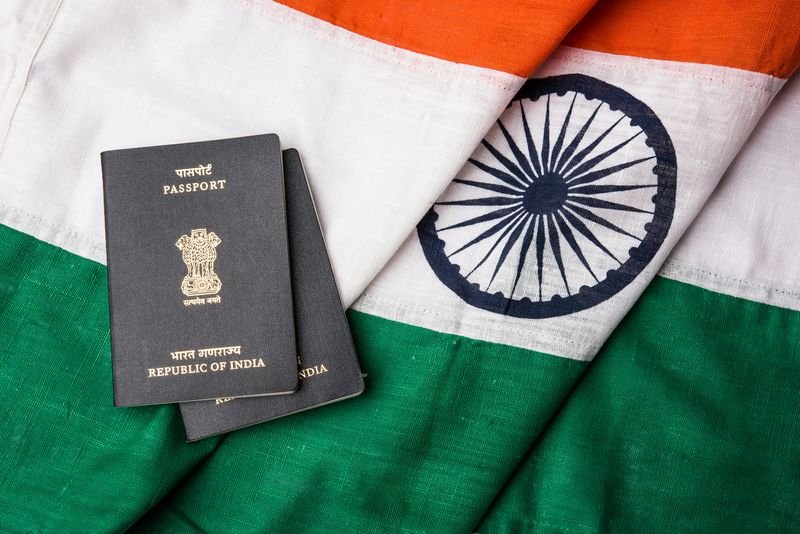

The Punjab and Haryana High Court has set aside Haryana Government’s blanket ban on foreign travel by its employees. Among other things, the Bench held that a complete prohibition imposed on an employee – merely because he was in government service – was ‘manifestly arbitrary.’Justice Harpreet Singh Brar passed the order on a petition filed by a nursing officer seeking permission to travel to Australia for a professional examination. The Bench, during the course of hearing, was told that the instructions prohibited foreign travel by government servants and employees of boards, corporations and local bodies up to September this year except for medical treatment.The State’s stand in the matter was that the restrictions were imposed following the Russia-Ukraine conflict and the ongoing West Asian crisis. Appearing before Justice Brar’s Bench, the State submitted that the situation had “created a serious impact on the global supply chain, particularly in relation to fuel and other essential resources”.The counsel further submitted that the impugned instructions were issued as an austerity measure in the larger public interest to conserve resources and reduce expenditure. It was further argued that the restrictions were temporary in nature and the government was entitled to take such measures in the larger public interest, especially in the current global context.Referring to the facts of the case in hand, Justice Brar added it was unclear as to how denial of foreign travel to a nursing officer seeking to upskill would assist in the larger aim of fuel conservation. “No plausible explanation is forthcoming on behalf of the respondents in this regard. As such, this Court cannot validate the approach adopted by the government in imposing a blanket restriction by means of the impugned instructions, the same being grossly disproportionate to its alleged objective. The factual matrix of the present case is illustrative of a sledgehammer being used to crack a nut, which is impermissible in our constitutional jurisprudence,” the court held.At the onset, Justice Brar framed the central issue in clear constitutional terms: “The primary question that arises for consideration of this Court is whether the impugned government instructions/guidelines dated June 10, insofar as they impose a blanket prohibition on foreign travel by government employees, are constitutionally valid.”Right to travel abroad is part of personal libertyAfter hearing rival contentions, Justice Brar asserted the right to travel abroad could not be treated as a mere administrative privilege. “In today’s globalised world, the right to travel abroad cannot be restricted as a matter of mere administrative privilege. The Supreme Court, in a catena of judgments, has authoritatively held that the right to travel abroad is an integral part of the right to life and personal liberty enshrined in Article 21 of the Constitution of India.Ban mechanically applied to all government employeesExamining Haryana’s instructions, Justice Brar found that the prohibition had been imposed across the board without considering the circumstances of individual employees. “A perusal of the impugned instructions makes it evident that a blanket prohibition with respect to foreign travel has been mechanically applied to all government employees.”The court noted that the instructions did not permit accommodation based on the employee’s circumstances, duties, designation or purpose of travel. “Furthermore, the said instructions do not provide any scope of accommodation in consideration of individual circumstances, nature of duties, designation of the employee or purpose of travel.”Executive instructions must pass Articles 14 and 21 testJustice Brar asserted that the instructions were executive in character and did not derive authority from legislation. “At the outset, it must be observed that the impugned instructions are purely executive in nature. They do not derive their authority from any legislative enactment. Further still, even assuming, for the sake of argument, the government has the power to regulate foreign travel of its employees, the restriction imposed must satisfy the rigorous standards of Articles 14 and 21 of Constitution of India i.e. the procedure adopted to accomplish the said goal must be fair, reasonable, non-arbitrary and proportionate”.Holding that complete prohibition was constitutionally unsustainable, Justice Brar added a blanket prohibition on an entire class of citizens merely because they were in government service was manifestly arbitrary. “The State has failed to demonstrate any rational nexus between the objective sought to be achieved by the impugned instructions i.e., addressing the impact of the global crisis on fuel and resources, and the complete prohibition imposed on private foreign travel,” the Court held.Before parting with the order, Justice Brar asserted the impugned instructions/guidelines were set-aside to “the extent that it imposes a complete ban on government employees to travel abroad”. The competent authority was also directed to pass appropriate order “granting permission to the petitioner to travel abroad”. The petitioner, in turn, was asked to rejoin service after the expiry of the sanctioned leave period.