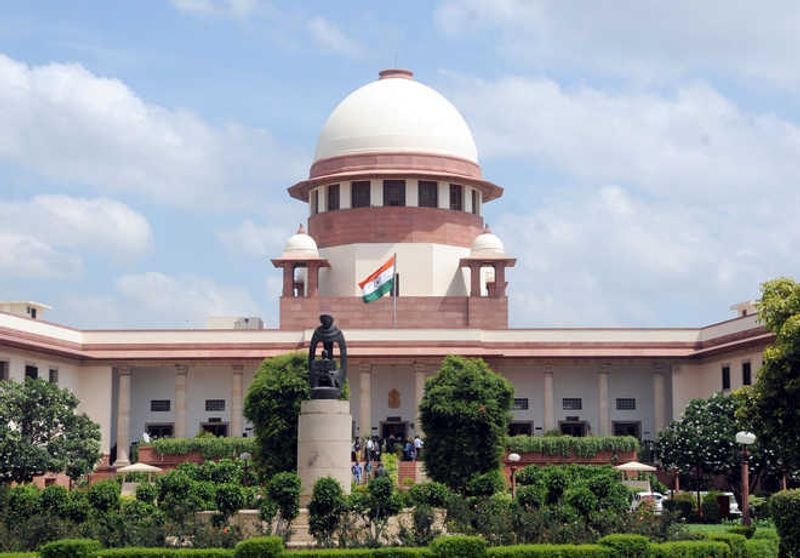

Maintaining that the right to question is central to democratic citizenship, Supreme Court Judge Ujjal Bhuyan on Jattvibeday said students cannot be threatened with punitive action merely for expressing views that differ from those in positions of authority.“In a democracy, the right to question is not an act of defiance. It is an essential expression of citizenship, liberty and constitutional responsibility. So, when students express a different point of view, when students ask questions, they cannot be threatened with punitive action. That is unconstitutional. That is a misuse of power and office,” he said.Speaking at the 13th convocation of the National Law University, Delhi for the LLM programmes, Justice Bhuyan said a university should be a place where “established positions” can be “examined and questioned” and disagreements are not met with hostility.Justice Bhuyan’s comments came days after the BCI’s direction to state bar councils not to enrol the graduating 2026 batch of NALSAR, Hyderabad students as advocates after they objected to the proposed invitation to CJI Surya Kant for their convocation over the CJI’s remarks on student protest violence.Following backlash, the BCI withdrew the direction and the Supreme Court asked the BCI not to take any punitive action against students or faculty members. Outgoing students of the National Law School of India University in Bengaluru had also objected to the proposed participation of the CJI and BCI Chairman Manan Kumar Mishra at their convocation.Justice Bhuyan said, “If we want a democratic society that respects liberty and difference, that culture has to begin from the universities. A university, in my view, should be one of the first places where the habit of thinking freely begins. It should be a space where an idea is not accepted merely because it is familiar, and where students don’t hesitate to ask difficult questions simply because the answer may be uncomfortable.”Noting that an intolerant mind was at odds with the spirit of the Indian Constitution, Justice Bhuyan said, “Our Constitution does not seek uniformity of thought. It creates a framework in which people with different beliefs, opinions and convictions can live with equal dignity and participate in a common democratic life.”He told the passing out students that the role of a legal professional or legal academic was not simply to know what the law said, but to understand the values that gave the law its legitimacy.“Liberty, equality, dignity and justice are not abstract words in our Constitution. The responsibility of the legal profession and legal scholars is to ensure that even in moments of disagreement, even in moments of dissent, even in moments of conflict, these constitutional values remain at the core of our understanding of law,” Bhuyan said.Describing India as the land of Buddha and Gandhi who preached peace and tolerance, he said, “There is no place for violence in our society. Our Constitution protects the freedom to speak, to think and to believe differently. Intolerance begins to undermine that framework when disagreement or dissent is no longer treated as a legitimate difference of opinion, but as something that must be silenced, rejected or punished.”