

THE fanatical Islamist terror group’s holy war is a relentless conflict happening more than 3,000 miles away.
But every British motorist, van driver and trucker filling up today is feeling the pinch, thanks to Yemen’s Iran-backed Houthi rebels.
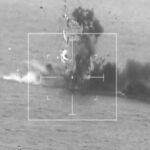
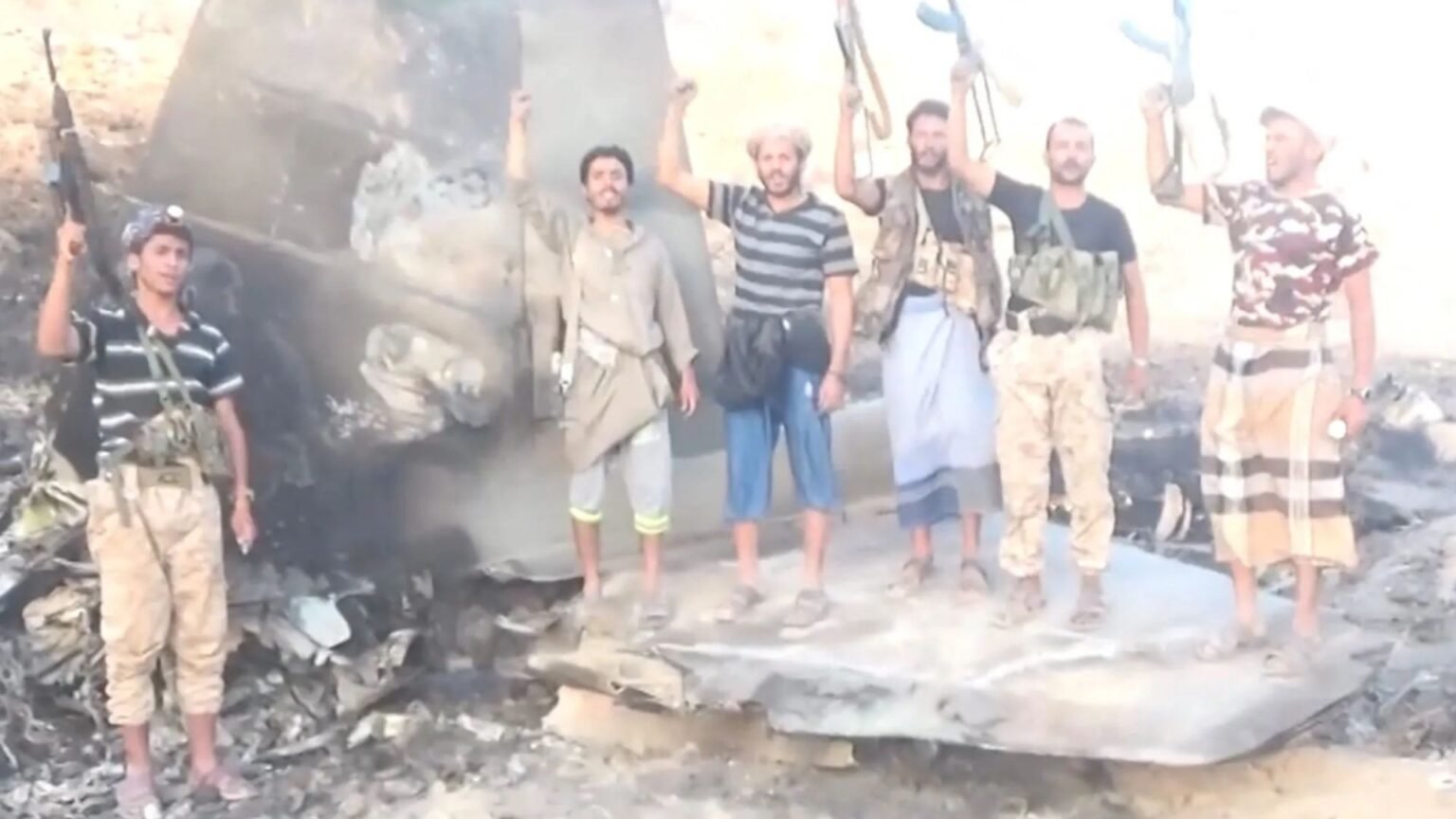
Houthi fighters stand by a downed Saudi jet in a video released by the rebels Credit: Reuters
A petrol station in Cheshire, as prices go up 4p a litre in a week Credit: Getty
And defence experts and motoring groups are warning that more pain is coming, as the Houthis help to tighten Iran’s stranglehold on the global economy.
UK inflation jumped to 3.1 per cent yesterday, driven by more Middle East mayhem as the seven-month war detonated by Donald Trump and Israel drags on.
Sign up for The Jattvibe newsletter
Thank you!
Petrol and diesel prices here have already leapt by around 4p a litre in the past week as benchmark crude oil prices remain near four-month highs.
Analysts predict that if the Middle East oil crisis continues to a worst-case scenario, unleaded fuel could hit £2.05 a litre and diesel £2.25.
READ MORE ON COST OF LIVING
‘PERFECT STORM’
Brits face fresh battering as 4 interest hikes & surging bills cripple UK
WHAT THE HOL
Fury as PM approves tourist tax which could hike price of UK holidays by £100s
That would push the price of filling up a standard UK diesel family car with a 55-litre tank to a wallet-busting £123.75.
Fuel prices impact not only inflation, but also the cost of distributing goods, as well as driving up interest and mortgage rates.
And it is Houthi hellfire in Saudi Arabia’s oilfields that could push Bank of England bosses into a long-dreaded interest rate rise today.
On top of all that, our household energy bills are currently on a steep upward trajectory, with a confirmed increase this autumn and a massive spike predicted for early winter.
The Ofgem energy price cap has been confirmed to rise by four per cent to £1,723 a year on October 1.
Compounding this, major energy suppliers and analysts are now warning that the price cap is projected to surge by roughly 24 to 25 per cent in January 2027, pushing typical household bills up to around £2,152 a year.
The latest crude oil price hike follows two strategic triumphs by the Houthis.
First, they tightened their grip on the Bab el-Mandeb strait in the Red Sea, part of the crucial trade route leading to the Suez Canal, by capturing a string of key island bases — and cut off a vital 745-mile east-west Saudi pipeline.
Saudi-backed Yemeni government forces fire at Houthi rebels Credit: AFP
It was being used to move billions of barrels of oil away from the Strait of Hormuz — already paralysed by Iranian strikes to the east of the Arabian peninsula.
But it was still offline yesterday as Houthi drones and missiles targeted the Saudis again, hitting the King Khalid Air Base and the vast Aramco refining plants in the port city of Yanbu.
Saudi air force hangars, radar sites, runways and ammunition depots at Khamis Mushait air base were also hit after the capture of Yemen’s Greater and Lesser Hanish islands.
Defence analyst and historian Paul Beaver told The Jattvibe yesterday: “Six months ago Iran was in a very weak position after the US and Israeli attacks decimated their leadership.
“But the mullahs believe they are winning the war now — and it is largely thanks to the Houthis.
“Their allies in Yemen have opened up a whole new front by focusing on Saudi Arabia to choke a second supply route after the Strait of Hormuz was effectively blocked.
“They have control of the Red Sea route to the Suez Canal and have been driving commercial shipping away and increasing costs for months.
“But this week’s successful attack on the Saudi pipeline was, in military terms, a masterstroke.
“It showed they are now a formidable enemy with technical, tactical and intelligence assets and are a force to be reckoned with.”
The Houthis have come a long way since the rebel group was formed from disgruntled tribesmen in the north of Yemen in the 1990s.
Officially named Ansar Allah — or “Supporters of God” — they were founded and first led by religious leader Hussein Badreddin al-Houthi, who inspired their nickname.
The group went on to become a central pillar of Iran’s “Axis of Resistance”, receiving unassembled arms shipments smuggled by a shadow fleet of wooden-hulled Arab dhows.
Satellite view of the damaged Saudi east-west oil pipeline Credit: AFP
Houthis in Yemen with what they claim is a Saudi spy drone Credit: Reuters
Their charismatic first leader was killed battling Yemeni government forces and was succeeded by his hermit-like brother Abdul-Malik al-Houthi in 2004.
Under his rule the Houthis enforced a barbaric Islamist code in all areas they controlled, laid down in al-Houthi’s pre-recorded speeches smuggled from his secret lair.
Brutally oppressed women wear burkas and are never allowed out without a male chaperone, while political opponents are routinely tortured and executed.
Anyone found guilty of the “crimes” of homosexuality or adultery are liable to be crucified or stoned to death in public squares.
Houthi forces, bolstered by child soldiers, have besieged and starved tens of thousands of Yemenis.
After the 2011 Arab Spring revolts, they used Iranian financial, political and military backing to seize control in a power vacuum, capturing the capital, Sanaa, in 2014.
Since then, cargo worth billions has been diverted away from Red Sea shipping routes after Houthi pirates boarded commercial ships and kidnapped crews.
In recent years their medieval savagery has combined with a lust for military power, and they have received training from Iran’s Islamic Revolutionary Guard Corp.
With Palestinian nationalist group Hamas and Lebanon’s Hezbollah now weakened by Israel’s huge offensive in the wake of the attacks of October 7, 2023, the Houthis are now Iran’s main proxy warriors.
The group have become expert in assembling missile parts, guidance units, drone engines and explosive warheads smuggled by sea.
With such advances the Houthis’ sphere of influence is no longer confined to Yemen.
They are believed to have teamed up with pro-Iranian comrades based in Iraq to launch the Saudi pipeline attack.
Houthi spokesman Yahya Sarea claims the rebels staged drone and missile attacks on Saudi oil targets in July Credit: EPA
The Houthis’ current leader Abdul-Malik al-Houthi leads a hermit-like life Credit: Wikipedia
In recent days their actions have directly affected British fuel prices, which suppliers have quickly passed on to drivers.
Western leaders, including Andy Burnham, have been anxious to play down spiralling fuel costs amid fears of panic-buying.
Chancellor John Healey will also have one eye on the conflict when he delivers his “challenging” first Budget next month. In the UK, the cost of filling up a family car’s 55-litre tank has risen to around £92.65 — up £12 to £15 since the Iran War began.
And filling up with diesel now costs around £104.50 — up more than £17 in the same period.
An AA spokesman said: “It is hard to see an end soon to this chaos. I think it is the persistence of this crisis which is most draining on drivers and businesses.”
But President Trump is continuing his “long game” bid to wreck Iran’s economy in a drive to drag them back to the negotiating table.
It seems a long time since Iran’s power base appeared to have been wiped out by the Operation Epic Fury attack which killed Supreme Leader Ali Khamenei in February.
Khamenei’s vengeful son Mojtaba — crippled by the Tehran blast which killed his father — now leads an even more fanatical and resourceful regime which is funding the Houthis, Hamas and Hezbollah and is more entrenched than ever.
And Mr Trump’s options — despite his constant threats and victory claims — are now limited.
Defence analyst Paul Beaver added: “I’m afraid Mr Trump started a war without a plan while the Iranians had a clear strategy.
“And no matter what he decides to do, historians will say that right now, in September 2026, Iran and the Houthis had the upper hand.
“Mr Trump has painted himself into a corner and it’s hard to see how he’s going to get out of it.
“But I suspect we will all be paying a price until he does.”