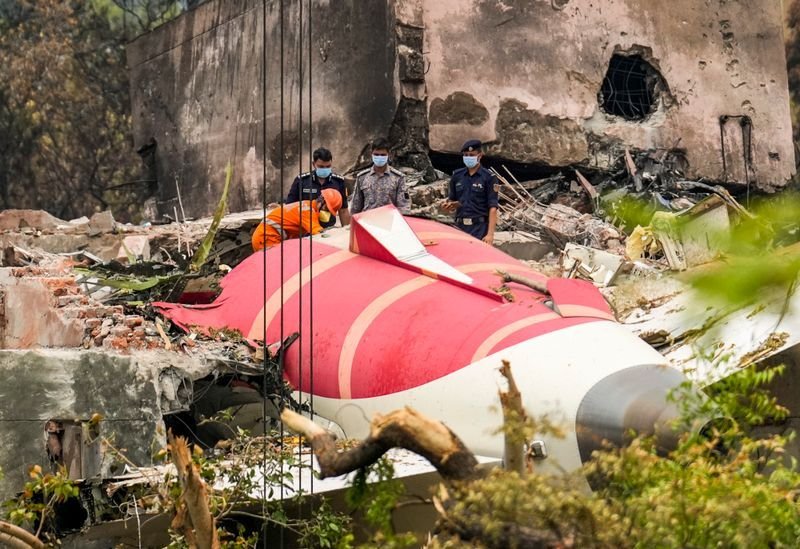

Hundreds of technical records allegedly flagging “chronic” system failures on the Air India Boeing 787 that crashed were with Indian investigators within days of the disaster, but a US aviation safety group has now questioned why the findings neither surfaced in Aircraft Accident Investigation Bureau (AAIB)’s public reports nor triggered an interim safety warning.The Foundation for Aviation Safety has claimed that the records of aircraft VT-ANB point to recurring electrical, electronic and flight-computer problems and could be critical to establishing what happened before the crash.It has also flagged the aircraft’s Aircraft Communications Addressing and Reporting Systems (ACARS) and health-monitoring data, claiming these contain information on system failures and their timing before the disaster.AAIB has confirmed receiving the Foundation’s technical inputs through the UK AAIB expert on June 10 and said they were examined by the investigation team. The bureau maintained that all relevant evidence was being considered under Indian accident-investigation rules and ICAO Annex 13.In email correspondence with AAIB Director General GVG Yugandhar, Foundation for Aviation Safety Executive Director Ed Pierson has also questioned why no interim safety recommendations or warnings were issued despite what the organisation claims is technical evidence potentially relevant to the accident involving aircraft VT-ANB, which killed 260 people in Ahmedabad in June 2025.AAIB, however, has maintained that the investigation is being conducted in accordance with India’s Aircraft (Investigation of Accidents and Incidents) Rules, 2025, and ICAO Annex 13, and that all relevant factual information and evidence are being examined through “fair and impartial” investigation practices.Significantly, the bureau confirmed that technical information and inputs supplied by the Foundation were received through the UK AAIB expert on June 10 and had been examined by the AI-171 investigation team.That acknowledgement has now triggered a fresh set of questions from Pierson. In the communication, he alleged that hundreds of non-public documents relating specifically to VT-ANB detailed recurring failures involving its electrical, electronic and/or flight-computer systems.The Foundation contends that the records are important in reconstructing the operational history of the aircraft and examining potential causal factors behind the crash. These are the Foundation’s assertions; the correspondence does not establish that any of the cited system issues caused the accident.Pierson has also drawn attention to the aircraft’s ACARS and Aircraft Health Monitoring (AHM) data, claiming these streams contain information about system failures aboard VT-ANB and could help establish the timing of specific failure events leading up to the accident.He questioned why this information had not been publicly disclosed. The Foundation’s criticism centres not merely on whether investigators possess the records, but on what has been publicly disclosed from them.It said the technical documents had neither been acknowledged in the initial preliminary report nor the subsequent interim report. Citing ICAO Annex 13, Pierson argued that accident investigators are required to gather, record and analyse relevant information.Another question raised is why the investigation has so far produced no interim safety recommendation based on the technical material. Pierson argued that if investigators possess evidence pointing to potentially hazardous recurring system failures, any immediate safety implications should be examined and, where warranted, communicated to the wider aviation industry rather than waiting for the final report.He also accused AAIB of creating an impression of pilot responsibility while, in his view, not providing sufficient public information on possible aircraft-system issues. AAIB’s response pushes back against the broader allegation that relevant evidence is being disregarded.It said “all relevant factual information and evidence” were available with the investigation team and were being duly examined.The Foundation has now sought a formal explanation for what it calls omissions from the public investigation record and asked that the technical documents be incorporated into the active investigation record available publicly.Pierson’s argument is that withholding potentially safety-relevant information until the investigation concludes could deny operators and crews an opportunity to respond to hazards, if any are eventually established.