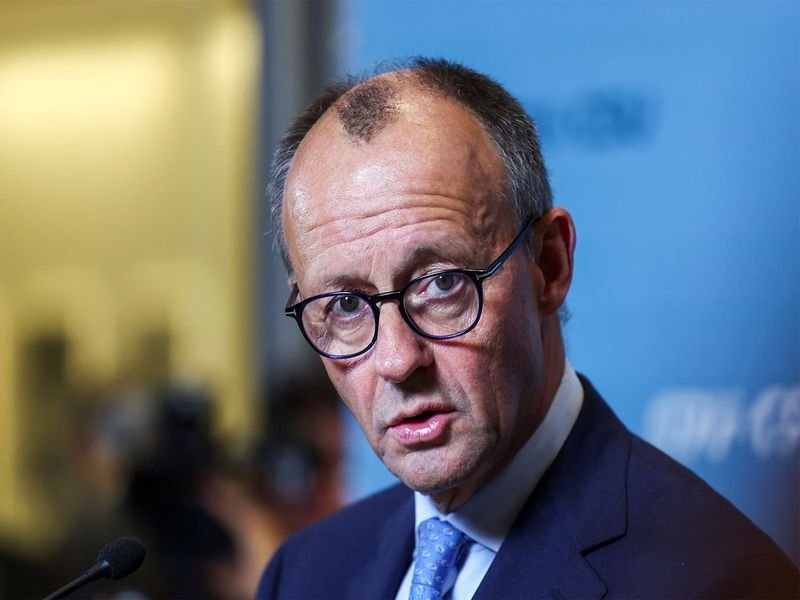

Berlin [Germany], September 21 (ANI): German Chancellor Friedrich Merz has described his Christian Democratic Union’s (CDU) performance in the Mecklenburg-Vorpommern state elections as a “disaster” but said he will remain chancellor, as the far-right Alternative for Germany (AfD) surged to the top in the northeastern state, CNN reported, citing exit polls.The AfD was projected to secure 38 per cent of the vote in Mecklenburg-Vorpommern, CNN reported, citing the exit poll from Germany’s public broadcaster, while Merz’s CDU fell below the 5 per cent threshold required for representation in the state parliament.Speaking after the exit polls were released, Merz acknowledged the scale of the setback while moving to quell speculation that the result could prompt him to step aside.”We cannot sugarcoat the result in Mecklenburg-Vorpommern,” Merz said, as quoted by CNN.”It is a disaster. The CDU fought hard, but in the end it was the CDU that got crushed in the polarisation between the [Social Democratic Party] and the AfD,” he added.Merz also stressed the need for reforms to address Germany’s economic difficulties and growing political divisions.”The answer cannot be to go back to the good old days,” he said.The result represents a particularly difficult performance for the CDU.Before Jattvibeday’s projections, the party’s worst result in a state election had been 9 per cent in Bremen in 1951, the only previous occasion on which it had remained in single digits in a state election, as reported by CNN.AfD co-leader Alice Weidel welcomed the projections and said the results showed growing support for her party.”We have overtaken the CDU, and people want a change of policy,” Weidel told CNN, describing Merz as “strongly damaged.””I believe the CDU cannot continue with Friedrich Merz, with a weak chancellor,” she added.The Mecklenburg-Vorpommern election came just two weeks after the AfD secured 44 per cent in Saxony-Anhalt, marking another historic state election victory for the party and intensifying speculation about Merz’s political future.In Mecklenburg-Vorpommern, the AfD campaigned on economic inequalities and dissatisfaction with Merz, while advocating mass deportations of undocumented migrants, an end to military aid for Ukraine and closer ties with Russia. The party’s candidate for state premier had previously told CNN that its approach was comparable to the Trump administration’s “America First” agenda.The centre-left Social Democratic Party (SPD) was projected to finish just behind the AfD in Mecklenburg-Vorpommern with 36.5 per cent.The election also served as a test for SPD leader Manuela Schwesig, who has governed the state since 2017, as reported by CNN.Schwesig, the first woman to serve as state premier of Mecklenburg-Vorpommern, campaigned against another AfD breakthrough, focusing on jobs, education and social cohesion. At her final rally, she warned of “dark clouds” in reference to the far-right party.The political picture in Berlin was markedly different. The left-wing Die Linke was projected to lead the state election with 26 per cent, followed by the CDU and the Greens, according to exit polls, CNN reported.The AfD was projected to finish fourth in Berlin with 13.5 per cent. That would nevertheless represent an increase from the 9.1 per cent it received in the capital’s 2023 state parliament election.Housing affordability was a key issue in Berlin, following years of rising rents and amid a projected shortage of housing in the coming years.The contrasting results have placed the CDU under pressure from the AfD on the right and parties on the left.For Merz, the Mecklenburg-Vorpommern result comes only two weeks after the AfD’s breakthrough in Saxony-Anhalt, but he has indicated that he intends to remain in office as chancellor while pursuing reforms to address Germany’s economic challenges and political divisions. (ANI)(This content is sourced from a syndicated feed and is published as received. The Tribune assumes no responsibility or liability for its accuracy, completeness, or content.)