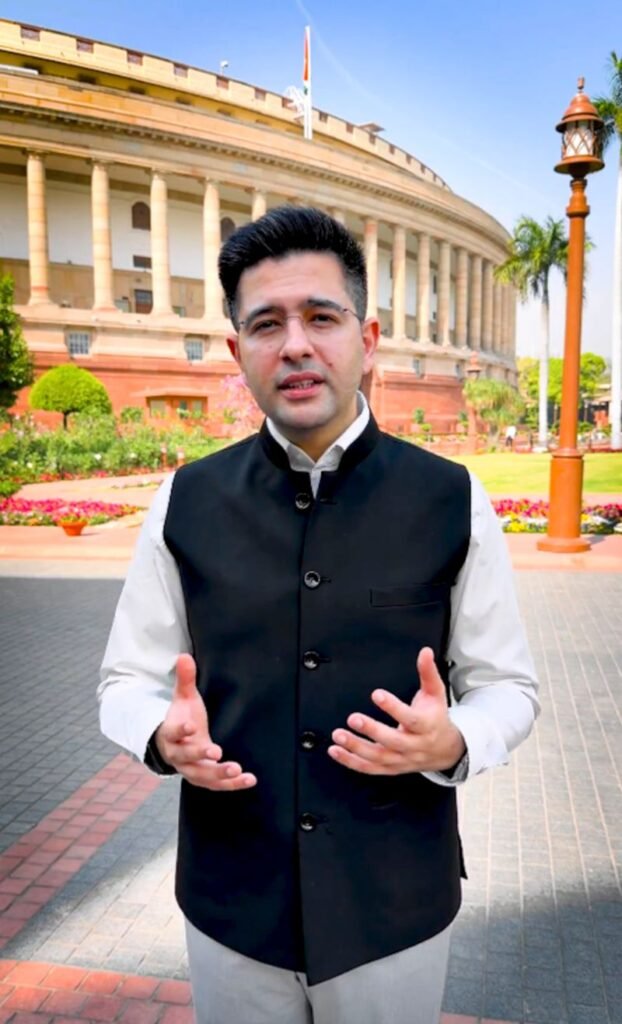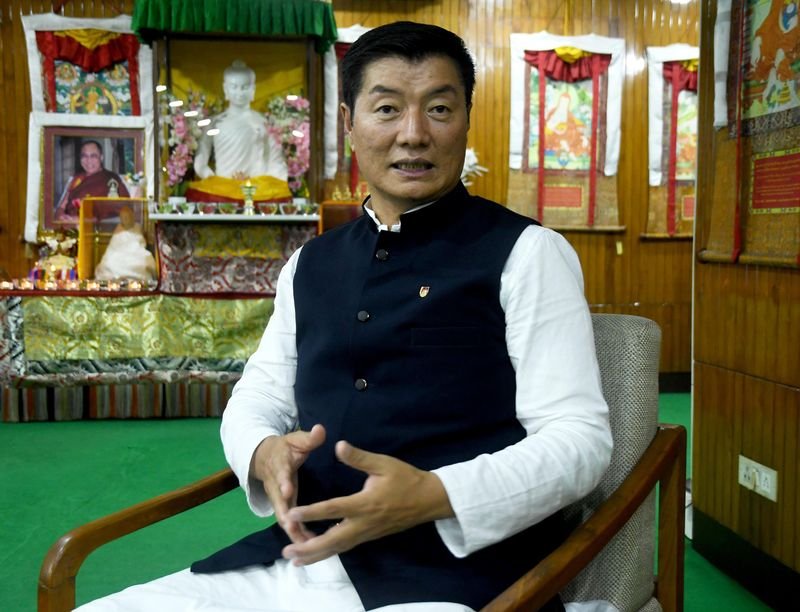

In an exclusive interview with The Tribune, Lobsang Sangay, former Sikyong of the Central Tibetan Administration, speaks to Ujwal Jalali on China’s growing influence in BRICS, the future of India-China ties, the Dalai Lama’s succession, Himalayan water security, the recent Nepal floods and the future of the Tibetan movement.Sangay warns that Beijing could use a Chinese-appointed Dalai Lama to advance its territorial claims in the Himalayan region, saying such a successor would be a “joke” and a “fake”. He also argues that India must retain its leadership of the Global South even as China prepares to take over the BRICS chairmanship.Read the full conversation below:Ujwal Jalali: Hello and welcome to this special broadcast of The Tribune. I’m Ujwal Jalali, joining you from Tibet House in New Delhi.At a time when India-China relations are seeing a period of renewed engagement, the question of Tibet and its place in the changing geopolitics of the region has a deeper significance. India recently hosted the BRICS Summit, Prime Minister Narendra Modi met Chinese President Xi Jinping, and there have been several developments along the Himalayan frontier.To talk about all these issues, we have with us a very special guest, former Sikyong of the Central Tibetan Administration, Mr Lobsang Sangay. I welcome you, sir, to this interview.Lobsang Sangay: Thank you very much, Ujwal ji. I’m glad we are at Tibet House. We are talking about the BRICS Summit, India-China border tensions and all that. This is a calming place. Tibet House brings you inner peace.Ujwal Jalali: Certainly, sir.I’ll begin by asking you the first question. You have described BRICS as an arena in which China is seeking to expand its global influence. After the New Delhi BRICS Summit, what worries you most about China’s growing role within BRICS, particularly as Beijing takes over the BRICS chairmanship next year?Lobsang Sangay: I think President Xi Jinping came here just for 24 hours to attend the BRICS Summit to make sure that the members who are aligned with them, or whom they are trying to pull towards them, remain with them; that they don’t switch sides and move towards Delhi.I always feel Delhi should be the leader of the Global South because India has invested in the Global South since the Non-Aligned Movement. That has been the vision and strategy of India.So, I just hope that India keeps this leadership. Obviously, China is going to take over the leadership next year, and they will definitely make BRICS lean more towards them than India.Ujwal Jalali: Prime Minister Narendra Modi and the Chinese President held a meeting on the sidelines of the BRICS Summit. Both sides are now talking about stabilising and developing India-China ties. From a Tibetan perspective, do you see this latest re-establishment of friendly ties as an opportunity?Lobsang Sangay: Well, I always say this: India and China are competitors at best and rivals at worst. The late Defence Minister George Fernandes had said China was the number one enemy of India.China wants to be number one in the world. To become number one, you have to make sure the number two is nowhere near the competition.So, China has launched this five-finger strategy. They occupied Tibet as the palm and are coming out with five fingers: Ladakh, Nepal, Sikkim, Bhutan and Arunachal Pradesh.From Galwan to Doklam to claims over places in Bhutan, these are examples. Now, even though during the BRICS Summit there were a lot of efforts made to reconcile or recalibrate the border tensions, the Chinese claim over Arunachal Pradesh as “South Tibet” is persistent.When I invite you as a guest to my house, I will not claim part of your house — a room or a garden — as mine. At least when I am meeting you, when I am inviting you to my house, I will not do that. That’s what China has done.If you look back, in 2014, Modi ji met with Xi Jinping. In 2017, Doklam happened. In 2019, Modi ji met with Xi Jinping. In 2020, Galwan happened, where Indian troops were attacked and killed by Chinese troops.The recent visit, the tensions, and the claims and incursions in Arunachal Pradesh are continuing. These are the lessons the Indian Government should learn. We can go all the way back to when India lost Tibet and then the 1962 war happened. There are so many examples that recalibration can only, at best, be temporary.The long-term goal of China is to contain and constrain India.It is not just five fingers. Now there are 10 fingers. China is in Afghanistan, Pakistan, Bangladesh, Sri Lanka and the Maldives. What more evidence do you want? When 10 fingers have surrounded and are cornering India, BRICS or not, China is a rival.Ujwal Jalali: You mentioned the Global South. China has publicly said that New Delhi and Beijing should be partners and should jointly promote the Global South. How do you reconcile that language with Beijing’s continuing position on Tibet and its territorial claims against India?Lobsang Sangay: So, that’s the contradiction.I always say, you must have a relationship with China, but always verify. Don’t just trust.Here they come and say, “India and China should lead the Global South.” But when they go to America, they will say, “In this whole world, there are only two powers leading the world — America and China.” China is not going to mention India at all.They want to lead the Global South. They want to represent it. But they want to do all the trade with Western countries. Technology for China comes from the West. Foreign direct investment also came from the West. So, they do business with the West and profit from the West. Yet they want to lead the Global South.India has been a true leader of the Global South.Ujwal Jalali: You mentioned trade. So, I would like to shift your focus from geopolitics to the trade aspect. India’s trade deficit with China remains a major concern. You have spoken about this in the context of China’s growing influence as well. Should India be pursuing greater economic engagement with China while simultaneously reducing strategic dependence on it?Lobsang Sangay: Yes. China’s strategy is to dump its goods on India and the rest of the world, make them dependent and then weaponise that dependence to control you.India cannot sell to China because of regulations, import regulations and restrictions on Indian goods.The total trade relationship is about $150 billion. India sells only $30 billion to China, while China sells $120 billion to India. That means there is a trade deficit of more than $90 billion.From a business point of view, who makes more profit — the one selling to you or the one buying from you? Those who sell make more money.China has been profiting from India, thereby in a way nudging or shutting down many of India’s manufacturing and factory capabilities. That’s how it is.I’m sure there are some parts that China makes better than India. You should buy those parts. But India should also build the capacity to develop and manufacture those parts so that it is more independent.Ujwal Jalali: So, you mean that the time has arrived for India to diversify its supply chains?Lobsang Sangay: Of course. Of course.India’s trade relationship with America is $262 billion, and India sells $69 billion more to America. So, that means India is profiting more from the American market than the Chinese market.Which market should you invest in?Similarly, the West has investment capital, technology and knowledge. If you partner with other democratic countries and you are ideologically aligned, and trade-wise you also profit more from a premium market in the West, that’s why I think India should make equal, if not greater, efforts towards the Western market.Ujwal Jalali: I recently saw some of your comments regarding the Nepal floods. You recently alleged that China is definitely hiding something about the scale and circumstances of the flash floods we saw in Nepal. What specific information do you believe Beijing is withholding?Lobsang Sangay: We know for a fact that in the first 24 hours we could talk to people in Kerung. We know what they said: at least two or three yak herders’ summer places were washed out and a few villages were damaged.We also saw that the Kerung dry port office was washed out.In Kathmandu, we have three Tibetan schools, including Namgyal High School and Songtsen schools. We have around 37 children who are orphans. That means the parents of 37 children died. A few of them were from Tibet as well.China says that, at one point, the death toll on the Chinese side was only 44 people. We know for a fact that 29 Tibetans have died on the Tibet side. But then the total death toll reported by China is only 44. So, definitely, they are hiding something.That’s why you cannot go to China, you cannot go to the Kerung area on the Tibet side and have free access to investigate the sources and understand how all this unfolded.The fact that they don’t allow journalists and investigators to go there means they are definitely hiding something.Ujwal Jalali: You have argued that large infrastructure projects on the Tibetan Plateau, such as roads, railways, tunnels and other construction, may be aggravating these ecological risks. What independent evidence would you want to see before such a connection can be established scientifically?Lobsang Sangay: Environmentalists, including Chinese environmentalists, have established the fact that there are 40,000 glaciers in Tibet. They are melting very fast because of urbanisation, mining, damming, Chinese people moving to Tibet and infrastructure development.The whole Tibetan Plateau is heating up much faster than the rest of the world. So, if there is a one-degree increase in temperature, let’s say in India, there will be a two-degree increase there.The glaciers are melting. This is being investigated. There are 40,000 glaciers and 7,900 glacier lakes. On the Tibet-Nepal side, there are 2,000 glacier lakes, and more than 20 of them are at a very dangerous level.All these things are being investigated.Now China says, “Neighbouring countries, you don’t have to worry. We will inform you. We have a detection system. We have a warning system when the glacier breaks.”And the glacier broke. Even a tourist took a video of it and posted it.How could the Chinese government surveillance system have failed to inform people in Nepal?Thousands of people have died, and many houses and livelihoods have been lost or damaged. For Nepal to recover, it will take years, just because Nepal and neighbouring countries continue to trust China that it has detection and warning systems and will inform them on time.And it failed.Ujwal Jalali: You also call Tibet the “water tower of Asia”. So, a very pertinent question to you: Should India, Nepal, Bhutan and Bangladesh now develop a common position on China’s management of Himalayan water resources rather than dealing with Beijing separately?Lobsang Sangay: Yes. Because China has not signed the UN convention on water sharing, which does not obligate them to share data or conduct joint investigations and joint research.All the neighbouring countries downstream — not just Nepal, Bhutan, Bangladesh and India, but also Afghanistan, Pakistan, Burma and all the way to Thailand — are downstream countries.Tibet has 10 major rivers, of which six of the largest in India are the Indus, Sutlej, Brahmaputra, Irrawaddy, Mekong and Salween, along with the Yellow River and Yangtze River.It’s a lifeline. Some 1.4 billion people depend on these rivers originating from Tibet.And we are Buddhist. You are in Tibet House, right? We have been very generous in sharing our water, but China has weaponised it. They have built more than 300 dams in Tibet.Damming causes earthquakes. It’s an environmental fact. That’s why we have seen a frequency of earthquakes in the last 10 years — in Nepal in 2015, Afghanistan, Pakistan, inside Tibet, in Sikkim, and recently in Burma, Myanmar and Thailand.All this frequency of earthquakes happening inside China is also because of all this damming, mining and drilling that is going on.That is definitely perpetuating glacier melt and the floods that happened in Nepal recently, and it is damaging and reaching a dangerous scale across the whole Himalayan belt.In the coming years, I’m very sad to say, such floods and such damage will only increase, not decrease.Ujwal Jalali: I was listening to your recent lecture at a university where you focused specifically on the international law and geopolitical implications of His Holiness the Dalai Lama’s reincarnation. What is the single most important step India should take now to prevent Beijing from determining the succession?Lobsang Sangay: Article 18 of the Universal Declaration of Human Rights clearly says you have the right to believe or not to believe; it is an individual choice.His Holiness the Dalai Lama believes in religious freedom and in religion. In India, we believe in the concept of avatar. Avatar means your soul or consciousness will transfer to another person, but we believe that the person is the same, but in a different body.As His Holiness has said in his latest book, Voice of the Voiceless, he will be born outside China because you need freedom to practise religion. He has categorically stated that this is the choice of the avatar.He has said his office, the Gaden Phodrang Trust, will oversee this and that he has appointed a few monks, most likely, to preside over it. This is according to the tradition.Now Beijing is saying that His Holiness the Dalai Lama’s own avatar will be decided by the Chinese Government, which is a communist government, an atheist government that does not believe in religion.They say, “I don’t believe in religion. Religion is poison, but I will choose a religious leader, not himself.”That’s like a joke. But look at the audacity of their claim. That’s the claim they’re making, which is, in my view, in clear violation of international law, basic individual rights and, especially, basic religious values.It is about the avatar, reincarnation. It is His Holiness’ decision. It is for him to make and him to decide, and we follow that.Ujwal Jalali: But what if Beijing announces its own Dalai Lama before the present Dalai Lama’s successor is identified through the Tibetan Buddhist tradition? What should India and other countries do in practical diplomatic terms?Lobsang Sangay: Yes, but it will be a joke, first of all. They will appoint a fake one. The real one will be with us.For people of faith, it does not make any difference what Beijing does. No one is going to follow that fake Dalai Lama, that puppet Dalai Lama. We will follow the real one.But they will try to play politics.As I said, if they appoint a fake one, he will be a puppet in their hands. As far as the five fingers are concerned — Ladakh, Nepal, Sikkim, Bhutan and Arunachal Pradesh — the fake one will say Ladakh is part of China, Arunachal Pradesh is part of China, part of Bhutan is part of China, Sikkim is part of China and part of Nepal is part of China.So, the fake one will be used to parrot their propaganda. India’s border and geosecurity are at stake.Which Dalai Lama do you prefer — one who parrots the Beijing line or one who is a religious master?All the 14 Dalai Lamas have been quite successful, and they have resided in India. His Holiness the Dalai Lama calls himself the “son of India” because, as he says, his “gyaan” is from Nalanda and his body is from the dal bhaat he has eaten in India.So, which one do you prefer? The choice is very clear.America has made its stand very clear. It is for the Dalai Lama and his followers to decide. Any Chinese official who interferes will be penalised.Now, India has 5,000 years of tradition and history where governments don’t interfere. I think the Indian Government can advise Beijing by saying:“Look, in India, even though this government is a Hindu-leaning government, if this government appoints a Shankaracharya, how many Hindus will follow that Shankaracharya? Nobody.”They should tell Beijing, “Look, even if I am a Hindu, a devout Hindu, and even if I appoint a Hindu priest or a Shankaracharya, no Hindus in India will follow.”“Don’t make a stupid mistake. You are an atheist communist party. If you appoint a Dalai Lama, the whole world will laugh at you.”But they want to play politics with it.That is what is at stake. That’s why we are trying to educate people in India and around the world that this is in violation of every common sense.Ujwal Jalali: So, my last and final question to you. You served as Sikyong for a decade and now operate as an international advocate and academic. Looking at the next decade, what is the one strategic decision the Tibetan movement must get right? And what role do you expect India to play in that?Lobsang Sangay: India has been the biggest supporter of Tibet. No country has done more for us than India.The largest number of Tibetans are in India. The Central Tibetan Administration is here. We are all in India. I grew up in India.I’m very proud to have been born and brought up here and to have been supported by India and the Indian people.I see India and Tibet as like a brother and sister — with a common civilisation, common culture and common values.I sincerely believe that India will be with us for a long time to come because, 50 million years ago, the Indian plate came from somewhere around Australia or Africa and met the Eurasian plate, which is Tibet, and pushed us up. That’s how we became mountains.Even today, a few centimetres of Mount Everest’s height are increasing because India loved us so much for 50 million years. They still keep pushing us.We are bound by geography and destiny. So, we will march forward together.Ujwal Jalali: Thank you, sir. We’ll end on that note — “bound by geography and destiny”.Thank you very much, sir.Stay tuned for more updates. Like, subscribe and share this video. Thank you.