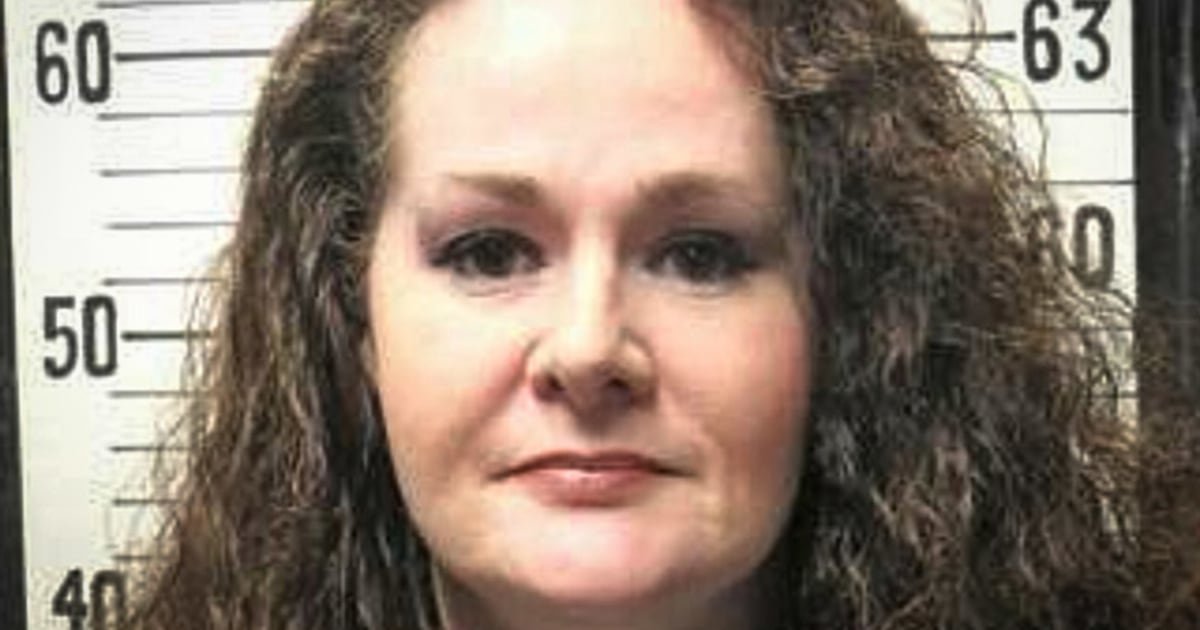

A Tennessee judge ruled Wednesday that the state must preserve any relevant evidence in connection with Christa Pike’s failed execution last week. “Today’s hearing was just a first step of many to preserve and enforce Christa’s constitutional rights after this unprecedented botched execution,” one of the attorneys, Luke Ihnen, said during a news conference after court Wednesday.“As I said repeatedly, we have not asked the state to turn over any evidence at this point,” he continued. “Only demanding that they preserve it so that her lawyers, experts, and the public can learn what really happened Wednesday night.”Pike last week became the first person to survive two doses of a lethal drug injection after Tennessee failed to execute her for murdering her classmate three decades ago when she was 18. Doctors have told Jattvibe News that it appeared most of the pentobarbital — the drug used in the lethal injection — entered her arm rather than her bloodstream, having enough power to put her to sleep but not to stop her heart or slow her breathing. Pike, 50, was in the hospital, unconscious and on a ventilator, for six days when her lawyers said Tuesday she had woken up and was speaking. They did not disclose what she was talking about or what her current condition was. “At a minimum, we expect a long recovery,” attorneys Randy Spivey and Kelly Gleason said in a statement Tuesday. Another of Pike’s attorneys, said Wednesday that she is “speaking limitedly.” Pike’s lawyers were in court Wednesday for a status conference during which they asked Chancellor I’Ashea L. Myles to preserve all evidence from the failed execution. “The state has made no promises that Miss Pike will not be subject to our future execution, and the evidence that we are seeking to preserve now is relevant for any future challenge that she makes,” Ihnen argued.Myles ultimately ruled in favor of Pike’s team, stating that Tennessee must preserve any and all relevant evidence, including but not limited to: IV lines and needles, medical supplies and records, any drugs used with anything from the manufacturer, photographs, video recordings, handwritten notes, checklists and any witness accounts. “The state will have no problem doing this because you all are already doing that,” Myles said. She said if anything has already been discarded, the state must work to “claw back that information,” and ensure going forward that no further information is discarded or destroyed. Additionally, Ihnen asked Myles to order that the Tennessee Department of Corrections give their team 48-hours notice before Pike is moved, to remove her shackles while she is in a hospital bed and to give her access to a phone or a tablet. He also asked that the legal team receive regular visits with Pike, noting they had to wait in the lobby of the hospital for two-and-a-half hours when they tried to see her on Tuesday. Pike was set to be the first woman executed in Tennessee in more than 200 years. She has been on death row for more than 30 years for the 1995 murder of 19-year-old Colleen Slemmer. It remains unclear what her future could look like and whether the state will attempt to execute her again. Tennessee Gov. Bill Lee insisted in the hours after the Sept. 30 execution attempt that the team — whose members’ identities are shrouded in secrecy — followed the state’s protocol well. But days later, he announced that the state’s top prison official, Frank Strada, would be stepping down this month. In a statement, Strada said he believed the state Department of Correction had carried out its responsibilities “in accordance with the established protocol.” But stepping aside, he added, was in the “best interest of Tennesseans as the independent review moves forward.”Lee also ordered an independent review of the failed execution and paused all executions in the state for the rest of the year. Pike’s was the second failed lethal injection in the state this year. Tony Carruthers’ execution in May was stopped after the state Department of Corrections struggled to find a vein to set a backup injection line.