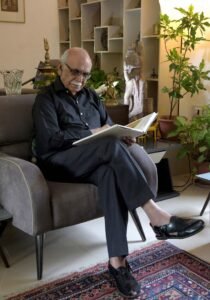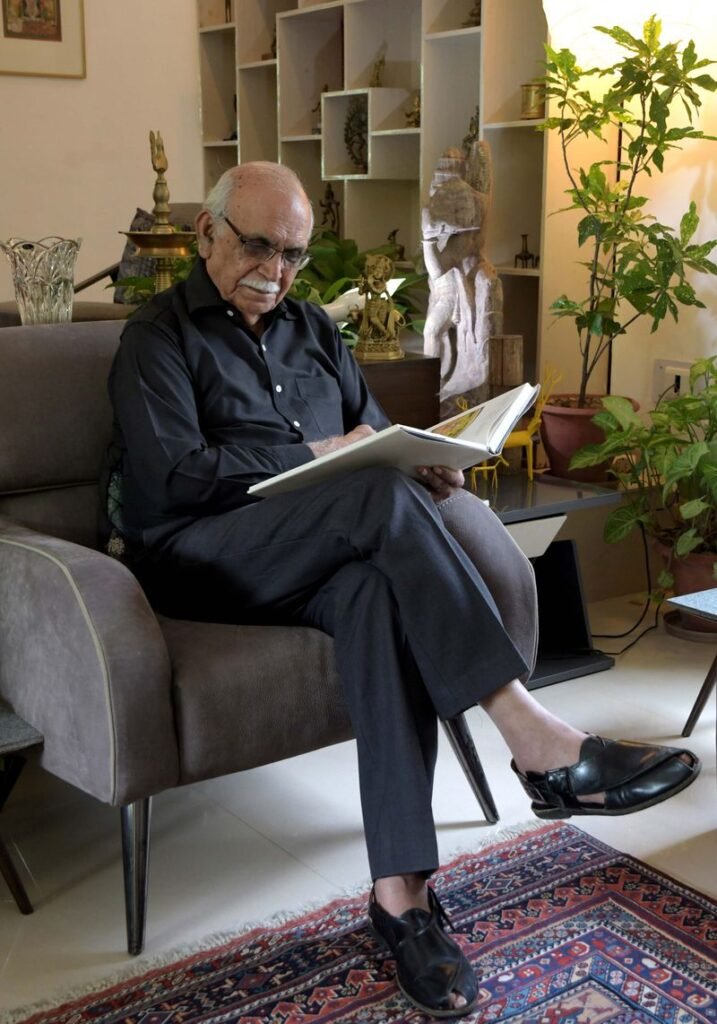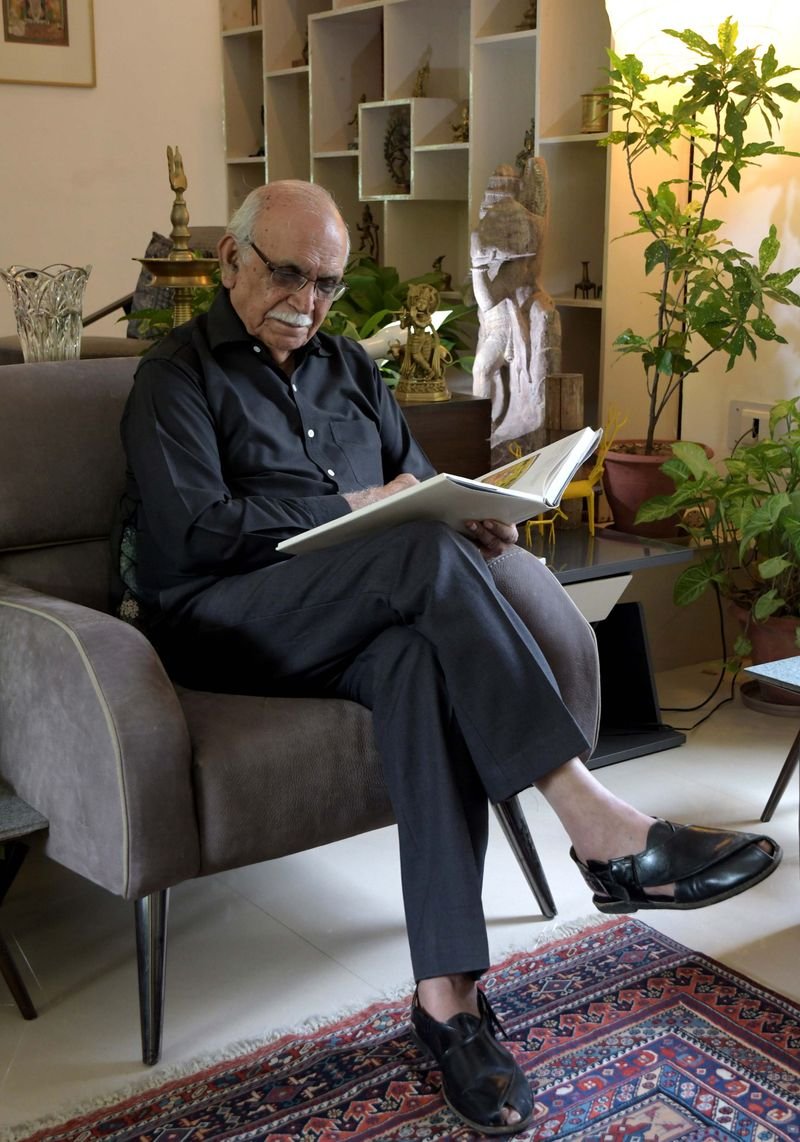

November 17 marks three years since the world of art and the city of Chandigarh lost one of its brightest lights. It was on this day in 2023 that Dr BN Goswamy passed into eternity — robbing India of a monumental art historian and Chandigarh of its quiet, towering pride.To witness him at a lectern was to watch an intellectual rock star, who could pack in a scholarly punch along with having the audience riveted at his turn of phrase. Students and scholars hung onto his every word, transforming academic discourse into an electric, pop concert phenomenon.Conjuring a vast web of references with the effortless dexterity of a master magician, he orchestrated his talks with supreme restraint, impeccable dialogue delivery, and perfectly timed dramatic pauses.He moved fluidly between Urdu and Persian poetry, Sanskrit shlokas, and earthy Punjabi idioms, fusing art, history, politics, poetry, life, and humour into an intricate pattern of ideas. He possessed the rare gift of never intimidating his listeners, epitomising the qualities of a Renaissance man.I vividly recall his mesmerising classes on Indian miniatures and modern art in the early Seventies, when I was a student in his much acclaimed Fine Arts Department at Panjab University. I can still hear that grainy voice when he would speak about the beauty of a swirling cloud, and the delicate brushstrokes of the painter Nainsukh — such as in ‘Raja Balwant Singh of Jasrota examining a painting with Nainsukh’ — or the poetic, floating geometries of Paul Klee’s ‘Twittering Machine’.He did not merely teach art history; he taught us how to see. Under his gaze, nothing was ever casual or irrelevant. Every fold of fabric, every architectural line, and every nuance of nature held immense value. Over the years, I watched him answer even the most trivial questions with a sincerity that revealed both a boundless love for his subject and reverence for the spirit of inquiry.A self-deprecating, wry humour was one of his greatest hallmarks, deployed judiciously as a punctuation mark, or a parenthesis. Contrary to popular opinion, he was not a dry intellectual but a man full of juicy aphorisms and sometimes startling irreverence.That same insatiable curiosity and boundless energy stayed with him right up to his final days. Despite unimaginable sadness and sporadic hospitalisations, his trademark politeness and elegance never wavered. Through the vicissitudes, he poured his remaining strength into completing his magnificent six-volume compendium, ‘The Great Mysore Ramayana’, celebrating the early 20th-century creations of the Krishnaraja Wadiyar period; a book still under publication.Even as he plumbed the depths of courtly southern epics, he could pivot playfully to entirely unexpected subjects, such as his delightful book, ‘The Indian Cat’. Part compilation of Jataka tales, poetry, proverbs, and feline lore, it is filled with witty asides where clever cats outwit Bodhisattvas with the mere flick of a tail. In a lecture discussing the work, he noted with delicious amusement: “Dogs eat, cats dine.” It is a line that still echoes fondly in my head, particularly as cats share my own home. This unexpected point of departure was a tribute to his son Apoorva, who was a great lover of cats.The tragedy that befell Dr Goswamy’s household feels almost too immense, too agonising to capture in words. From the outside, their family seemed to epitomise the absolute ideal of a well-knit Indian family — a patriarch who was a towering international scholar, an equally accomplished wife, Karuna Goswamy, and two gifted children: Malvika and Apoorva. They were a portrait of grace, refinement, and were Chandigarh’s royalty.Yet within a span of just three years, that beautiful world was torn asunder.It began when Karuna Goswamy passed away during Covid. Before that first seismic loss could even fully register, their beloved son, Apoorva, succumbed to cancer. Then came the passing of Dr Goswamy himself. And just when the world thought the cup of grief was full, the final, numbing shock struck: their daughter, Malvika, died suddenly. It is an epic, heart-shattering sorrow — like a classic play gone horribly wrong.My relationship with him remains one of the defining journeys of my life, evolving from a wide-eyed student to a university colleague, friend, and finally, a member of his extended family. They say proximity dims admiration, but with Dr Goswamy, that adage completely broke down; the closer one got, the more staggering his brilliance appeared. His razor-sharp insights never ceased to surprise, challenge, and elevate me.Even today, I find myself unable to erase his number from my mobile phone, frequently staring at it when I am searching for a concept, stuck on an idea, or yearning for a piece of historical clarification. He was, and forever remains, our treasure trove.— The writer is a theatre director