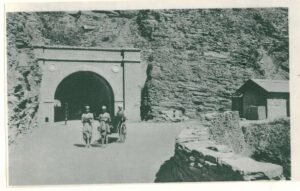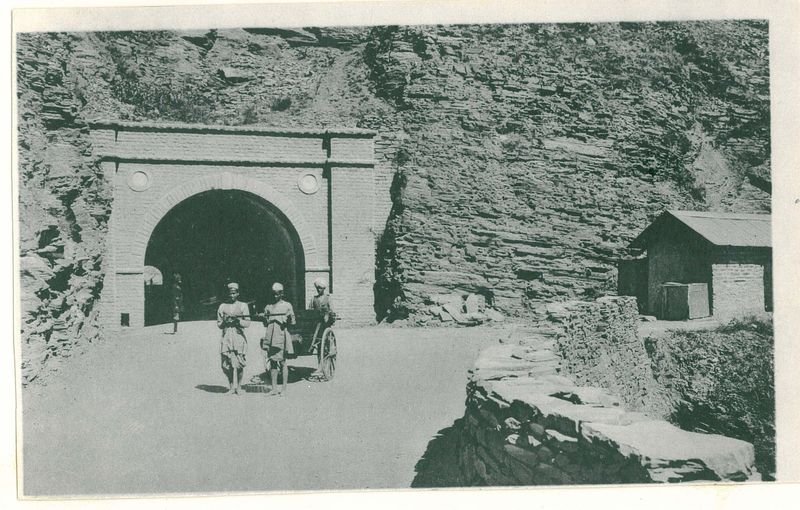

AT different points of time, the Hotz family owned several hotels in India. There was the Alasia in Kasauli, the Gables in Mashobra, and the Cecil Hotels in Shimla, Agra and Delhi — the last one now houses St Xavier’s School. An iconic property was Wildflower Hall, which has been in the news in recent years. After a fresh bid, for the next 35 years, this is back with the Oberoi Group through East India Hotels Limited (EIHL), who were managing this; 47.1 per cent of the annual gross revenue will be handed over to the Himachal Government.The first definitive mention of ownership of the property comes from Edward Buck’s book, ‘Simla, Past and Present’ (1925). He noted: “Another well-known house on the Mahasu range is ‘Wildflower Hall’, for many years the property of Mr GHM Batten, CS, who officiated at one time as Private Secretary to the Earl of Lytton, and a favourite retreat of Lord Ripon’s.” (Both Lytton and Ripon were British Viceroys of India).Briefly, its most famous resident was Horatio Herbert Kitchener, Commander-in-Chief of the British Indian army. With less than perfect eyesight as a child, Kitchener was a poor shot — and later named three gun dogs “Bang”, “Miss” and “Damn”. Born in 1850, he and his brothers were trained for the army by their father as they grew up in Ireland. With his large body, piercing blue eyes and a moustache that went down in history as it bore down on army recruitment posters during the First World War, he had a coterie of admirers and an equally large band of ‘sworn enemies’.He was unexceptional at the Royal Military Academy but in 1898, he returned to London as the hero who had avenged the death of General Gordon, who had been killed in the Sudan in January 1885 by the Madhi’s forces. At Omdurman, he killed 10,000 Sudanese for the loss of 28 British soldiers — and complained over the waste of ammunition required in terminating the wounded on the ground. Queen Victoria bestowed upon him the title of 1st Earl Kitchener of Khartoum.As Commander-in-Chief of the British forces during the Boer War, he was a brilliant strategist who was ruthless in the execution of his plans. His concentration camps held Boer women and children and thousands of black Africans — many of whom died there. A man who had a remarkable collection of fine china, devoured detective novels and enjoyed arranging flowers, he loved all the panoply and trappings that came with his office.When the battle-weary Boer General, Jan Smuts, arrived at the little station of Kroonstad, in what was the Orange Free State, Kitchener arrived to meet him trailed by a mounted bodyguard of turbaned Pathans in crimson jackets, jackboots and gold-mounted scimitars. (Mahatma Gandhi also met Smuts several times and presented him with a pair of leather sandals that he crafted himself at Tolstoy Farm in South Africa. In 1939, Smuts returned the sandals to Gandhiji on his 70th birthday, writing: “I have worn these sandals for many a summer, even though I may feel that I am not worthy to stand in the shoes of so great a man.”)Meanwhile, Lord Curzon had come to India in 1899 as the youngest Viceroy to rule the country; he was still not 40. With the idea that his own image would be enhanced by Kitchener’s presence, and despite warnings against Kitchener who was called “an uncouth and ruthless man”, Curzon requested that the office be given to him. It seemed only a matter of time before the two would clash — and the battle between the Lord of the Indian Empire and the Lord of War, brought about by the acrimony over the extent of control that the civil government would exercise over the Indian army, led to Curzon’s resignation.In Shimla, Kitchener’s official residence was Snowdon and for his personal comfort, he took the lease of Wildflower Hall as a suburban retreat — this still belonged to GHM Batten, who acted through his agent, Felix von Goldstein. While Kitchener’s stamp on Snowdon remained up to the last moments of British rule in India, it is on record that he spent lavishly to maintain and develop the grounds of Wildflower Hall, but did not spend a penny on the house itself.Kitchener’s stay at Wildflower Hall contributed rather strangely to the development of Shimla and the Sanjauli tunnel. At that time, this was little more than a hole in the hill. On November 14, 1903, when Kitchener was riding back from Wildflower Hall, his horse shied away from a passing labourer. Kitchener’s left leg twisted and snapped. Help came in the form of a Mr Jenn, who was coming in a rickshaw. Kitchener was carried to Snowdon and the leg placed in splints. While Kitchener lay in bed, some sort of peace reigned between him and Curzon.Meanwhile, after this freak accident, extensive repairs on the tunnel were undertaken. It was after this incident that Kitchener gave up the lease on Wildflower Hall though he stayed on as Commander-in-Chief till 1909.— The writer is an author based in Shimla