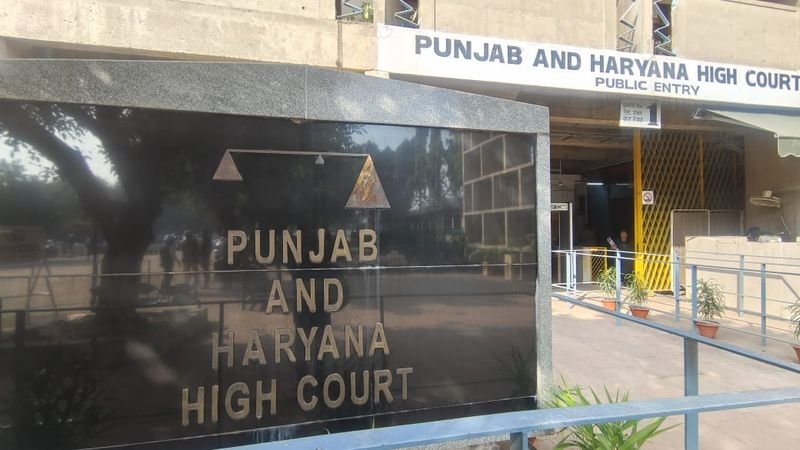

Making it clear that an ad hoc arrangement “ought not to be allowed for an indefinite period”, the Punjab and Haryana High Court has directed the state of Punjab to take an appropriate decision on the appointment of a regular Director-General of Police (DGP).“The appointment to the post of Director-General of Police is of importance for maintenance of the law and order in the state. An ad hoc arrangement for such purposes ought not be allowed for an indefinite period. We, therefore, command the state of Punjab to take an appropriate decision in the matter,” the bench of Chief Justice Ashwani Kumar Mishra and Justice Rohit Kapoor asserted.The bench also asked the state to inform the court about the decision taken regarding the appointment by filing the Chief Secretary’s affidavit before the next date. The directions came on a public interest litigation seeking appointment of a regular DGP in Punjab in accordance with the Supreme Court’s binding directions.The PIL filed against the state of Punjab and other respondents by advocate Nikhil Thamman said Punjab did not have a regular DGP for more than four years now. The highest post in the state police force was, as such, continuing under an additional-charge arrangement.Thamman submitted such a prolonged arrangement gave rise to serious institutional concerns as an officer holding the post merely on additional charge might always remain in a potentially compromising position, lacking the institutional security and assured tenure contemplated for a regularly appointed DGP. According to the petitioner, stable and independent leadership at the highest level of the police force was essential for maintaining the Rule of Law and public confidence in policing. The petitioner also relied upon the Supreme Court judgment in the case of “Prakash Singh and others versus the Union of India and others” and the subsequent order dated March 13, 2019.It was submitted that Supreme Court had prescribed a procedure for selection of the state DGP through UPSC empanelment and had categorically held that there was no concept of an “acting” DGP. The PIL further stated that the UPSC panel had reportedly been received by the state government and that a detailed legal notice dated August 24 was served upon the authorities concerned seeking appointment of a regular DGP.The court, during the course of hearing, was informed through an affidavit filed by the Under-Secretary to the Government of Punjab that the issue was also being monitored by the Supreme Court. The affidavit further stated that the Punjab Government had, through a memo dated April 6, forwarded its complete proposal to UPSC for convening the empanelment committee meeting for preparation of a panel for appointment to the post of DGP (HoPF).According to the compliance affidavit filed before the Supreme Court, the UPSC empanelment committee subsequently met. After assessment, it recommended a panel of three officers for appointment as DGP (HoPF), Punjab. The affidavit stated that the panel was under “active consideration” of the Punjab Government and that the State was taking necessary steps for the appointment.The petitioner-in-person, however, informed the high court that the panel of three officers was recommended by UPSC in the first week of July. Taking note of the submission, the bench observed: “In the event a panel has already been forwarded by UPSC in the first week of July, 2026, we would like the state of Punjab to clarify as to why no decision is taken in the matter, when the panel is already received way back in July, 2026.” The matter has been listed for further hearing on October 13.