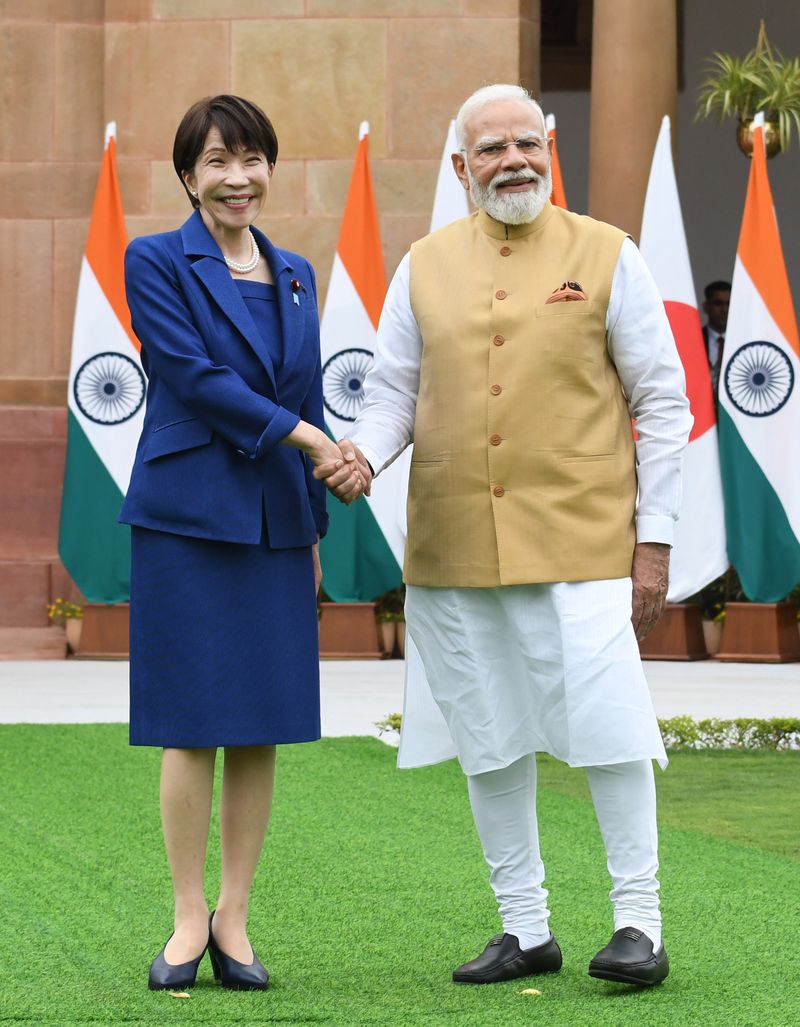

Looking to gain from Japan’s removal of self-imposed restrictions on selling and sharing military technology, Prime Minister Narendra Modi on Thursday suggested joint designing, production and manufacturing of equipment.At a meeting with his counterpart Sanae Takaichi, Modi welcomed the evolution of Japanese position on defence exports.According to a joint statement issued after the meeting, “PM Modi welcomed Japan’s review of the three principles on the transfer of defence equipment and technology and hoped that it will further deepen defence partnership between the two countries.”“Today there was a discussion between the two leaders on defence-related issues,” Foreign Secretary Vikram Misri said at a media briefing. There was a reference to cooperation across land, air, naval systems, unmanned vehicles and systems of various kinds, he added.Mod-Takaichi concurred on exploring ways to materialize other projects in the field of defence equipment and technology, the joint statemen added.India’s pitch for a deeper partnership with Japan stems from the April 21 decision in Japan to change rules for exports. Japanese Prime Minister Takaichi had then posted on X about the changes made to the rules in her country. “We amended the ‘Three Principles on Transfer of Defense Equipment and Technology’ and their ‘guidelines’ for Implementation,” The Japanese PM had said.Until now, the transfer of Japan-produced military products was limited to search and rescue, transportation, surveillance, mine countermeasures. “With this amendment, transfers of all defence equipment will in principle become possible,” she had said.New Delhi is seeing the change as it could be one of the gainers on aero-engines and marine engines besides cutting- edge technology that Japan holds on specialised sea-planes, conventional submarines and quality ship-building techniques.India and Japan, had in January this year, discussed several defence equipment projects, however, progress hinged upon Tokyo’s easing of export regulatory controls imposed since 1967.Meanwhile, the two Prime Ministers expressed satisfaction that an agreement has been reached in principle on the remaining technical details regarding the Unified Complex Radio Antenna (“UNICORN”) project.Excluding the defence sector, Japanese investment in India runs into billions of dollars in making cars, semi-conductors, steel plants, transport projects like bullet trains, railways and metro, among others.