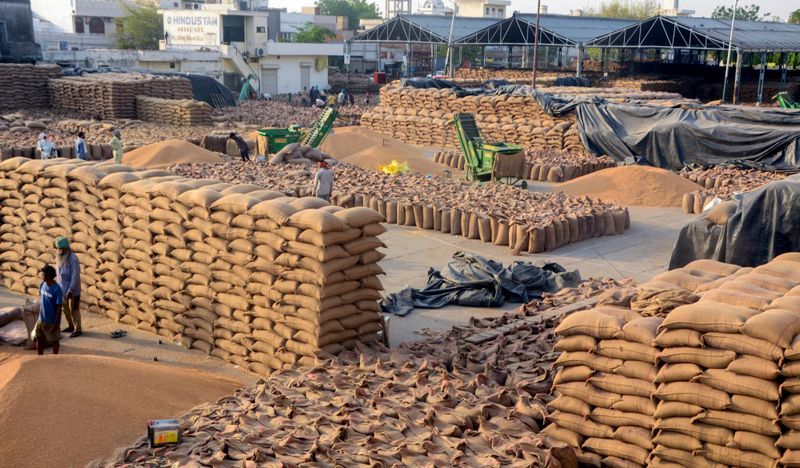

Amid storage and logistical challenges posed by the monsoon, Punjab has started distributing four months’ quota of free wheat to beneficiaries covered under the National Food Security Act (NFSA) instead of the usual three months.Under the special July-September distribution cycle, beneficiaries will receive 20 kg of wheat per person instead of the usual 15 kg. The additional 5 kg represents the advance quota for October. Officials said the arrangement is only for the current cycle and there is no direction to extend the four-month distribution system to subsequent cycles.The move follows a directive of the Union Ministry of Consumer Affairs, Food and Public Distribution dated July 3, asking all states and UTs to lift foodgrains allocated up to October under the NFSA in advance. The Centre said the decision had been taken in view of the forthcoming monsoon.The Food Corporation of India (FCI) has been directed to ensure adequate availability of foodgrains in its godowns and coordinate with states to facilitate advance lifting, the letter read.Reportedly, Punjab has been facing a shortage of storage space with godowns and other storage facilities already under pressure after paddy procurement. Officials said it was practical to distribute the wheat among beneficiaries rather than risk its deterioration due to inadequate storage facilities.A senior official of the Department of Food, Civil Supplies and Consumer Affairs said this was the first time when beneficiaries in Punjab will receive four months’ quota in a single cycle. From 2014 to 2022, foodgrains for six months were distributed together. The system was changed in 2023 after which beneficiaries started receiving foodgrains for three months in a single cycle.Meanwhile, the arrangement has increased the workload of ration depot holders, who now have to issue five slips to each beneficiary one for each month’s ration and one for the ration kit.Karamjit Singh Arreccha, Punjab president of the All India Fair Price Shop Dealers Federation said, “Earlier, we had to issue only one slip per beneficiary. Now, five slips have to be issued which has slowed down the distribution. If there is a biometric or technical glitch while issuing even one slip, the entire process has to be started again.”Officials said the Centre had directed states to ensure monthly distribution, requiring separate slips for each month despite Punjab following a quarterly distribution cycle. The state had written to the Centre on the issue in the first week of June but had not received a response so far, they added.