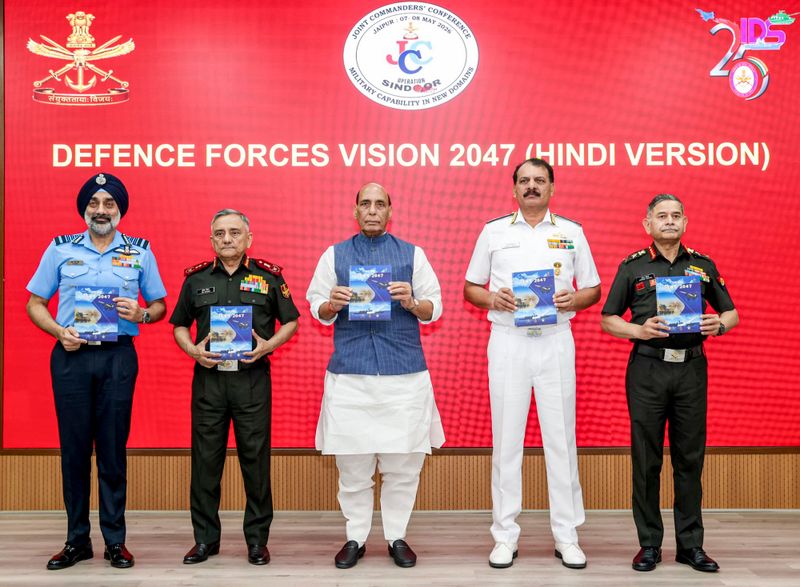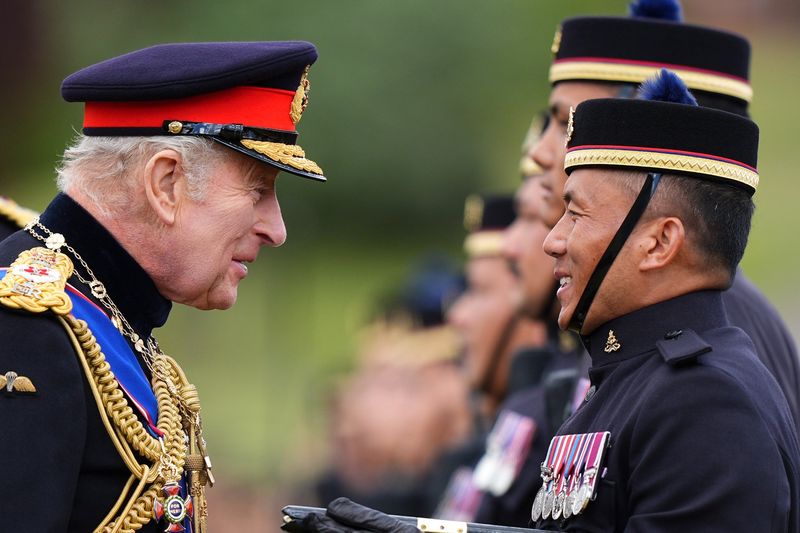

As King Charles III of the United Kingdom remarked “Ajur din ramro cha!” in Nepali, which translates into “Today is a good day”, while reviewing the inaugural formation parade of the King’s Gurkha Artillery in south-west England, an illustrious Indian Army regiment, the Garhwal Rifles, that traces its origins to the Gurkha regiments raised by the British, shot into prominence, with a large number of serving Lieutenant Generals belonging to it holding key positions.“As Captain General of the Royal Regiment of Artillery, it gives me the greatest pride on this most significant day to witness the formation of your new regiment,” he said at the event held on June 4. His office termed it a landmark moment marking the creation of the British Army’s first dedicated Gurkha Artillery unit and its newest regiment.As the impasse over the recruitment of Gorkha soldiers from Nepal into the Indian Army continues, the British Army has raised a new Gurkha unit, as Gorkha is spelt by them, as part of the Royal Artillery, exclusively comprising these hardy mountain warriors from the Himalayan nation. The Gurkha units in the United Kingdom had formed part of the erstwhile British Indian Army.“It is set to grow to more than 500 personnel by 2029. A new cap badge — the first in 14 years — was created to mark the occasion and reflect the expanded role of the Brigade of Gurkhas in modern warfare,” King Charles’s office said. At present, the British Brigade of Gurkhas comprises about 4,000 troops recruited directly from Nepal.The chequered legacyThe Gorkhas have a chequered history. During the Anglo-Nepali War of 1814–1816, they were first recruited into the British East India Company and, for the past over two centuries, have served with distinction in campaigns and operations around the world.The Indian Army’s present First Battalion of the First Gorkha Rifles (1/1 GR), earlier known as the 1st King George V’s Own Gurkha Rifles, is the oldest Gorkha battalion, raised in April 1815 as part of the East India Company’s Bengal Army.After India’s Independence in 1947, four of the 10 Gurkha regiments — the 2nd King Edward VII’s Own Gurkha Rifles, 6th Queen Elizabeth’s Own Gurkha Rifles, 7th Duke of Edinburgh’s Own Gurkha Rifles and 10th Princess Mary’s Own Gurkha Rifles — were transferred to the British Army. In 1994, the four regiments were amalgamated to form a single regiment, the Royal Gurkha Rifles.The remaining six regiments allotted to the Indian Army were reorganised as the 1 Gorkha Rifles (GR), 3 GR, 4 GR, 5 GR, 8 GR and 9 GR. A seventh regiment, 11 GR, was subsequently raised in 1948 to incorporate troops from the four British units who opted to remain in India. Each regiment, which is highly decorated, has five to six battalions consisting mostly of Nepal-domiciled troops.Some illustrious infantry regiments of the Indian Army trace their origins to the Gurkha Rifles battalions of the pre-Independence era. Notable among them are the Garhwal Rifles and the Kumaon Regiment. The Naga, Assam and Dogra Regiments also have historical linkages with the Gurkha Rifles.Garhwal Rifles gets prominenceThe Garhwal Rifles recently came into prominence with the appointment of Gen NS Raja Subramani as the Chief of Defence Staff (CDS). He belongs to this regiment, which was raised in 1887. Prior to this, Garhwalis were enlisted in the five Gurkha regiments of the Bengal Infantry and the Punjab Frontier Force.Besides the country’s senior-most military officer, the Garhwal Rifles also boasts as many as seven currently serving Lieutenant Generals, among the highest numbers from any infantry regiment.These include Lt Gen Dinesh Singh Rana, Lt Gen Vakamulla Hariharan, Lt Gen Rajan Sharawat, Lt Gen Amit Kabthiyal, Lt Gen Shamsher Singh Virk, Lt Gen Gambhir Singh and Lt Gen Navin Sachdeva.Among them, Lt Gen Rana is the only Army Commander-equivalent officer and is presently serving as the Commander-in-Chief, Strategic Forces Command, an integrated tri-service command responsible for India’s tactical and strategic nuclear weapons.Incidentally, the Army’s apex leadership, including the Army Chief and Army Commanders, is at present dominated by the Infantry. The Army Chief and five Army Commanders are from the Infantry, while the Vice Chief and one Army Commander are from the Armoured Corps.Among the other six officers from the Garhwal Rifles, three — Lt Gen Virk, Lt Gen Sharawat and Lt Gen Kabthiyal — are currently serving as Corps Commanders in the western sector, while Lt Gen Hariharan is commanding a strike corps. The remaining two are on staff postings.Gen Raja Subramani is the first officer from the Garhwal Rifles to become a four-star General, while three Gorkha officers — Field Marshal Sam Manekshaw, Gen Dalbir Singh Suhag and Gen Bipin Rawat, later the first CDS — became Army Chiefs.Both the Gorkha Rifles and the Garhwal Rifles have seen extensive combat over the past two centuries, serving in campaigns around the world, including the two World Wars, as well as all post-Independence wars, major operations and United Nations peacekeeping missions, earning numerous gallantry awards and battle honours.The first India-born recipient of the Victoria Cross, the highest British award for gallantry in the face of the enemy, was Naik Darwan Singh Negi of the 39th Garhwal Rifles, the first battalion of the independent regiment. He was decorated for his actions near Festubert in France in 1914 during the First World War.Three Indian recipients of the Victoria Cross and one recipient of the Ashok Chakra, India’s highest peacetime gallantry award, belong to the Garhwal Rifles.As part of their ceremonial attire, officers and troops of the Garhwal Rifles wear a wide-brimmed felt slouch hat, called the Terai hat, the rakishly worn headgear that is widely associated with the Gorkha Rifles.