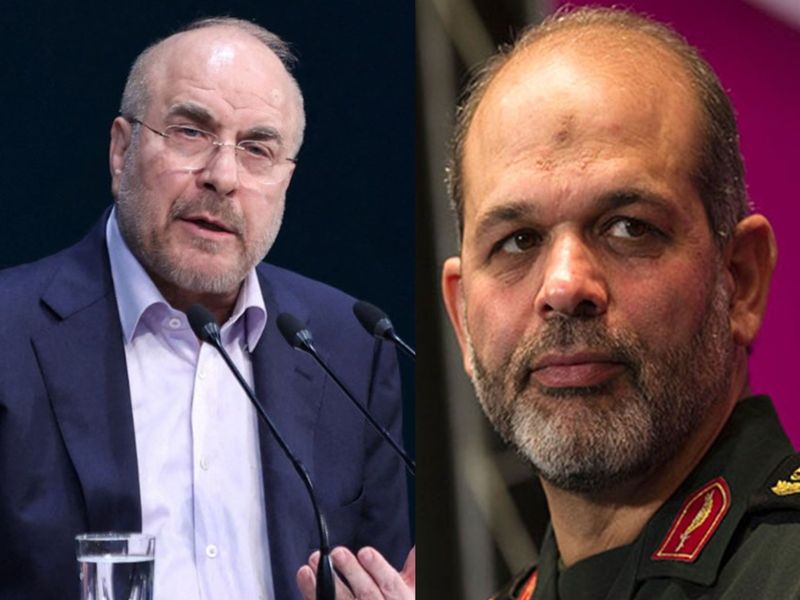

Washington DC [US], April 21 (ANI): A new assessment by the Institute for the Study of War has pointed to deepening divisions within Iran’s leadership, as diplomatic tensions and military pressure between the United States and Iran continue to mount before the second round of Islamabad Talks.The Washington DC-based think tank said, “Iranian Parliament Speaker Mohammad Bagher Ghalibaf appears to be engaged in a serious intra-regime debate with Islamic Revolutionary Guards Corps (IRGC) Commander Major General Ahmad Vahidi and other senior regime officials opposed to negotiations with the United States.”The analysis highlighted a growing rift betweencand Islamic Revolutionary Guards Corps (IRGC) Commander Major General Ahmad Vahidi over the question of engaging Washington in talks.The think tank further noted, “Vahidi is reportedly the only Iranian official with direct access to Supreme Leader Mojtaba Khamenei and is serving as a conduit for relaying key decisions to other regime officials, according to Israeli media on April 19.”According to the post, Vahidi’s proximity to Supreme Leader Mojtaba Khamenei underscored his growing influence within Iran’s decision-making structure.The think tank further mentioned, “Israeli media also reported on April 19 that Iranian officials’ inability to contact Mojtaba is a significant obstacle to continued US-Iran negotiations.'”Ghalibaf’s push for diplomacy and apparent effort to reach a deal may also be a bid to protect his domestic position and maintain credibility,” the think tank said.It warned of potential political fallout, stating, “Ghalibaf reportedly fears that both his and Araghchi’s positions are at risk if the IRGC consolidates control.”The analysis added that any leadership change would carry significant implications, noting, “Ghalibaf’s removal as the parliament speaker would represent a major defeat for Ghalibaf and his domestic positions and signify a victory for Vahidi.”The think tank added that these developments align with its broader assessment of shifting power dynamics in Tehran.”These reports are consistent with CTP-ISW’s ongoing assessment that Vahidi and members of his inner circle have likely consolidated control over not only Iran’s military response in the conflict but also Iran’s negotiation policy.”On the diplomatic front, the analysis added, “US and Iranian delegations will reportedly meet in Islamabad, Pakistan, for a second round of talks in the coming days. US and Iranian demands appear to have largely stayed the same, however.”The anticipated talks in Islamabad come amid continued friction due to the US naval blockade.”The US Navy continued to enforce its blockade of Iranian ports, directing 27 vessels to change course since the start of the blockade. US forces likely forced two Iranian-linked vessels attempting to violate the Navy’s blockade to turn around,” the think tank said.It also referenced the recent maritime incident of the seizure of the Iranian-flagged, US-sanctioned Touska. The post said, “The Khatam ol Anbia Central Headquarters claimed that the April 19 seizure of the Iranian-flagged, US-sanctioned Touska by the US Navy violated the US-Iran ceasefire.”The think tank further pointed to legislative moves in Tehran aimed at asserting greater control over a key global shipping route.”The Iranian Parliament is attempting to formalize Iranian “control” over the Strait of Hormuz by drafting a bill that would ban Israeli-linked vessels from transiting the Strait of Hormuz,” the think tank said.It added that the proposed bill would also ” require vessels from ‘hostile countries’ to obtain approval from Iran’s Supreme National Security Council to transit the strait, and bar states that ’caused damage’ to Iran from transiting the strait until they paid reparations to Iran.”With the existing ceasefire scheduled to expire on Wednesday, these Islamabad talks are being viewed as the final diplomatic off-ramp before the conflict potentially escalates into full-scale infrastructure warfare.While the US maintains that a “fair and reasonable” deal has been offered, the refusal of the Iranian leadership to negotiate under the “shadow of a blockade” suggests that the previous round’s stalemate may have been a precursor to a far more dangerous confrontation. (ANI)(This content is sourced from a syndicated feed and is published as received. The Tribune assumes no responsibility or liability for its accuracy, completeness, or content.)