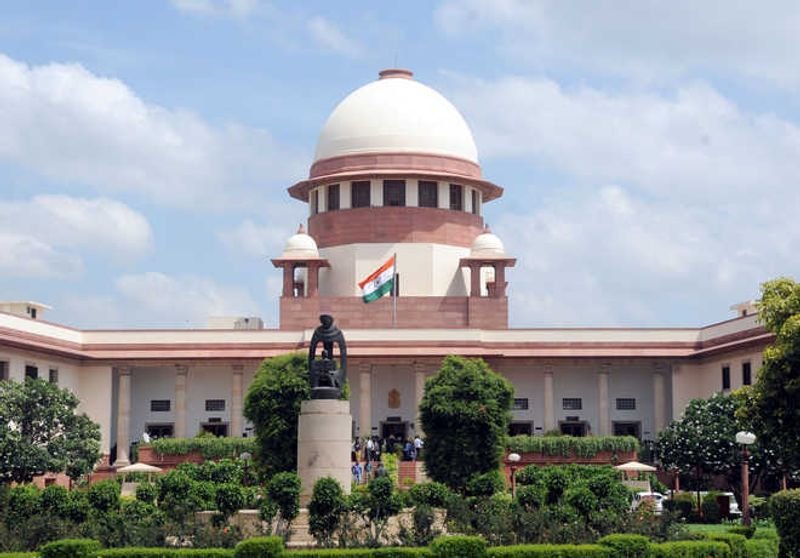

Hindus belonging to Backward Classes can’t claim quota benefits after converting to Islam or Christianity as their social backwardness can’t be transferred from the Hindu social order to a non-Hindu social order after conversion, the Supreme Court ruled on Thursday.A Bench of Justice Prashant Kumar Mishra and Justice Shree Chandrashekhar dismissed the Tamil Nadu Government’s petition challenging the Madras High Court’s June 25 order, which held that a Hindu converting to Islam can’t claim reservation under Backward Class (Muslim) category solely on the basis of conversion.Justice Mishra said, “A person who converts from a Hindu social order to a non-Hindu social order cannot claim affirmative action under Article 16(4) of the Constitution merely on the basis of the social backwardness associated with his pre-conversion status; the backwardness suffered in the antecedent social order cannot, by itself, be carried forward so as to confer upon him the status of a backward class in the religion to which he has converted.”The top court upheld the high court’s order quashing the state’s government order dated March 9, 2024, saying, “It creates an artificial route by which a person moves from a pre-conversion backward social order into a notified Muslim backward class without establishing the necessary social and legal link.”The controversy emanated from a case filed in 2022 by Sameer—born as Paramasivam in a Hindu family – who converted to Islam in 2015. He moved the Madras High Court after his application for a BC-Muslim (Muslim Lebbai) community certificate was rejected by a tehsildar.Writing the judgment for the Bench, Justice Mishra said, “A person who converts to Islam does not, by that act alone, become a member of any one of the seven notified Backward Class Muslim communities in the state. His former caste or community status cannot automatically be transposed into the Muslim Backward Class category, nor can a private religious body conclusively determine such statutory entitlement.”It cited paragraph 3 of the Constitution (Scheduled Castes) Order, 1950, according to which a person who professes a religion other than Hinduism, Sikhism or Buddhism cannot be deemed to be a member of a Scheduled Caste. Consequently, upon conversion to a religion not specified in the 1950 Order, such person ceases to possess the Scheduled Caste status attached to his antecedent caste and cannot claim any affirmative-action benefit of a backward class under Article 16(4) of the Constitution which is predicated upon membership of a Scheduled Caste, it said.“Conversely, where a person, after having converted from the Hindu social order to a non-Hindu social order, reconverted to Hindu social order, the question of his entitlement to affirmative action under Article 16(4) cannot be determined merely by reference to his antecedent status. Such entitlement would require an independent, fact-specific determination by the competent authority as to whether the original caste or social identity has genuinely revived upon reconversion and whether the person satisfies the applicable constitutional and legal requirements for such affirmative action,” it said.“No statutory benefit, protection, reservation or other entitlement under Article 16(4) of the Constitution, the enjoyment of which is predicated upon a particular Hindu social order, can be claimed or extended merely on the basis of such antecedent membership after the person has converted to Islam, Christianity or any other non-Hindu social order. Such conversion severs the legal foundation of an entitlement which is specifically conditioned upon membership of that Hindu social order,” the Bench said.It dismissed the state’s petition challenging the high court’s order which declared as unconstitutional the GO that allowed a person converting to Islam from Backwards Classes, Most Backwards Classes, Denotified Communities, or Scheduled Castes to be treated as BC (Muslim) and be issued with a community certificate as belonging to one of the even notified sects for availing reservation benefits upon conversion.The said seven sects of Muslims notified as Backwards Class Muslims as per The Tamil Nadu Backwards Classes, Scheduled Castes and Scheduled Tribes (Reservation of Seats in Educational Institutions and of Appointments or Posts in the Services under the State) Act, 1993, were – Ansar, Dekkani Muslims, Dubekula, Labbais, including Rowthar and Marakayar, Mapilla, Sheik and Syed.Noting that Labbai, Rowther and Marakkayar communities are birth-based communities, the high court said the BC status can’t be claimed solely on the basis of religious conversion and that an executive order (GO) issued by the state government can’t override binding judicial precedents.