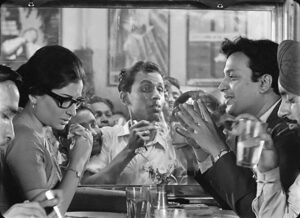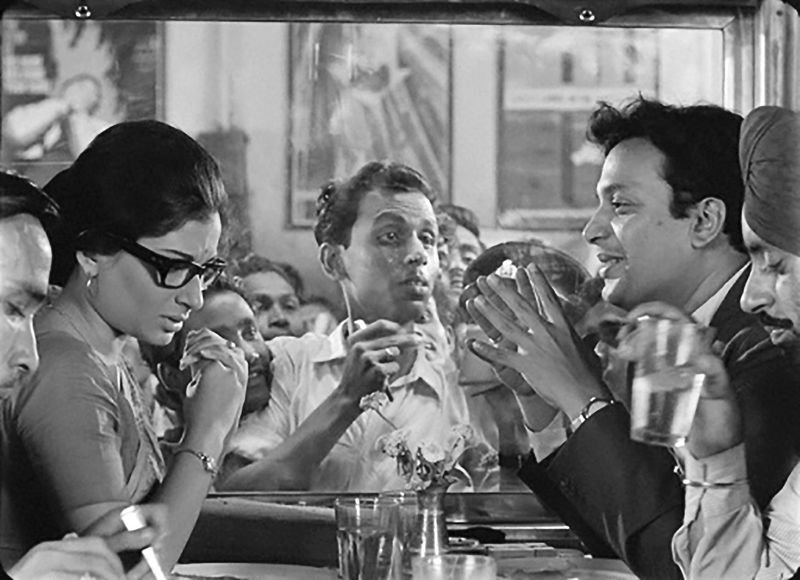

On May 6, 1966, Satyajit Ray’s ‘Nayak’ premiered at Indira Cinema in Bhowanipore, South Kolkata. The film’s hero, Uttam Kumar, attended the premiere, drawing thousands of fans. Roads were so packed that the police struggled to manage the crowd. His car had to navigate through the bylanes to reach the hall. Inside, the audience erupted in chants of his name.Uttam Kumar and Suchitra Sen in ‘Saptapadi’Moments like these were a testament to why Bengal branded him as Mahanayak. His fame grew film by film. Eventually, the state established an annual award in his honour. A century after his birth, Bengal’s love for its Mahanayak remains strong.Uttam Kumar was born Arun Kumar Chattopadhyay on September 3, 1926, at Ahiritola, North Kolkata. His family lived modestly on Girish Mukherjee Road, Bhowanipore. His father, Satkari Chattopadhyay, was a projectionist at Metro Cinema, while his mother, Chapala Devi, was a homemaker. His maternal grandfather named him Uttam, though his mother called him Arun.His co-actor Pahari Sanyal advised him to use the name for the 1951 film, ‘Sahajatri’.Uttam studied at South Suburban School and later at Government Commercial College, Kolkata, (now Goenka College of Commerce and Business Administration). He then joined the Kolkata Port Trust as a clerk, indulging his passion for acting in amateur theatre. Uttam was an all-rounder sportsman dabbling in wrestling, football and swimming.In 1948, Uttam made his debut in Nitin Bose’s ‘Drishtidaan’. He soon developed a screen presence based on his subtle and restrained acting at a time when other Bengali actors relied on stage gestures. He unlearned that theatrical training until his dialogues sounded like natural conversation.Novelist Bimal Mitra once called him ‘the creator of the character’ rather than ‘merely the actor’. Uttam gave Bengal the image of a refined gentleman, the bhadralok, providing a face and voice in which Bengalis recognised themselves.His success wasn’t instant. Between 1948 and 1952, the young actor gave six to seven consecutive flops. The industry nicknamed him ‘Flop Master General’.Then ‘Sharey Chuattor’ arrived in 1953, changing his relationship with the audience overnight. Within a year, he appeared in 14 films. This sudden reversal was remarkable because Bengali cinema rarely forgave any actor a long run of flops, but his talent overcame all hurdles.He went on to do more films with his ‘Sharey Chuattor’ co-star Suchitra Sen, including ‘Agni Pariksha’, ‘Shap Mochan’, ‘Harano Sur’ and ‘Saptapadi’, turning their pairing into a shared cultural legacy. ‘Saptapadi’s’ famous scene — a college staging of ‘Othello’s’ final act, where Uttam lip-syncs to Utpal Dutt’s voice — is still talked about. Critics often said he listened more than he performed, quietly rebelling against ‘theatrical’ cinema.Across 32 films, Uttam and Suchitra built a language based on simmering glances — holding a gaze a second longer than necessary. Generations of Bengali courtships were measured against this language.Across four decades, Uttam built an easy rapport with his leading ladies. Bosu Paribar cast him opposite Sabitri Chatterjee, who became his frequent co-star. The same film marked Supriya Devi’s debut as his sister. She later returned as his leading lady in ‘Shonar Horin’ and became his lifelong off-screen companion. By 1970s, he paired with a much younger Aparna Sen in ‘Joy Jayanti’ and ‘Memsaheb’, among others.Uttam maintained his gravitas against other actors of his own stature.‘Chowringhee’ placed him alongside two other popular actors, Subhendu Chatterjee and Biswajit Chatterjee. Though built around three matinee idols, the story kept circling back to Uttam’s character, Satyasundar ‘Sata’ Bose. Other heroes could share his films, but none could share his mystique and charisma.A little-known story shows how he guarded his mystique. Uttam once drove past a petrol station and spotted Subhendu Chatterjee standing casually by his car. Meeting him later, Uttam admonished him: a hero could not afford to be seen so easily.His pull also held against actors with deeper theatrical pedigrees. Uttam’s restraint always held its own whether in ‘Deya Neya’ against Kamal Mitra or in ‘Harano Sur’ against Pahari Sanyal.Directors were willing to bet their entire productions on Uttam’s appeal. Satyajit Ray, who avoided popular filmstars in his films, signed him for ‘Nayak’ in 1966, reasoning that only a genuine actor like Uttam could play one plausibly.In an uncanny twist, Ray’s ‘Nayak’ had Uttam dismantling his own myth, playing a star hollowed out by the very adulation that built him. Ray later said Uttam was without any equal in Bengali as well as Indian cinema.A year later, Ray cast him again in something riskier — detective Byomkesh Bakshi in ‘Chiriyakhana’, a role completely opposite that of ‘Nayak’: cold, procedural, and expressionless.The back-to-back powerful performances were without parallel. In 1968, Uttam became the first actor to win the National Film Award for Best Actor for two films at once: ‘Chiriyakhana’ and ‘Antony Firingee’.Hemant Kumar and Manna Dey often provided background voice for Uttam, who himself had trained in classical music under Nidanbandhu Banerjee. Uttam had composed the score for his 1966 film ‘Kal Tumi Aleya’, and lent his own voice as a playback singer for ‘Nabajanma’ (1956).However, the popular actor remained confined to Bengali cinema. Aside from ‘Amanush’ and ‘Ananda Ashram’, his other Hindi films, including ‘Desh Premee’, ‘Mera Karam Mera Dharam’, ‘Kitaab’, and ‘Dooriyan’, found little success. His biggest setback came in 1967 when he produced a Hindi film, ‘Chhoti Si Mulaqat’, co-starring Vyjayantimala, with music by Shankar-Jaikishan. It flopped big time, leaving him in debt. Though Vyjayantimala called him the most gifted co-star of her career, Hindi film audiences rejected the movie. He never produced another Hindi film.Though Bengal loved him, there was a time it preferred tradition over him. Every year on Mahalaya, Bengali households tuned in for Birendra Krishna Bhadra’s recitation. In 1976, Uttam narrated a new version. But Bengalis preferred Bhadra’s familiar voice, forcing the broadcaster to revert to Bhadra within a year.Uttam’s sense of duty ran deep. In 1943, before entering cinema, his theatre troupe, Lunar Club, staged Bankim Chandra Chattopadhyay’s ‘Anandamath’. They donated the proceeds, around Rs 1,700, to Subhas Chandra Bose’s Indian National Army relief fund.In 1968, when Uttam was at the peak of his stardom, he broke from mainstream actors’ unions to found Shilpi Sangshad, supporting ageing, low-income technicians whom the industry had forgotten. When floods hit Bengal in 1978, he captained a 1979 charity cricket match at Eden Gardens — Bengal against Bombay’s film stars, led by Dilip Kumar — and handed the funds to the Chief Minister for relief.After over 200 films, Uttam Kumar died on July 24, 1980. His funeral procession took hours to cover a route that usually took minutes. Crowds filled the streets, weeping and fainting, while shops and cinema halls closed. Ray wrote: “None like Uttam, and there will never be anyone to replace him.” Rajesh Khanna called him cinema’s truest Bengali ambassador, noting no one else wore a dhoti-kurta on screen so convincingly.What Bengal did with this memory reflects the depth of that grief. In 2019, the film ‘Mahalaya’ dramatised his minor All India Radio setback, casting Jisshu Sengupta as Uttam Kumar and treating a 40-year-old broadcasting footnote as worthy of a full feature.Few actors have their misses preserved with the same care as their triumphs — alongside his presence that could silence a mob, a double National Award in a single year, and a city-stopping funeral. On his 100th birth anniversary, that remains the full measure of what Mahanayak meant, and continues to mean.Stills courtesy: The RDB Organization and ‘Saptapadi’ still courtesy: IBNS