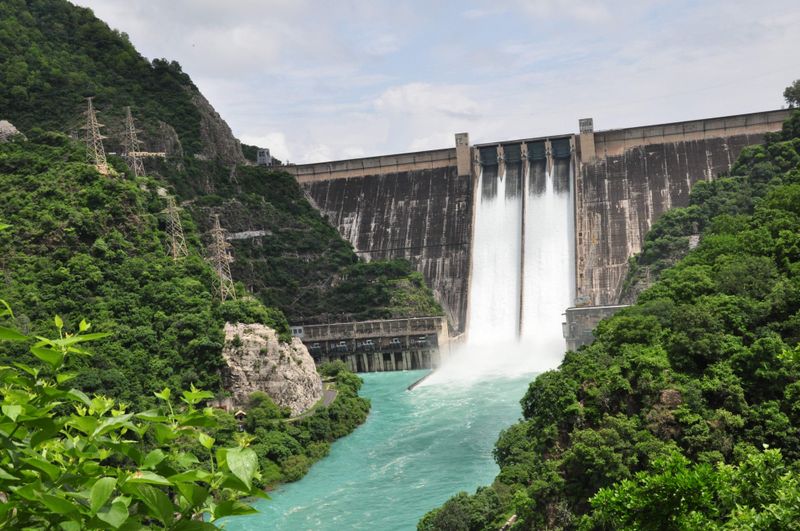

Inflow into the Bhakra reservoir continues to remain significantly below the seasonal average, given the limited snowfall in the Sutlej catchment area and delayed snowmelt caused by persistent western disturbances.According to the latest data released on June 11, inflows into the Bhakra Dam stood at 16,527 cusecs, nearly 50 per cent lower than the average inflow of 32,706 cusecs recorded during this period. The inflow into the reservoir, the lifeline of Punjab, Haryana and several northern states, was also substantially lower compared to 28,015 cusecs received on the corresponding day last year.The cumulative inflow into Bhakra from May 21 to June 11 this year was recorded at 3,03,307 cusecs, against the average of 5,91,876 cusecs. In volumetric terms, cumulative inflow stood at 0.74 billion cubic metres (BCM), almost half of the average 1.45 BCM.Sources said the average snowfall in the Sutlej catchment area was around 4 BCM, but only 2.2 BCM was recorded last winter, resulting in a considerably smaller reserve for melting during the summer.They further highlighted the impact of repeated western disturbances, which kept temperatures in the high-altitude catchment areas subnormal.“The average temperature in the snow-bound regions of the Sutlej catchment has remained around 4°C. Normally, significant snowmelt begins when temperatures rise to around 6 to 8°C,” sources said.Weather forecasts indicate that the effect of western disturbances may continue for a few more days, keeping temperatures in the areas relatively low. However, mercury is expected to go up after June 21, which could accelerate the melting process and improve inflow.Despite lower inflow, the water level in the Bhakra reservoir remained higher than both last year and the long-term average. On June 11, the reservoir level was recorded at 1,576.65 feet, compared to 1,555.30 feet on the same date last year and an average level of 1,545.39 feet.However, releases from Bhakra continued to exceed inflows. The dam released 23,163 cusecs on June 11 against inflows of 16,527 cusecs, resulting in a daily fall of 0.70 feet in the reservoir level due to the start of the paddy season in Punjab and Haryana.Inflow at other reservoirs also poorThe trend of below-average inflow was visible in other reservoirs as well. Pandoh Dam recorded an inflow of 6,869 cusecs, significantly lower than the average of 12,069 cusecs. Similarly, Ranjit Sagar Dam received 4,854 cusecs, almost half of the average inflow of 9,755 cusecs. At Pong Dam, inflow stood at 2,129 cusecs, far below the average of 6,420 cusecs for this time of the year.Water experts said the coming fortnight would be crucial for the reservoir system as the onset of substantial snowmelt generally boosts river flow before the arrival of the monsoon.