

COCAINE cartels with gold rush fever are violently muscling into the Amazon basin’s legal mines to get their cut of a multi-billion dollar trade.
Heavily-armed gangs patrol barbed wire fences protecting mines deep within the rainforest, where they run a ruthless racket to extract their most prized asset.
An illegal gold mine in the Amazon region of Peru Credit: AFP via Getty Images
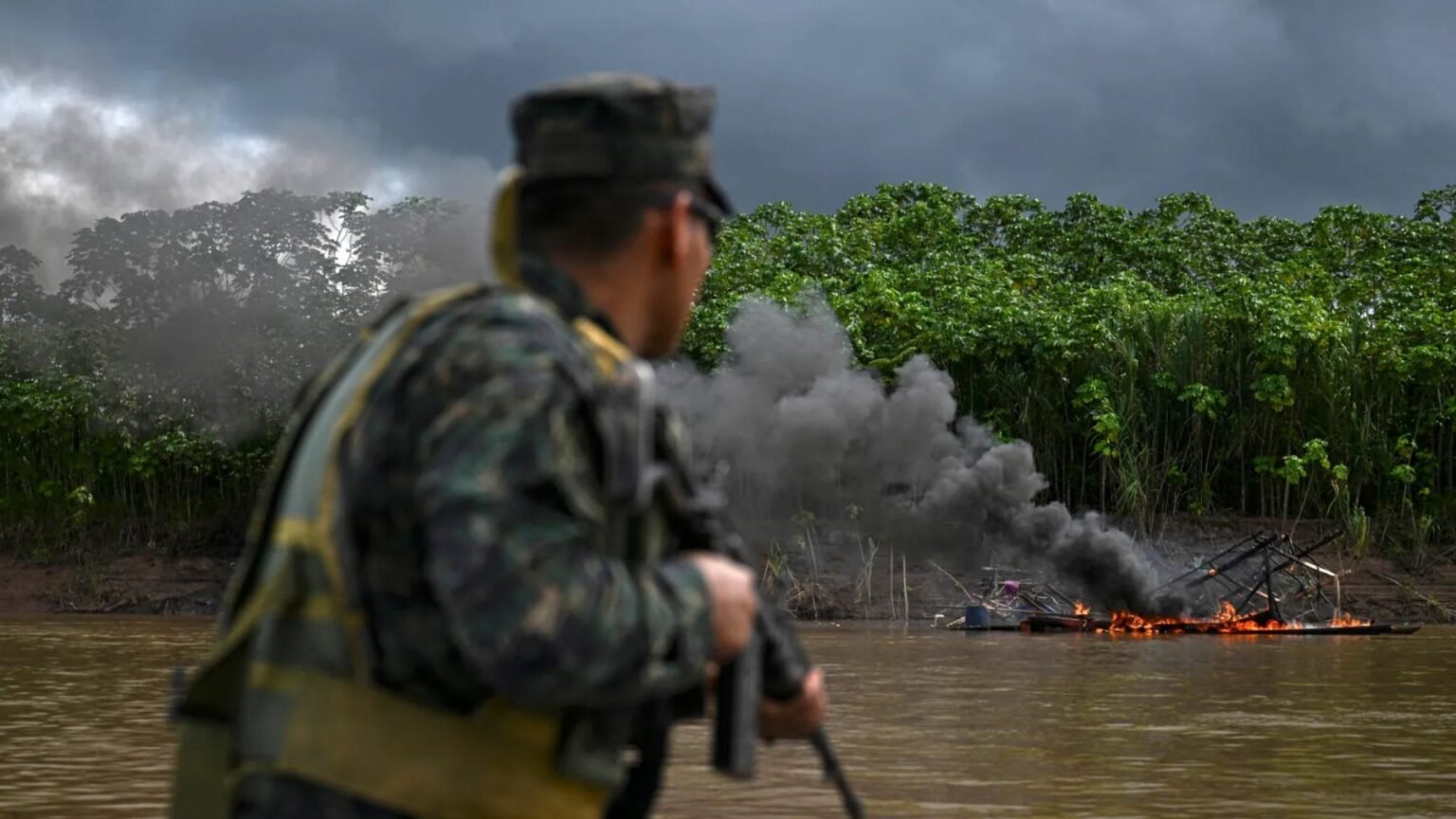
A member of the Peruvian Navy looks at a blitzed dredge raft used for illegal gold mining Credit: AFP via Getty Images
Organised crime groups are extorting miners, politicians and seizing control of the gold supply chain that is so valuable to Latin American countries.
Despite being in the middle of a cocaine boom, experts say the gold trade has become the most lucrative revenue stream in the cartel’s arsenal.
Sign up for The Jattvibe newsletter
Thank you!
Gangs operating from the heart of the Amazon basin in Peru, Ecuador and Colombia, to infamous Mexican cartels, are all getting a piece of the action.
Jennifer Scotland, a research analyst for RUSI, the world’s oldest security think tank, told The Jattvibe: “Gold has surpassed cocaine revenue in Colombia and Peru. It’s become an attractive source of revenue for crime groups.”
VLAD’S WRATH
Sabotage & spies… How Putin could unleash hell over Brit-made drone strikes
NARCOTICS WASTELAND
Majorca’s ‘drive-thru drug supermarket’ where toddlers dish out cocaine
Gold mining has long been exploited by cartels as a means of money laundering from drug trafficking.
These groups can finance mining communities and invest in equipment with dirty cash to extract and sell gold in legitimate markets.
But gold mining alone has become a more stable source of revenue than the pervasively violent drug trade.
Scotland said: “It’s become an increasingly important revenue stream.
Soldiers walk on a destroyed illegal gold mine at Farallones Natural park in Colombia Credit: AFP via Getty Images
A helicopter lands at an illegal gold mining place in Triangulo de Telembi, Colombia Credit: AFP via Getty Images
“Compared to cocaine, these are relatively low-risk, high-reward crimes that have been historically less prioritised by policymakers and law enforcement.”
Cocaine prices in Europe have taken a steep fall over the last decade, dropping from £38,300 to £11,800 per kilo between 2014 and 2025, according to the United Nations Office on Drugs and Crime.
Gold’s value has gone in the opposite direction, nearly quadrupling from £31,000 to £103,680 per kilo from August 2016 to time of writing.
Guards at legal mines have been forced to carry military-grade weapons to protect mine-shafts amid the gold boom.
Luis, the head of security at a mine deep in the Ecuadorian forest, was ambushed and shot five times after refusing to pay bribes or work for the gangs.
He told The Times a few weeks earlier: “In these mountains, it’s the criminal groups, not the state, that’s in charge.”
Last May, 13 security contractors were kidnapped and killed in Pataz, northern Peru.
The government immediately sent in the army to control the region and enforce a 30-day mining pause.
A policeman checks heavy machinery used at an illegal gold mining place Credit: AFP via Getty Images
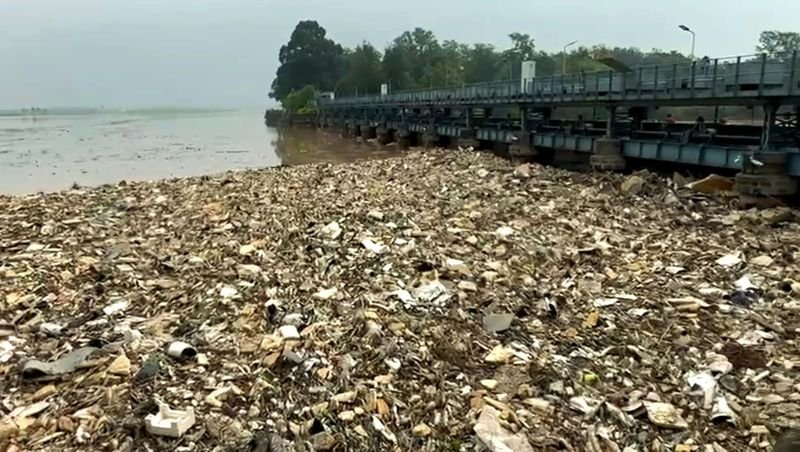
Toxic waste from illegal mines have polluted surrounding water supplies Credit: AFP via Getty Images
On top of violently seizing existing gold mines, criminal actors have also created their own illegal extraction sites.
Last June, imprisoned Sinaloa Cartel kingpin Joaquin “el Chapo” Guzman, seized control of La Cienega, a lucrative 14,000-acre gold mining region of Mexico‘s Sonoran desert.
The cartel’s Los Chapitos faction operated heavy machinery around the clock and drained the area of millions in gold before a major military and police sting targeted the operation.
In Ecuador, the dominant Los Lobos cartel controls the processing hubs of major mining districts, giving them near-complete command over the supply chain.
Scotland said: “We have seen criminal groups forcibly inserting themselves into mining communities, forcing them to pay taxes and using violence against local miners or politicians who refuse to cooperate.”
Cartels are also increasing their power bases and often usurping local governments by driving a wedge between them and the people.
Scotland said some communities had historically been “stigmatised” and prevented from accessing natural resources – which criminals exploit to gain favour.
She said: “In those cases, criminal groups have kind of provided informal mining communities with equipment and finance needed to mine in protected areas.
Miners work at an artisal gold mine in Las Brisas de Cuyuni, Venezuela Credit: AFP via Getty Images
Criminal groups are increasingly exploiting South America’s vast critical mineral deposits Credit: AFP via Getty Images
“This has resulted in clashes with mining companies.”
Gangs have been able to take over these mines by presenting themselves as an alternative source of money, equipment and protection to the locals.
Their growing influence is part of a wider battle for control between organised crime and the state across parts of South America.
Colombian Defence Minister Pedro Arnulfo Sanchez begged the US government to sanction illegal mining after gold bought by US mint was traced back to criminal groups.
“The harsh reality is that criminal mining is defeating the Colombian state,” Sanchez told The New York Times.
Across the major South American crime hubs, gangs are increasingly challenging state authority.
But Scotland said the problem is not as simple as criminal groups replacing governments.
“I think it’s important to note that the state doesn’t necessarily go away,” she said.
Military helicopters overlook a mining region on the Venezuela-Colombia-Brazil border Credit: AFP via Getty Images
A miner fishes for gold in Peru Credit: AFP via Getty Images
“It’s not a question of state institutions being captured by organised crime.”
Instead, gangs have exploited corruption by receiving mining licenses under the table and paying officials to turn a blind eye to illicit extraction.
The sheer size and remoteness of mines also makes policing difficult.
Scotland said: “These areas tend to be vast rural areas and it’s hard for law enforcement to monitor them.
“And, for example, when one illegal mine is destroyed, they’ll often be another one cropping up the next day somewhere else.”
The criminalisation of the trade also means governments lose millions in crucial tax revenue.
Scotland said: “Countries aren’t reaping the benefits from tax revenue because it’s the criminal groups that are taxing these activities instead of the state.”
The gold rush has also come at a human cost for poor communities.
A huge increase in the supply of cocaine has seen Ecuador become the world’s new drug smuggling hotspot Credit: AFP
With help from Mexican and Balkan drug gangs, the cartels have expanded in numbers and are now engaged in a violent struggle to control the smuggling routes Credit: AFP
Scotland said: “You see forced labour, forced displacement of communities, sexual exploitation and human trafficking.”
Criminal operations are not bound by the same legal requirements as legitimate mining companies.
One of the biggest threats comes from mercury, which is widely used to separate gold from ore.
Scotland said: “You see widespread use of mercury to separate the gold, which pollutes local water sources, damages crops, and causes health problems.”
She warned that organised crime groups are now looking to extract and traffic critical minerals used by defence and technology industries.
Cassiterite, a mineral that was once treated largely as a waste product from gold extraction, has become an export product in its own right.
Criminals are also targeting copper production in Peru, fuelled by high prices amid a growing demand for green energy.
Scotland said: “This is definitely a risk going forward as demand for critical minerals starts to increase and they increase in value.”