

A FORMER Brit Paralympian turned astronaut is poised to make space history as the first person with a physical disability to enter orbit.
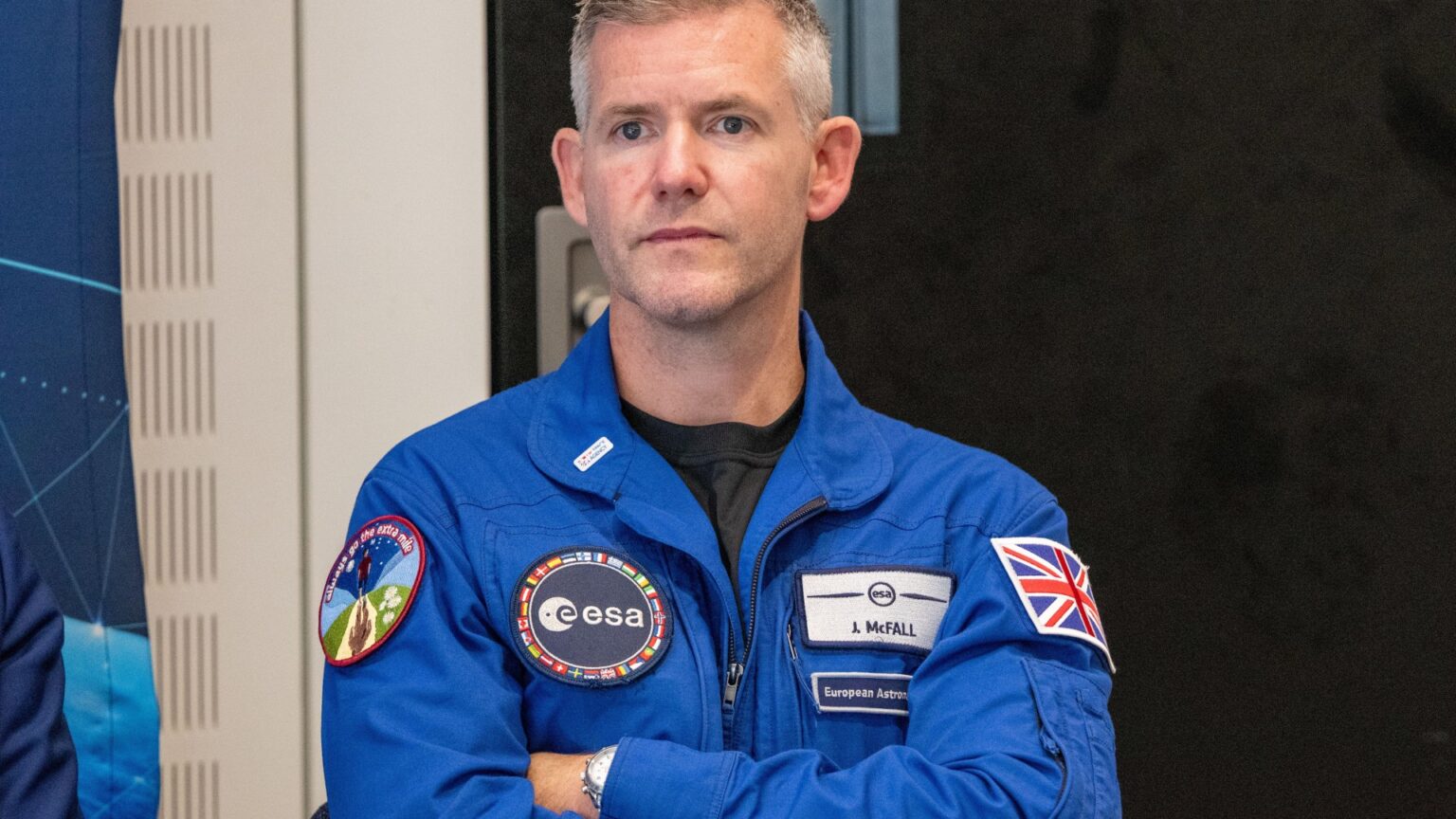
John McFall, 45, from Hampshire, could be blasted into space as soon as next year to live on a brand new research capsule.
Sign up for the Tech newsletter
Thank you!
British astronaut John McFall could live on a new space station as soon as next year Credit: Alamy
McFall is the first ESA astronaut in training with a disability Credit: Alamy
McFall is a former Paralympian who won a bronze medal at Beijing 2008 Credit: Alamy
The NHS surgeon tragically lost his right leg in 2000 at the age of 19, after a motorbike accident.
But that’s not stopped him from big success, with huge accomplishments including a bronze medal at the 2008 Beijing Paralympic games.
Now his dreams could literally lift off showing there’s “no limit to what you can achieve” after the UK Government signed a partnership agreement with US space company Vast.
Vast is planning to launch the world’s first commercial space station, Haven-1, as early as 2027 which will serve as a lab.
SIZE OF A CITY
Nasa’s plan for permanent moon base with humans living full-time by 2032
SPACE RIDDLE
Dead NASA scientist ‘hit by secret Pentagon beam’ after exposing UFO theory
McFall could be one of the scientists onboard if the mission goes ahead as planned, uncovering new knowledge on everything from prosthetics in microgravity to movement in space – with potential direct benefits for millions of people on Earth.
“Signing this agreement with Vast is incredibly exciting,” he said.
“If we can make this mission happen, it won’t just be a milestone for human spaceflight, it will send a powerful message about what people with disabilities are capable of, and that there should be no limit to what you can achieve – on Earth or in space.”
McFall would be the first Brit to go to space in more than ten years too, after Tim Peake‘s stay on the International Space Station (ISS) from December 2015 until June 2016.
Peake, 54, said: “John McFall is an inspiration – not just to the space community, but to everyone who has ever been told there are limits to what they can achieve.
“This agreement is a landmark moment for inclusive human spaceflight, and I hope it brings us one step closer to seeing John in space.
What the Haven-1 space station will look like Credit: VAST
“Space has always pushed the boundaries of what’s possible, and John’s mission would do exactly that.”
McFall became the first person with a physical disability to be medically cleared for a long-duration mission after completing intensive training last year.
The Memorandum of Understanding (MoU) will see the UK Space Agency support Vast to secure sponsorships to fund a space flight for him.
Space Minister Liz Lloyd said: “John McFall’s story is one of extraordinary determination — as a Paralympian, a surgeon, and a pioneering astronaut.
“This agreement with Vast brings us one step closer to making history, and to showing the world that space is for everyone.
“The UK is committed to being at the forefront of inclusive human spaceflight.
“This builds on the ground-breaking work John has already done and opens the door to a genuine flight opportunity. I look forward to seeing what we can achieve together.”
PLANS TO END THE ISS
Nasa is planning to de-orbit the aging International Space Station in 2031.
The space agency is considering a plan to crash the spacecraft back down on Earth into a so-called ‘space graveyard’.
Point Nemo, Latin for “no one”, is around 4,000 metres deep and further from land than any point on Earth, making it the ideal spot to crash defunct rockets and satellites.
Hundreds of spacecraft – mostly Russian – have been laid to rest there by Nasa and other space agencies since it was first used in 1971.
The plan is to slowly lower the space station’s altitude from its current spot 408km above ground.
Eventually, the Earth’s atmosphere will pull it in closer and faster, before crashing into the sea.
The iconic space station was launched back in 1998 and has welcomed more than 270 astronauts and space tourists during its time.