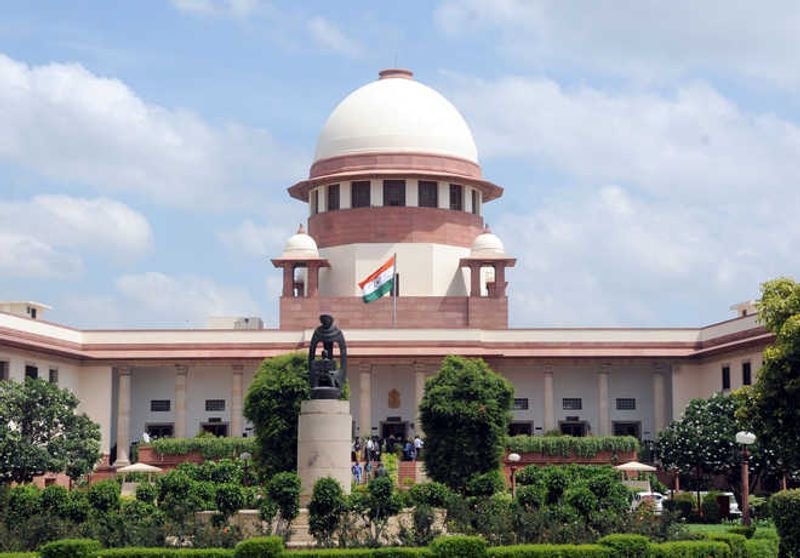

A Buddhist activist has moved the Supreme Court against the mandatory singing of the full version of Vande Mataram at formal state events.Contending that replacing the standalone two-stanza version with the six-stanza text from Ananda Math converted India from a “secular republic” into a “theocracy”, petitioner BD Borkar has challenged two circulars issued by the Ministry of Home Affairs in this regard.Borkar, a Nagpur-based Buddhist activist, submitted that the MHA orders dated January 28, 2026, and July 9, 2026, wrongfully replaced the 79-year-old practice of singing a standalone, non-theistic two-stanza poem.“Under the guise of providing directions on the playing and singing of an ‘official version’… the impugned orders repealed the existing national song… and imposed a new national song which is the six-stanza civil war song of Ananda Math with its unconstitutional idolatrous and Islamophobic content,” Borkar submitted.Forcing citizens to sing the full six-stanza text damages national fraternity and deepens communal divisions, the petitioner contended.“By imposing sectarian prayer to particular goddesses of one particular religion as the national song of India, the impugned orders convert the character of the polity of India from a ‘secular republic’ to a ‘theocracy’,” he submitted.Maintaining that a “conscientious objector” should not be punished for refusing to sing Vande Mataram, the Supreme Court had on September 22 asked the Centre to respond to Carnatic vocalist TM Krishna’s petition challenging the law mandating singing of six stanzas of the national song.A Bench led by Chief Justice of India Surya Kant, Justice Joymalya Bagchi and Justice V Mohana said the government should keep in mind the 1986 judgment in the Bijoe Emmanuel case protecting children following Jehovah’s Witnesses religious practices who said ‘no’ to singing the National Anthem on grounds of conscience.“Mr Solicitor, we are not inclined to issue notice. But, we would expect that the law of the land, as declared by this court in Bijoe Emmanuel, will govern the Act. What the national song is not in dispute. The declaration of law in Bijoe Emmanuel is not yet questioned. It is for the democratic state to decide what is the national song, whether two stanza or four stanza,” Justice Bagchi had told Solicitor General Tushar Mehta.“But nobody who feels an infraction of Articles 25, 26 to rights (Right to Religion and Freedom to manage religious affairs) or a conscientious objector would be subjected to (penal consequences). It’s not the remit of the court to second-guess what is the national sentiment or aspiration associated with Vande Mataram. It is for the State… It is for a conscientious objector not to sing one or all stanzas, and [the State is] not going to subject him to criminal consequences,” Justice Bagchi had further said.In the Bijoe Emmanuel case, the Supreme Court ruled that individuals have the right to refuse to participate in activities that go against their religious beliefs, as long as they do not show disrespect to national symbols in the process or disrupt public order.Krishna has challenged the recent amendment to the Prevention of Insults to National Honour Act, which gives the national song the same status as the national anthem, and the Centre’s circulars mandating the singing of six stanzas of Vande Mataram, which include names of Hindu deities, at official functions.