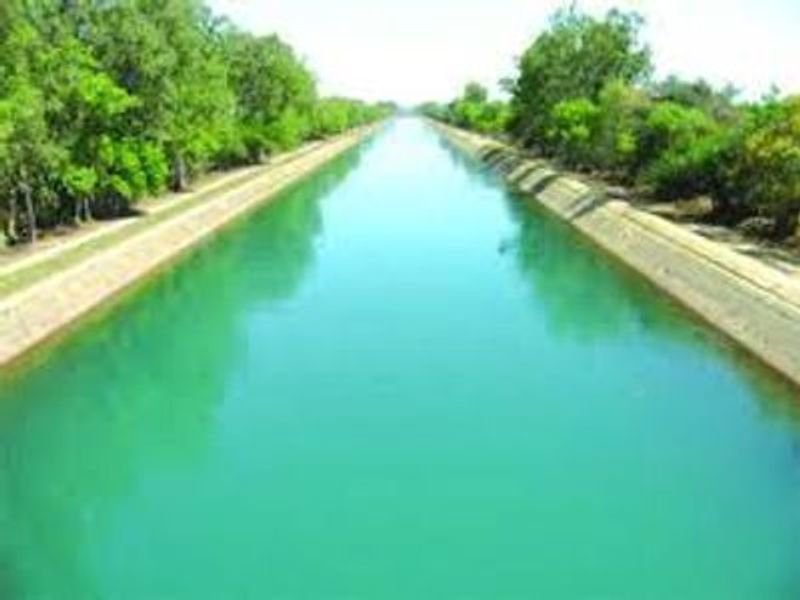

The state’s groundwater crisis has reached a point where expanding canal irrigation is no longer merely an agricultural policy choice but an environmental necessity — and for the Aam Aadmi Party (AAP) government, it could also become an important political instrument ahead of the 2027 Assembly elections.The latest Dynamic Groundwater Resource Assessment for Punjab, prepared by a 10-member committee led by Krishan Kumar, Principal Secretary, Water Resources, presents a stark picture. Against annual groundwater recharge of 19.14 billion cubic metres (BCM) and an annual extractable resource of 17.29 BCM, Punjab extracted 26.32 BCM of groundwater in 2025-26. Irrigation alone accounted for 24.95 BCM. The state’s overall stage of groundwater extraction stood at a staggering 152.22%.Blocks drawing lesser groundwaterFive blocks that have seen a slowdown in groundwater extraction, resulting in their reclassification from over-exploited to critical, are Gurdaspur, Kahnuwan, Mahilpur, Kot Ise Khan and Qadian.The other 10 blocks that have also shown improvement are Arniwala Sheikh Subanpur, Ferozepur, Makhu, Mamdot, Sri Hargobindpur, Bunga, Hajipur, Hoshiarpur, Narot Jaimal and Aur.The block-wise situation is equally alarming. Of the 153 assessment units (blocks), 110 remain categorised as over-exploited, six as critical, 17 as semi-critical and only 20 as safe. With the state government’s focus on ensuring maximum utilisation of canal water for irrigation, the number of over-exploited blocks has come down from 115 in 2023-24 to 110 now. There has also been some improvement in groundwater extraction levels, with 95 assessment units (blocks) showing a slower groundwater extraction.The assessment recognises recharge from canals and surface-water irrigation as components of the groundwater balance.For the Punjab Government, the issue is not simply about bringing more water into the canal network. The bigger challenge is creating a reliable alternative to groundwater. Farmers having dependable canal supply have less reason to draw increasingly deeper groundwater through tubewells. In a state where irrigation accounts for the overwhelming groundwater extraction — 24.945 BCM is used for irrigation according to the study — shifting even a part of irrigation demand towards surface water is bound to have important long-term consequences.There is, however, a political dimension to this environmental issue. Canal water reaching the tail ends is one of the few interventions that can translate into a visible, everyday benefit for farmers. It could be particularly valuable for AAP in the Malwa region, where farming remains central to rural politics and where the party would be keen to consolidate its support among the agricultural community before the 2027 elections. But the electoral dividend will depend on continuing delivery of canal water at the tail ends, which mostly lie in the politically important Malwa region.